
Ancient Egypt · 196 BC
Rosetta Stone
Ancient Egypt
Rosetta Stone
196 BC
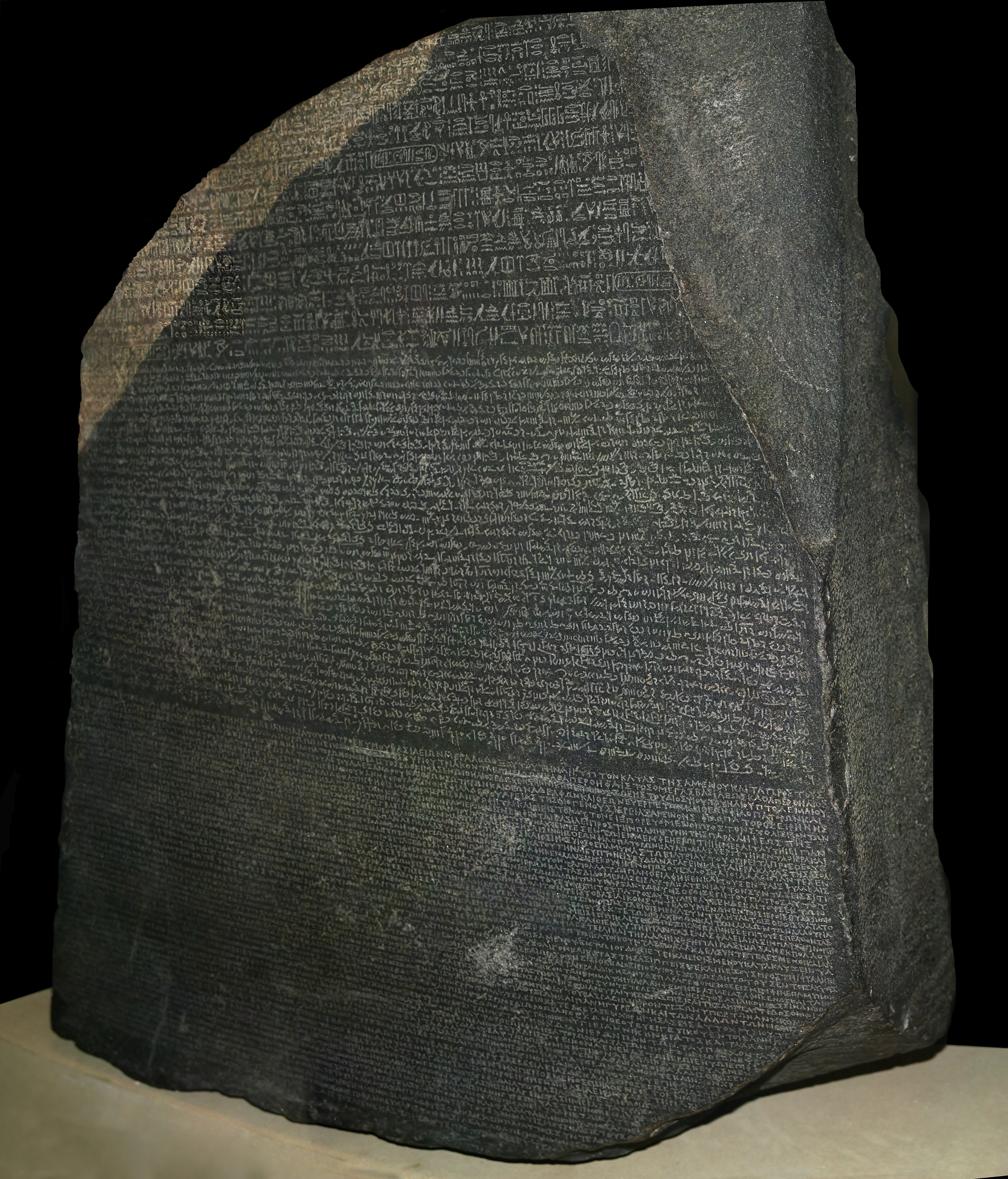
The Rosetta Stone is a fragment of a granodiorite stele originally erected at the temple of Sais in 196 BC, inscribed with a priestly decree of Ptolemy V in three parallel scripts — Ancient Egyptian hieroglyphs, Egyptian demotic, and Ancient Greek. Discovered in 1799 near the town of Rashid (Rosetta) by Napoleon's expedition and ceded to Britain in 1801, it became the key that enabled Jean-François Champollion in 1822 to decipher the hieroglyphic script for the first time in nearly two millennia. It is one of the most visited and most contested objects of the British Museum.
Exhibition Venue
Related Stories

Image source: Added by operations team