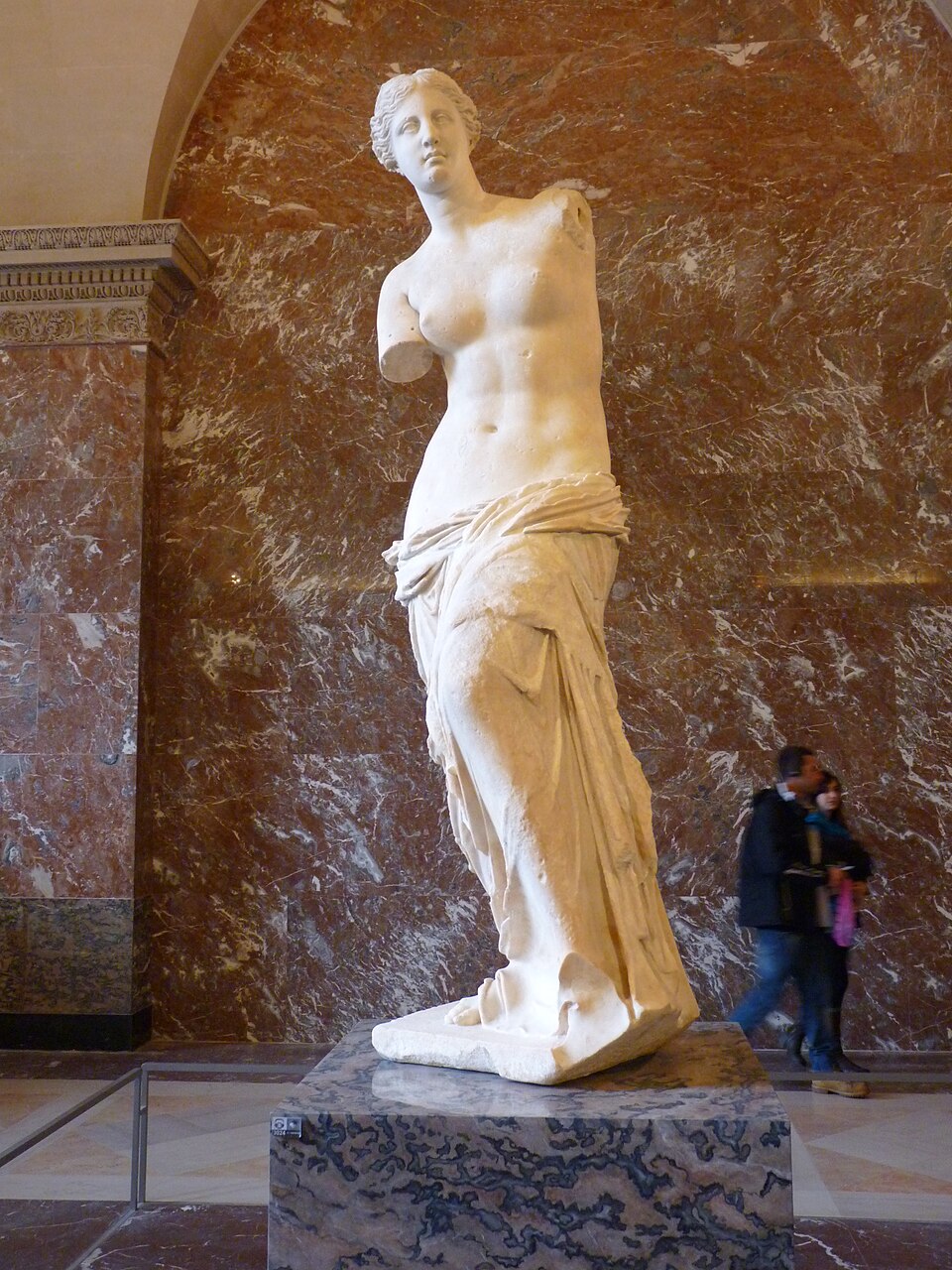

Unknown · c. 130–100 BC
Venus de Milo
Unknown
Venus de Milo
c. 130–100 BC
Carved in the Hellenistic period around 130–100 BC and most often attributed to the sculptor Alexandros of Antioch, the Venus de Milo is a life-size marble Aphrodite discovered in 1820 by a farmer on the Cycladic island of Milos and acquired the following year for the French crown. Standing roughly 2.04 metres tall, the armless goddess combines the idealised proportions of Classical sculpture with the sensual contrapposto of Hellenism. Whether she originally held an apple, a shield, or supported the arm of Ares has been debated since her discovery — and so has the precise reading of the inscribed base fragment once associated with her.
Exhibition Venue
Image source: Added by operations team