From Boston to Philadelphia: Exploring the Artistic Legacy of American East Coast Old Money
A Feast of Art Blossoming Through Time
Quiet, dignified stone walls, ancient buildings, and within them, centuries of stories carefully preserved. The cities of the American East Coast are not merely symbols of modern civilization, but vast museums embracing deep history and cultural heritage. In particular, the path from Boston to Philadelphia is not just a journey, but a special pilgrimage where one can glimpse the delicate yet overwhelming artistic tastes and foresight of America's 'Old Money'. Art pieces touched by the hands of prestigious families, having withstood the weight of time and preserved their unchanging value, are living history themselves, instilling in us awe and profound emotion.
This journey is not just a museum tour. It is an experience of witnessing how wealth, sophistication, and timeless discernment are sublimated into cultural heritage through art. Anticipating a warm emotion beyond cold reason, and deep contemplation on the beauty created by humanity, I started my engine from Boston's beautiful starting point. Autumn on the East Coast of America is particularly verdant, a season sometimes brushed by melancholic winds. Red and yellow maple leaves adorned the roadside, drawing me into this journey as if it were a scene from an artwork.
Museum of Fine Arts Boston: Light and Shadow Born in Monet's Garden
The moment I entered the Museum of Fine Arts Boston (MFA), I felt as if I had traveled through time. This place is a grand testament to how ardently the American upper class loved and collected European culture and art from the late 19th to early 20th centuries. The Impressionist painting collection, in particular, is overwhelming. The moment I stood before Claude Monet's works, I couldn't help but hold my breath. Among his series, the 'Water Lilies' series was not just a painting. It was a living poem that captured the changes in light, the movement of ripples, and the flow of time Monet felt in his garden at Giverny.
In each work, one can feel Monet's tenacity and reverence for nature. The brilliance of the morning sun hitting the water's surface, the intense midday light illuminating the pond, and the garden's serene appearance as the evening glow descends. The water lilies painted at different times make the viewer feel as if they are standing in that very garden. The MFA Boston's Monet collection is particularly diverse and rich, making it an ideal place to explore the depths of his artistic world. All of this was possible because wealthy patrons in Boston at the time recognized the value of Impressionist painters like Monet early on and invested boldly. Thanks to their foresight, we can appreciate such a beautiful legacy today.
The Aesthetics of the East Introduced to the West: The Japanese Art Collection
Another treasure of the MFA Boston is its extensive Japanese art collection. The essence of the East, unexpectedly encountered in a Western art sanctuary, gave me a fresh shock and deep emotion. From Edo period ukiyo-e to Buddhist statues, ceramics, and folding screens, its diversity and depth are truly world-class. It was even more astonishing to learn that pioneers like Ernest Fenollosa and William Sturgis Bigelow, at a time when Japanese culture began to be formally introduced to the West in the late 19th century, systematically collected and brought these traditional Japanese artworks to Boston, preventing their outflow abroad. Without their dedicated efforts and deep understanding of art, such a valuable collection could not exist.
When I stood before Katsushika Hokusai's 'The Great Wave off Kanagawa', I felt an awe as if being drawn into that massive wave. The dynamic movement of the waves contrasted with the precarious small boats below and the serenity of Mount Fuji in the distance, symbolically depicting the fated relationship between humans and nature. I could directly feel the significant influence of Japanese art on Western art, known as 'Japonisme', right here. The cultural exchange of that era, where Western magnates were captivated by Eastern philosophy and aesthetics and spared no immense investment, once again reminds us today of the border-transcending power of art.
Contemplation on the Road: From Boston to Philadelphia
Leaving Boston behind and heading towards Philadelphia was not merely a geographical shift. It was a time of contemplation, digesting the artistic inspirations I had seen and cultivating anticipation for new beauties yet to be encountered. Passing through New York and entering Pennsylvania, the skyscraper jungle gradually gave way to gentle hills and pastoral landscapes. The scenery flashing past the car window was like a painting, and within it, I discovered another face of the American East Coast. I sometimes rested on a bench with coffee, and explored small town shops, enjoying the unique local charm. I realized once again that the true delight of travel lies not only in the destination but also in the unexpected gifts gained along the way.
Suddenly, Monet's water lilies from Boston came to mind. Just as light and shadow changed moment by moment, the landscape in my mind was also changing with the flow of the journey. I grew increasingly excited about how the serene and tranquil artistic spirit of Boston would greet me in Philadelphia. In this historic city of Philadelphia, imbued with the spirit of American founding, how would art embody the legacy of 'Old Money'?
Philadelphia Museum of Art: The Pinnacle of Art Beyond the Rocky Steps
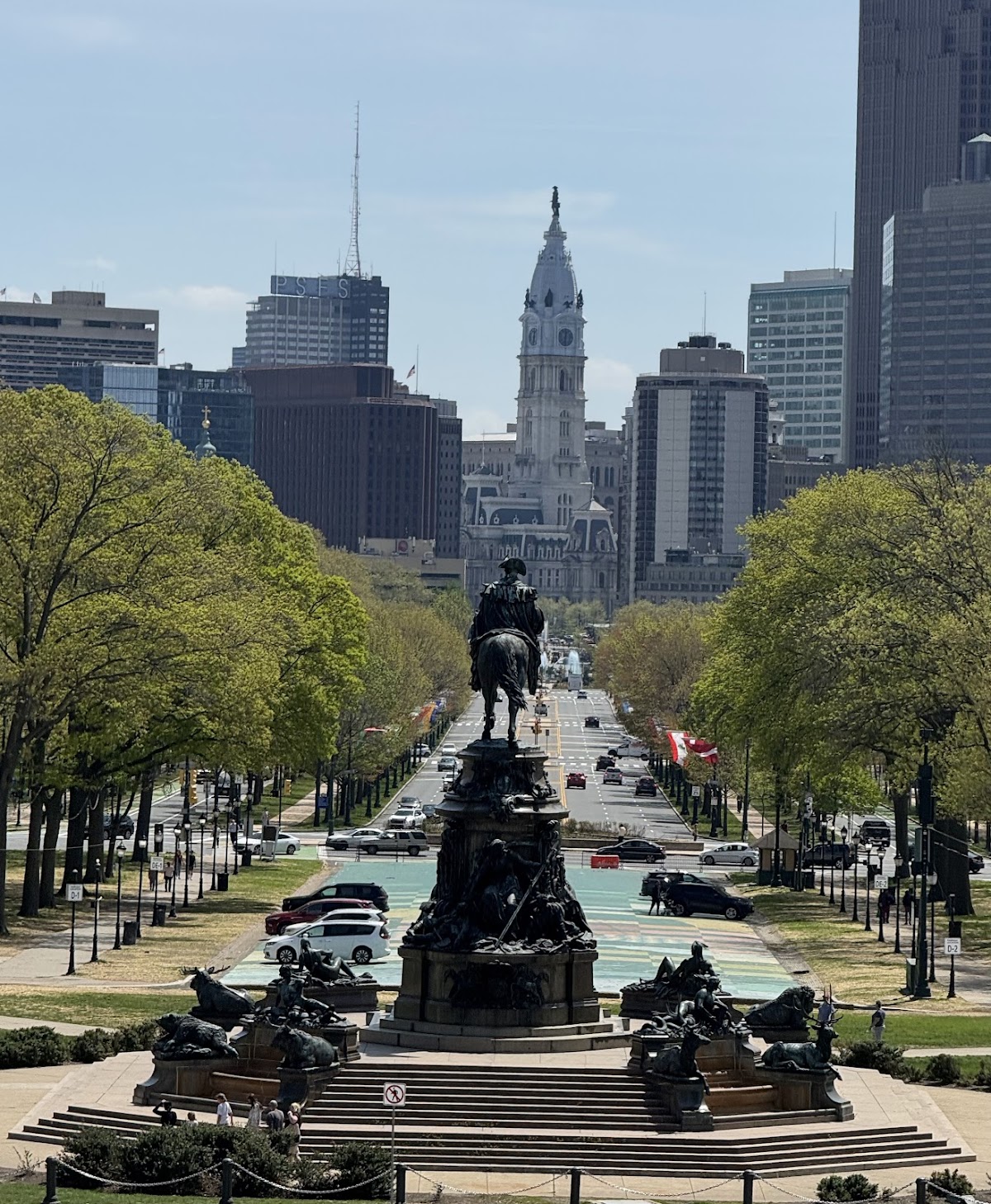
The majestic building of the Philadelphia Museum of Art asserts its presence from afar. The museum's steps, made famous by the movie 'Rocky', are not just an entrance. They are a symbol of challenge, success, and persistent effort. Climbing the steps one by one, I felt as if I had become the movie's protagonist. The panorama of downtown Philadelphia from the top of the steps was a painting in itself. Standing silently by Rocky's statue, I composed myself and took a deep breath before entering the hallowed halls of art.
The interior of the museum boasts a collection as vast and diverse as its exterior. Particularly fitting for Philadelphia, one of the centers of American modernism in the early 20th century, the contemporary art collection is truly overwhelming. The bold choices and investments of American magnates, who sought to establish their own artistic identity free from Europe's long traditions and authority, made the Philadelphia Museum of Art's collection even more special. Here, one can survey a broad spectrum of art history, from the works of masters like Rembrandt and Rubens to pioneers of modern art like Picasso and Matisse. Masterpieces from each era gathered in one place, fostering an artistic dialogue that transcended time and space.
The Shock of Duchamp and the Courage of Old Money
One of the highlights of the Philadelphia Museum of Art is its Marcel Duchamp collection. In particular, Duchamp's masterpiece and unfinished work, the 'Readymades', left a deep impression on me by posing fundamental questions about the nature of art. His attempts to present everyday objects like a urinal ('Fountain') or a bicycle wheel as works of art caused immense shock and controversy in the art world of his time. However, wealthy Philadelphia art patrons, Walter and Louise Arensberg, understood and fully supported Duchamp's radical artistic vision. Without their intellectual courage and progressive vision, it would have been impossible for so many of Duchamp's works to be gathered in one place, stimulating our thoughts today.
I stood before Duchamp's work for a long time. What is art? What is beauty? What is the artist's intention? What is the role of the viewer? Countless questions raced through my mind. 'Fountain' was not just a urinal, but a powerful manifesto demonstrating how an artist's idea and context could transform an ordinary object into a work of art. The fact that Old Money patrons embraced and supported not only classical aesthetics but also such avant-garde and radical art speaks volumes about the breadth and depth of their artistic discernment. They were not merely collectors; they were true pioneers who contributed to opening new horizons in art.
Art, Time, and Enduring Legacy
This art journey from Boston to Philadelphia left a profound resonance within me. From Monet's light and color, the delicacy of Japanese art, to Duchamp's radical philosophy, each city and museum held the artistic legacy of 'Old Money' in its own way. All these artworks were not merely objects, but the concentrated result of the spirit of an era, the passion of the wealthy, and their bold vision for the future. They did not merely accumulate wealth but contributed to its sublimation into a cultural asset for humanity.
Through this journey, I experienced firsthand how art transcends time to reach us, and how past heritage enriches the present and future. The elegant classicism of Boston and the challenging innovation of Philadelphia perfectly showcased the multifaceted artistic tastes of America's 'Old Money'. Every work I encountered on this path reawakened me to the power of art and the greatness of the human spirit, leaving an indelible impression of emotion in my heart. This journey has ended, but the eternal legacy bequeathed by art will continue to live within me, inspiring new insights.
Visitor Info
| Duration | 3박 4Sun (보스턴 2Sun, 이동 1Sun, 필라델피아 1Sun) |
| Budget | 교통편(렌터카), 숙박, 미술관 입장료, 식비 포함 1인당 약 $1,500 ~ $2,500 (항공권 제외) |
| Route | 보스턴 (MFA) → 뉴욕 경유 (by car 이동) → 필라델피아 (미술관) |