Santander, A Sanctuary of Art Embracing the Sea
Santander, A Sanctuary of Art Embracing the Sea
Located in Santander, the capital of Spain's Cantabria region, Centro Botín stands as a striking architectural landmark. Situated at Plaza Emilio Botín, P.º de Pereda, s/n, 39004 Santander, Cantabria, Spain, the center appears to float above Santander Bay, bridging the historic Jardines de Pereda park with the expansive sea. This central location ensures excellent accessibility within the city.
Renzo Piano's Vision — Two Floating Shells
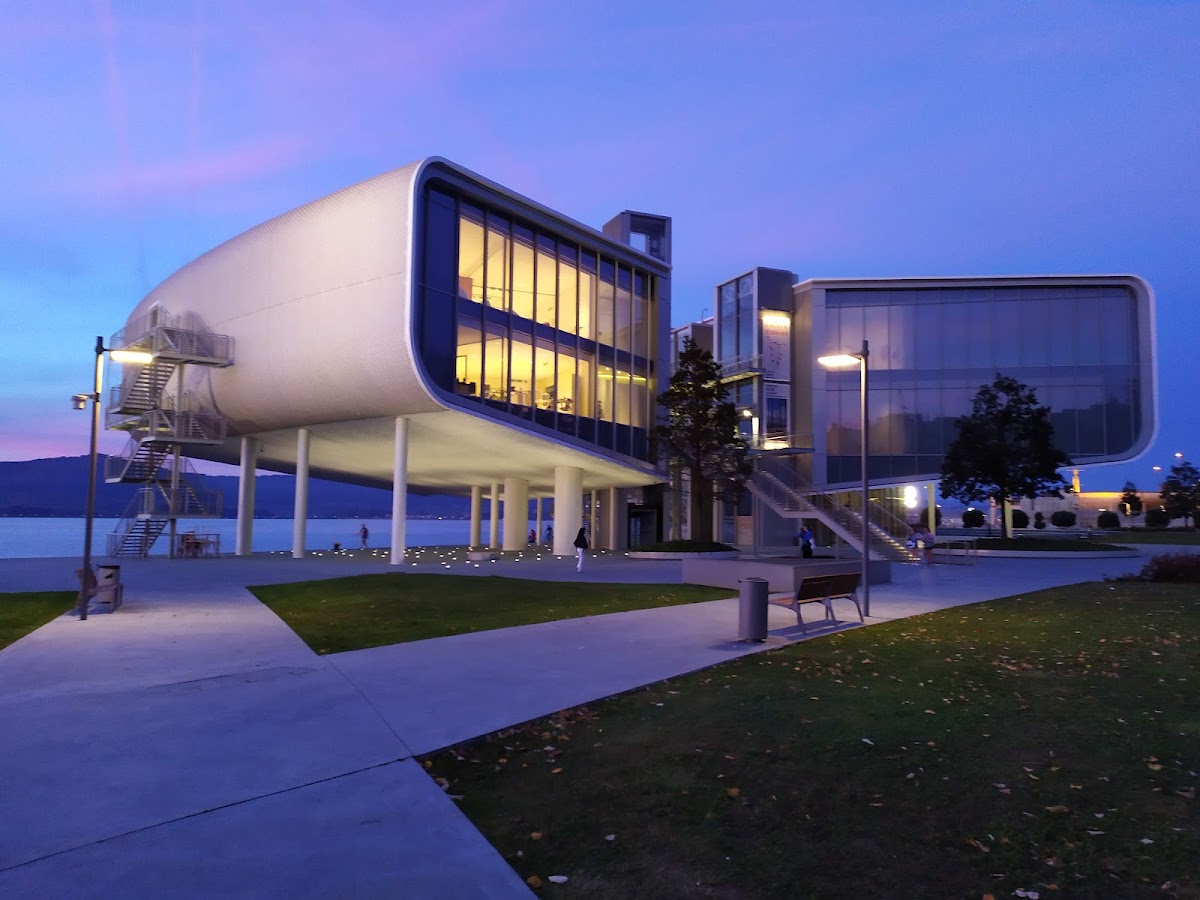
Designed by the renowned Italian architect Renzo Piano, Centro Botín is a contemporary art center born from the vision of the Botín Foundation. The foundation aims to foster engagement with art and culture, serving as a vital hub for artistic exchange and community involvement. The building itself is a monumental work of art, featuring two large D-shaped blocks suspended in the air, connected by glass and steel walkways.
The exterior is clad in 270,000 pearlescent ceramic tiles that shimmer and change with the light, reflecting the surrounding waters and sky. This dynamic facade allows the building to constantly interact with its environment, embodying a living, evolving structure that mirrors the natural beauty of Santander Bay.
Architecture and Interior Flow — Light and Sea Views
Inside Centro Botín, panoramic glass windows flood the spaces with natural light and offer expansive views of the bay. Piano's design ensures that visitors maintain a continuous connection with the sea, with windows strategically placed at varying heights on each floor to frame different perspectives of the bay. The internal circulation guides visitors through a journey where art and nature converge.
The glass walkways connecting the two main blocks serve as elevated bridges, providing breathtaking vistas of the lush Jardines de Pereda below and the sparkling sea beyond. These pathways are not merely transitional spaces but integral viewing platforms that highlight the architectural dialogue between the built environment and the natural landscape.
Materials and Programs — Warmth in Modern Design
The choice of materials, including steel, glass, ceramic tiles, and warm wooden accents in the interior, creates a harmonious balance between modern aesthetics and inviting comfort. Exhibition spaces are meticulously designed to utilize natural light while ensuring optimal conditions for art preservation, demonstrating Piano's thoughtful approach to both function and form.
Beyond its exhibitions, Centro Botín functions as a vibrant cultural hub, offering diverse programs such as educational workshops and activities for children. These initiatives emphasize art's universal value, encouraging creativity and engagement across all age groups. The ground floor features a café and restaurant with stunning bay views, fostering a relaxed atmosphere where art integrates seamlessly into daily life.
Public Art and Night Views — A Cultural Heartbeat
Public art installations outside the building extend the artistic experience beyond the interior, making art accessible to everyone. At night, Centro Botín transforms into a luminous spectacle, its pearlescent tiles glowing softly against the dark sky, resembling a giant jewel floating on the water. This dual appeal allows visitors to explore art by day and enjoy a romantic ambiance by night, cementing its role as Santander's cultural heartbeat.
Connectivity — Gardens, City, and Beyond
Centro Botín is seamlessly integrated with the restored Jardines de Pereda, offering a tranquil green space for relaxation and contemplation. From the gardens, visitors can admire the unique architecture of the center. Its prime location also provides easy access to Santander's bustling city center and historic district, including the Santander Cathedral and Mercado del Este.
Ferries departing from the harbor in front of the center connect to nearby coastal towns like Somo and Pedreñas, offering unique perspectives of Santander Bay and Centro Botín from the water. This connectivity underscores the center's role as a focal point that links the diverse attractions of the city, blending art, nature, and urban vitality into a memorable experience.
Exhibitions and Visitor Information
Centro Botín focuses on contemporary art, featuring diverse exhibitions that explore various trends in modern art. The architectural design itself enhances the viewing experience, with natural light and the surrounding environment interacting with the artworks. Exhibitions often encourage visitor participation and highlight the dynamic interplay between art, space, and the viewer.
- Admission: Adults €10, students €5. Free admission on Tuesdays. Prices may vary for special exhibitions; checking the official website is recommended.
- Operating Hours: Closed on Mondays. Tuesday to Friday, 10:00 AM - 2:00 PM. Saturday and Sunday, 10:00 AM - 8:00 PM. Hours may vary seasonally.
- Location: Plaza Emilio Botín, P.º de Pereda, s/n, 39004 Santander, Cantabria, Spain.
- Transportation: Approximately a 10-minute walk from Santander Central Station. A taxi from Santander Airport takes about 15 minutes. City buses are also available.
- Recommended Visit Duration: Approximately 1.5 hours, though 2-3 hours may be needed depending on interest.
Visitor Info
| Admission | Translating |
| Hours | Translating |
| Location | Plaza del Centro Botín, s/n, 39002 Santander, Cantabria, Spain |
| Getting There | Translating |
| Estimated Visit | Translating |