London V&A Museum: Strolling Through a Treasure Trove of Art and Design
London V&A Museum: Strolling Through a Treasure Trove of Art and Design
London V&A Museum: A Nexus of Art and Design in Kensington
The Victoria and Albert Museum (V&A), located at Victoria and Albert Museum (Stop M), London SW7 2RZ, UK, is a global beacon of art and design. Situated in the Royal Borough of Kensington and Chelsea, it forms a cultural triangle known as 'Albertopolis' alongside the Natural History Museum and the Science Museum, all within a 5-minute walk from South Kensington Tube Station (Piccadilly, District, Circle lines).
Established in 1852, the V&A houses over 5 million objects, making it one of the world's leading museums of art, design, and performance. Its grand Victorian architecture is a masterpiece in itself, setting the stage for collections that span ancient civilizations to contemporary digital design. The museum serves as a living space that continuously explores how art and design have shaped human life and culture.
Founding Vision: From the Great Exhibition to a Design Powerhouse
The genesis of the V&A traces back to the 1851 Great Exhibition in London, which highlighted the need for improved British industrial design. Prince Albert, consort to Queen Victoria, championed the idea of an institution to educate the public and inspire artisans. This led to the establishment of the South Kensington Museum in 1852, focusing on collecting and exhibiting decorative arts and crafts.
In 1899, Queen Victoria renamed the institution the 'Victoria and Albert Museum,' solidifying its royal patronage and its evolution into a world-class museum. The V&A continues to be a vital center for design education and research, with its diverse collections reflecting its founding vision of merging art with industry and public education.
Architectural Splendor: Victorian Grandeur Meets Modernity
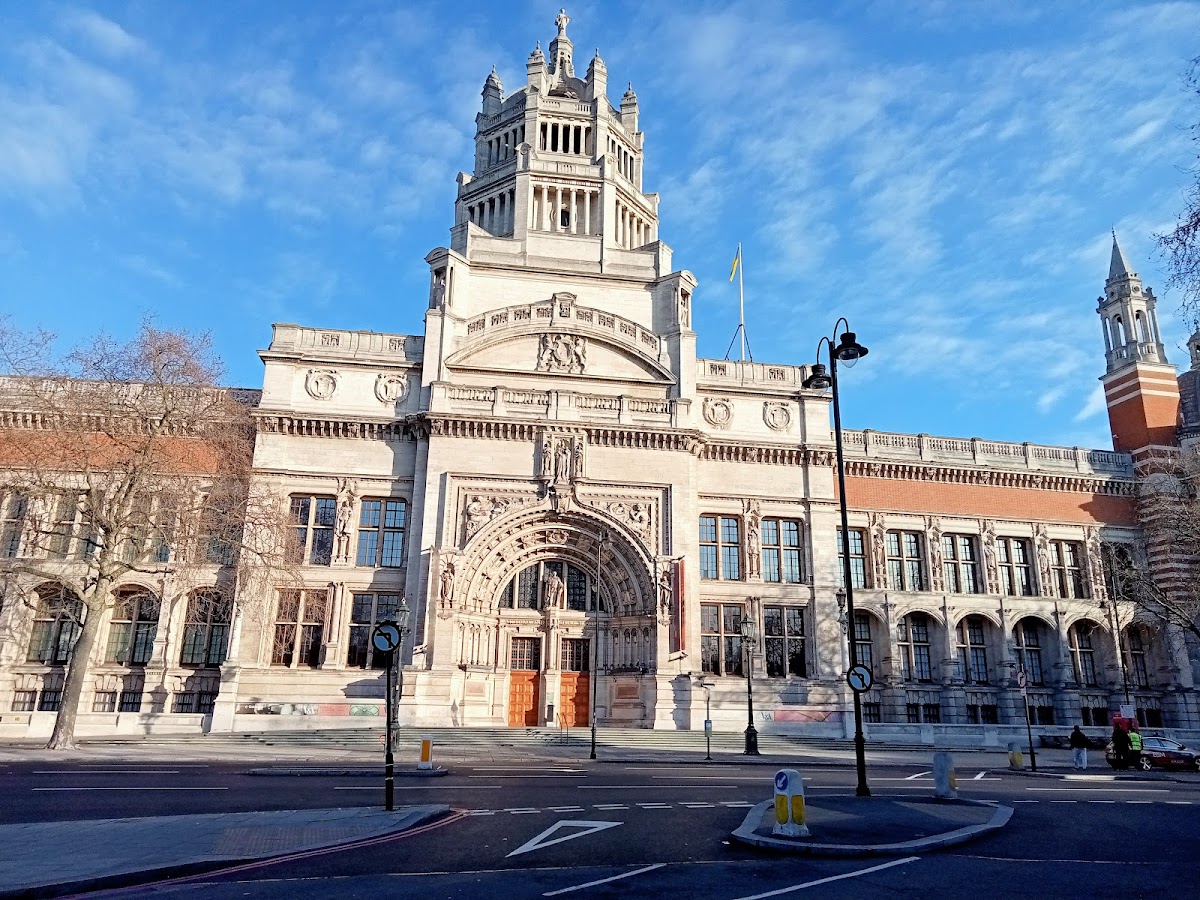
The V&A building is a significant artwork, embodying the grandeur and decorative beauty of the Victorian era. Its red-brick facades, adorned with intricate terracotta details and allegorical figures, invite close inspection. Inside, the vast spaces, stained-glass windows, mosaic floors, and William Morris designs contribute to an immersive aesthetic experience.
Notable architectural features include the central John Madejski Garden, a serene oasis blending Victorian and modern elements, and the Exhibition Road Quarter, opened in 2017. This modern underground extension, with its sunlit courtyard, showcases the museum's continuous evolution while harmonizing with the classical structure. The V&A's architecture itself is a key exhibit, inspiring visitors with its historical and contemporary design.
A World of Collections: Over 5 Million Treasures
The V&A's extensive collection of over 5 million objects offers a comprehensive journey through human civilization. It encompasses artifacts from ancient Egypt, Renaissance sculptures, East Asian ceramics, fashion, jewelry, furniture, and much more, spanning diverse cultures and historical periods. Each gallery provides deep insights into the aesthetic and technological advancements of its respective era.
Highlights include the monumental Cast Courts, featuring plaster replicas of iconic European sculptures like Michelangelo's David, which served as crucial educational tools in the 19th century. The Fashion Gallery traces the evolution of style from the 17th century to contemporary haute couture, revealing how clothing reflects societal values. The dazzling Jewellery Gallery displays pieces from various cultures and eras, illustrating the artistry and historical significance of precious adornments.
Key Collections: From Raphael Cartoons to Global Design
Beyond these, the V&A boasts the Raphael Cartoons, large preparatory drawings for Vatican tapestries, representing the pinnacle of Renaissance art. Its Asian art collection features world-class ceramics and textiles from East, South, and Southeast Asia. Medieval European artifacts, furniture, and glass art collections further enrich the museum's offerings, each telling a story of human ingenuity and craftsmanship.
The museum's diverse holdings bridge past and present, offering endless opportunities for discovery. Visitors can explore the intricate details of historical craftsmanship, understand the cultural contexts of various art forms, and witness the ongoing dialogue between tradition and innovation in design.
Visitor Information: Plan Your Visit
Admission: Entry to the V&A's permanent collections is free. Special exhibitions require a separate ticket, and advance booking via the official website is recommended, especially for popular shows or during peak times.
Opening Hours: The museum is open daily from 10:00 AM to 5:45 PM. On Fridays, opening hours are extended until 10:00 PM. Visitors should check the official website for any changes or specific holiday closures.
Transport: The V&A is easily accessible via the London Underground. Alight at South Kensington station, which is served by the Piccadilly, District, and Circle lines. An underground tunnel connects the station directly to the museum, making for a convenient journey.
Visiting Time & Facilities: A minimum of 3-4 hours is recommended to explore the museum, with a full day needed to experience it comprehensively. The V&A offers several on-site cafes and restaurants, including the V&A Cafe with its beautiful Victorian interior. The surrounding South Kensington area also provides a wide array of dining options, from casual cafes to diverse restaurants and pubs.
Visitor Info
| Location | Victoria and Albert Museum (Stop M), London SW7 2RZ, UK |
| Hours | Translating |
| Admission | Translating |
| Getting There | Translating |
| Estimated Visit | Translating |
Featured Works

미상 (페르시아) (Unknown (Persian))
아르다빌 카펫 (Ardabil Carpet)
세계에서 가장 유명한 페르시아 카펫

미상 (영국) (Unknown (English))
웨어의 대침대 (Great Bed of Ware)
10명이 동시에 잘 수 있는 전설적인 거대 침대

미상 (마이소르) (Unknown (Mysore))
티푸의 호랑이 (Tippu's Tiger)
인도 마이소르 왕국의 기계식 호랑이 오르간