A Museum Stroll on Vienna's Ringstrasse: Encountering Habsburg Glory and Klimt's Kiss
A Museum Stroll on Vienna's Ringstrasse: Encountering Habsburg Glory and Klimt's Kiss
Vienna's Ringstrasse: The Kunsthistorisches Museum and its Setting
The Kunsthistorisches Museum (Museum of Art History) is located at Maria-Theresien-Platz 1, 1010 Vienna, Austria. It stands on the eastern side of Maria-Theresien-Platz, a grand square on Vienna's Ringstrasse. Facing it on the western side is its architectural twin, the Natural History Museum. Between these two monumental buildings stands the impressive monument to Empress Maria Theresia. The museum is easily accessible, a mere 3-minute walk from the U2 Museumsquartier subway station, and well-served by Vienna's tram and U-Bahn networks.
The museum building itself is a masterpiece of Neo-Renaissance architecture, designed to embody the wealth and power of the Habsburg dynasty. Its façade features intricate carvings, towering columns, and elaborate decorations. Inside, a magnificent staircase leads to a grand dome, adorned with golden embellishments and marble, creating an opulent atmosphere. This architectural splendor serves as a visual testament to the Habsburgs' artistic aspirations and imperial glory.
The Habsburg Legacy: Opening of the Kunsthistorisches Museum in 1891
The Kunsthistorisches Museum opened its doors in 1891. Its establishment was driven by the desire to make the vast art collection, amassed over centuries by the Habsburg imperial family, accessible to the public. The museum was constructed as part of Emperor Franz Joseph I's ambitious Ringstrasse project in the late 19th century. The Habsburg collection had grown significantly since the 16th century, with avid collectors like Emperor Rudolf II contributing to its expansion.
The Habsburgs were not merely symbols of power; they actively used art to legitimize their rule and enhance the prestige of their empire. They patronized leading artists of their time, including Albrecht Dürer, Tintoretto, and Titian, acquiring valuable artworks from across Europe. This rich history enabled the museum to house a world-class collection spanning the Italian Renaissance, the Dutch Golden Age, and Flemish Baroque painting. The museum's extensive collection, numbering over 100,000 objects, showcases masterpieces by artists such as Bruegel, Raphael, Rubens, and Vermeer.
Gustav Klimt's Early Works: Ceiling Paintings on the Grand Staircase
Ascending the museum's grand staircase, visitors encounter early works by Gustav Klimt adorning the ceilings. These ceiling paintings, created by Klimt and his artist collective, the Künstler-Compagnie, offer insight into his style before his famous 'Golden Period.' The works depict art history in a classical style, serving as a fascinating precursor to the revolutionary Art Nouveau movement he would later champion.
The architectural beauty beneath the massive dome is another highlight. The harmonious blend of golden ornamentation and marble creates an impression of a palace rather than a mere exhibition space. Even the corridors leading to various rooms feel like artworks themselves, with every detail reflecting the artistic ideals and grandeur of the Habsburg dynasty. The visual splendor and spatial grandeur of the building offer a unique experience even before engaging with the art collection.
Masterpieces of the Collection: Renaissance and Baroque Painting
The Kunsthistorisches Museum's vast collection encompasses the essence of European painting from the Renaissance to the Baroque era. Works by Italian Renaissance masters like Titian, Tintoretto, and Veronese demonstrate their profound understanding of color and composition. Caravaggio's dramatic chiaroscuro and theatrical compositions, in particular, had a significant impact on the art world of his time.
The museum also houses masterpieces by Northern European and Spanish painters such as Rembrandt, Rubens, and Velázquez. Their delicate brushwork and profound psychological portrayals of figures vividly convey the society and human emotions of their respective eras. The collection, featuring works by Bruegel, Raphael, Rubens, and Vermeer, guides visitors through a captivating world of art. Each artwork tells a story of the rise and fall of dynasties and the turbulent history of Europe, inviting deep historical contemplation beyond mere artistic appreciation.
The Bruegel Room: Depicting 16th-Century Flemish Peasant Life
Among the many treasures of the Kunsthistorisches Museum, the room dedicated to Pieter Bruegel the Elder (c.1525-1569) is particularly significant. The museum holds the largest collection of Bruegel's masterpieces worldwide, earning it the title 'Bruegel's World.' His iconic works vividly portray the daily lives and festivities of 16th-century Flemish peasants.
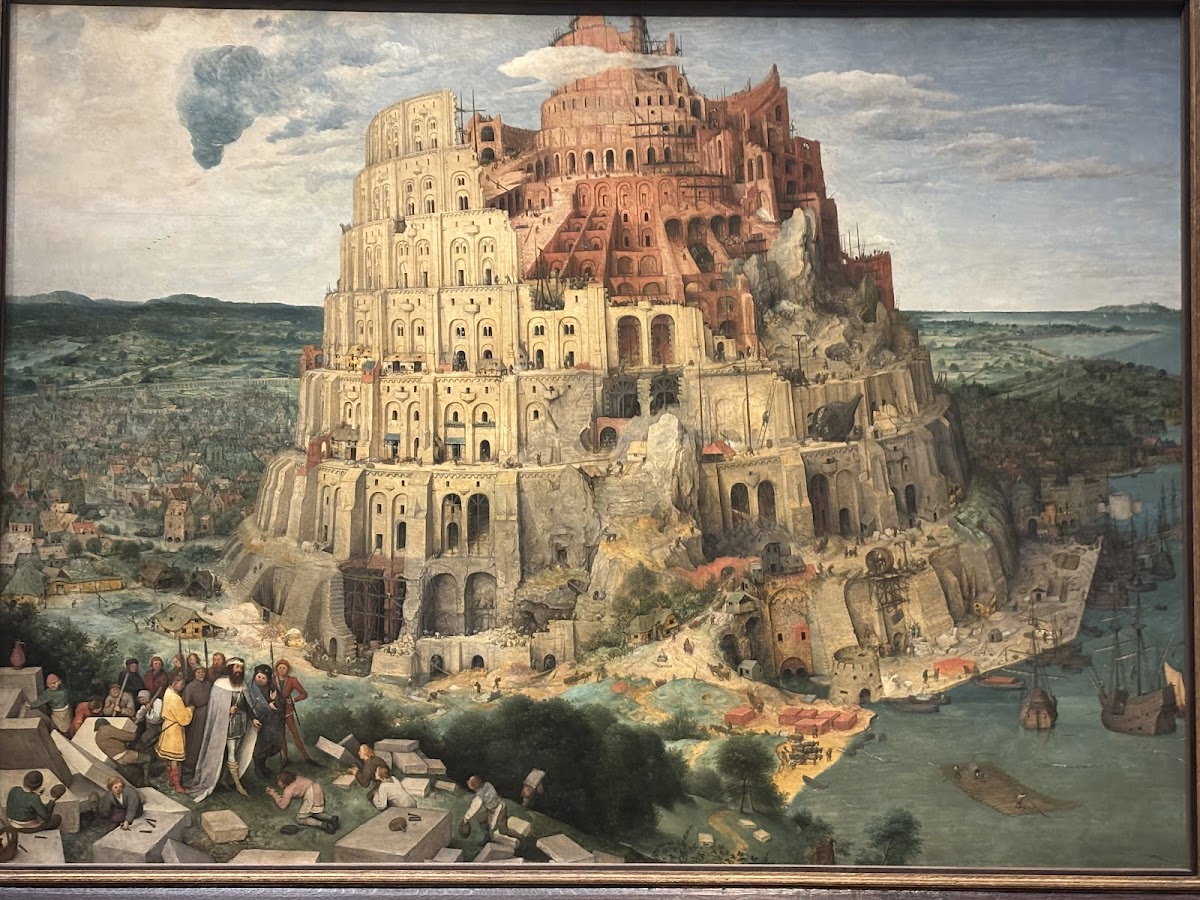
His masterpiece, 'The Tower of Babel,' imaginatively and meticulously depicts the biblical story, simultaneously illustrating human arrogance and transience. The bustling movements of countless figures constructing the colossal tower, alongside the simple lives of the people within it, are rendered with exquisite detail. 'The Peasant Wedding' and 'The Peasant Dance' capture the rustic yet endearing, humble yet vibrant lives of the peasantry. 'Children's Games' portrays numerous children engaged in various traditional games, conveying the timeless innocence and energy of childhood. Bruegel transcended mere landscape or figure painting, embedding the spirit and philosophy of his era's people into his art.
Visitor Information for the Kunsthistorisches Museum
Admission: Adult tickets are 21 euros, and student tickets are 18 euros. Children under 19 years old receive free admission. Discounts or free entry may be available with a Vienna Pass or Vienna City Card. Online pre-purchase of tickets is recommended.
Operating Hours: The museum is closed on Mondays. From Tuesday to Wednesday, it operates from 10:00 AM to 6:00 PM. On Thursdays, extended hours are offered from 10:00 AM to 9:00 PM. From Friday to Sunday, the museum is open from 10:00 AM to 6:00 PM. Operating hours may vary during special exhibitions or holidays, so it is advisable to check the official website before visiting.
Location and Transportation: The museum is located at Maria-Theresien-Platz 1, 1010 Vienna, Austria. It is accessible via U-Bahn lines U2 and U3 (Volkstheater station, a 5-minute walk), Tram lines 1, 2, D, and 71 (Ring/Volkstheater stop), and Bus line 48A (Volkstheater stop). Its location on the Ringstrasse ensures excellent public transport accessibility.
Connecting to Belvedere Palace: Gustav Klimt's 'The Kiss'
After experiencing the classical art at the Kunsthistorisches Museum, visitors wishing to see Gustav Klimt's iconic masterpiece, 'The Kiss,' are encouraged to visit the Belvedere Palace. The Belvedere is reachable from the Kunsthistorisches Museum by tram or on foot. This palace not only showcases the beauty of Austrian Baroque architecture but also houses the Austrian Gallery, which holds Klimt's celebrated works.
The Belvedere Palace complex consists of the Upper and Lower Belvedere, with the Austrian Gallery located in the Upper Belvedere. Encountering Klimt's golden-hued artistry here offers a richer understanding of Vienna's artistic spectrum. A combined itinerary of the Kunsthistorisches Museum and the Belvedere Palace provides a comprehensive journey through art history, from the classical works of the Habsburg era to the modern art of the early 20th-century Vienna Secession.
Visitor Info
| Estimated Visit | Translating |
| Translating | Translating |
| Translating | Translating |
| Recommended Route | Translating |
| Transport | Translating |