Los Angeles Art Road — From the Getty Center to LACMA
Los Angeles Art Road — From the Getty Center to LACMA
Los Angeles: A Deep Dive into West Coast Art
Los Angeles, often not immediately recognized as a 'museum city,' boasts one of the most extensive art landscapes on the US West Coast. Within a 20-km radius of the city center, several world-class museums offer a rich architectural and collection-focused itinerary for a 2-3 day visit. This guide outlines a one-day art road trip for first-time visitors or those prioritizing museum experiences.
This itinerary focuses on two major institutions: The Getty Center and LACMA (Los Angeles County Museum of Art). Located approximately 25 minutes apart by car, they represent distinct artistic periods and styles. The Getty Center, with its grand architecture and European masterpieces, and LACMA, a hub for diverse contemporary art in the city's heart, form the core of this art exploration.
The Getty Center: A White Fortress on Brentwood Hills
The Getty Center is situated on a hilltop in Brentwood, Los Angeles (1200 Getty Center Dr, Los Angeles, CA 90049, USA). Visitors begin their experience with a tram ride from the parking area up to the main complex, an integral part of the architectural journey itself. This elevated location offers panoramic views of the Pacific Ocean and the Los Angeles cityscape, providing a serene escape from urban bustle.
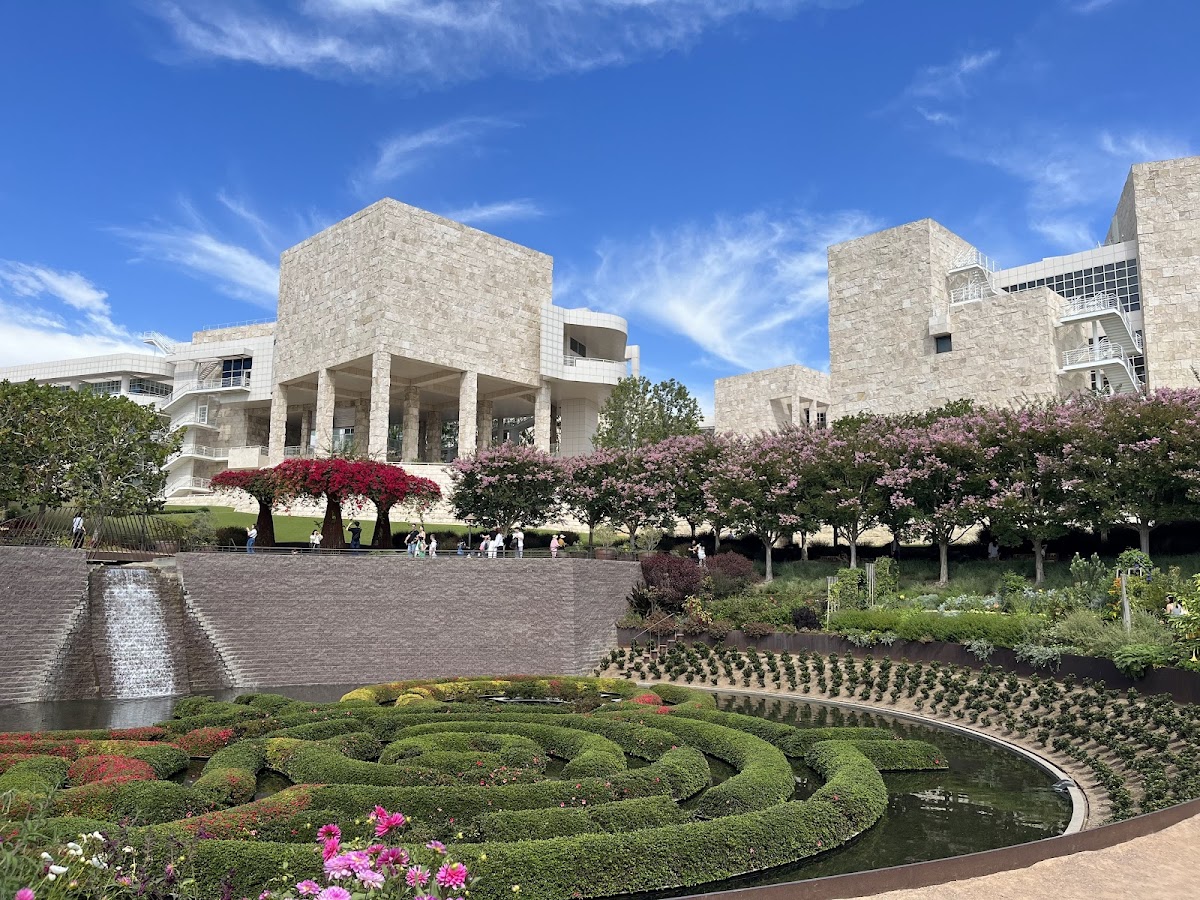
Opened in 1997, The Getty Center was designed by architect Richard Meier, known for his signature white aesthetic. The complex features white travertine stone, sourced from Italy, covering approximately 1.2 million square feet. Meier conceived the center as a series of pavilions and courtyards, maximizing natural light and creating interconnected public spaces for art appreciation and relaxation.
Getty's Collections: European Masters and Decorative Arts
The Getty Center houses an extensive collection, primarily focusing on European paintings, sculptures, and decorative arts from before the 17th century, with a strong emphasis on 18th and 19th-century French decorative arts. The collection also includes photography from the late 19th century to the present, totaling over one million objects.
Key highlights include 19th-century European paintings by masters such as Vincent van Gogh (including 'Irises'), Claude Monet, Paul Cézanne, and J.M.W. Turner. Works by Rembrandt and Rubens are also part of the collection. This comprehensive range allows visitors to trace significant movements in European art history.
Iconic Spaces at The Getty: The Central Garden and Views
A prominent feature of The Getty Center is the Central Garden, designed by artist Robert Irwin. Conceived as a 'sculpture in the form of a garden,' it is a living artwork that constantly changes with seasons and time. Its intricate waterways and diverse plant life create a peaceful and contemplative atmosphere.
Beyond the garden, The Getty offers breathtaking panoramic views from its various terraces and observation points. Visitors can take in sweeping vistas of Los Angeles, the Santa Monica Mountains, and the Pacific Ocean. The site is particularly popular for sunset and night views, blending architecture, nature, and art into a unique visitor experience.
Visiting The Getty Center: Logistics and Tips
Admission to The Getty Center is free, though parking costs USD 20. The tram ride from the parking structure is mandatory and forms part of the visit. A minimum of 3-4 hours is recommended for a thorough exploration.
The center is closed on Mondays. It operates from 10:00 AM to 6:30 PM Tuesday through Friday and Sunday, with extended hours until 9:00 PM on Saturdays. The extended Friday and Saturday hours are ideal for experiencing both sunset and city lights. It is advisable to check the official website for the latest operating information.
LACMA: A Modern Art Hub on Miracle Mile
LACMA (Los Angeles County Museum of Art) is located in the heart of Los Angeles's Miracle Mile district (5905 Wilshire Blvd, Los Angeles, CA 90036, USA). This area is a vibrant cultural corridor, home to several museums, including the adjacent La Brea Tar Pits. LACMA serves as a vital repository of modern art, reflecting LA's dynamic cultural landscape.
The museum is easily accessible via public transport, with the Metro D Line's Wilshire/Fairfax station nearby. LACMA is currently undergoing a significant redevelopment project, with a new building designed by Swiss architect Peter Zumthor. This ongoing construction will reshape the museum's physical presence and enhance its future exhibition capabilities.
LACMA's Collections: Over 120,000 Works of Global Art
Established in 1965, LACMA has grown into the largest general art museum in the Western United States. Its vast collection comprises over 120,000 works, offering a comprehensive overview of global art history from ancient times to the present. The collection reflects the cultural diversity of the Western US, encompassing European, Asian, Latin American, and Islamic art.
The museum's modern and contemporary art holdings are particularly strong, featuring significant works by leading artists of the 20th and 21st centuries. The collection also includes diverse media such as photography, design, and textile arts. This broad spectrum provides visitors with a rich artistic experience, mirroring Los Angeles's dynamic cultural identity.
LACMA's Signature: Chris Burden's 'Urban Light'
The most iconic feature of LACMA is Chris Burden's public art installation, 'Urban Light' (2008), located at the museum's entrance. This work consists of 202 restored vintage street lamps from the 1920s and 1930s, arranged in a grid. It has become a signature photo spot for Los Angeles, attracting visitors day and night.
The moment when all 202 lampposts illuminate at dusk is particularly captivating, drawing crowds of tourists and locals. 'Urban Light' activates the museum's exterior space, offering an accessible art experience even to those not entering the galleries. It is free to view and photograph.
Visiting LACMA: Logistics and Tips
As of 2024, admission to LACMA's permanent collection is free, though special exhibitions may incur a separate charge. A visit of 2-3 hours is recommended. Due to the ongoing Peter Zumthor new building construction, some exhibition spaces may be temporarily inaccessible; checking the official website for current exhibition information is advised.
LACMA is open from 11:00 AM to 6:00 PM on Monday, Tuesday, and Thursday. It is closed on Wednesday. On Friday, hours are 11:00 AM to 8:00 PM, and on Saturday and Sunday, 10:00 AM to 7:00 PM. While 'Urban Light' is a free photo spot, it gets crowded at dusk; mornings offer a quieter experience for photography.
LA Art Road Itinerary: Connecting Getty and LACMA
Navigating Los Angeles's art road typically requires a rental car or ride-sharing services like Uber/Lyft, as public transportation can be challenging for these routes. The drive between The Getty Center and LACMA takes approximately 25 minutes. An efficient itinerary involves visiting The Getty Center in the morning for its architecture and European art, then moving to LACMA in the afternoon for modern art and its iconic outdoor installations.
A suggested route: Dedicate 3-4 hours to The Getty Center in the morning. Lunch can be enjoyed at The Getty's internal restaurants or in nearby Brentwood. In the afternoon, spend 2-3 hours at LACMA. Evening options include dining in the Miracle Mile area around LACMA or experiencing 'Urban Light' as it illuminates.
Extending the LA Art Road: Downtown Museums
For a multi-day art exploration in LA, Downtown museums can be added to the itinerary. This area concentrates institutions like The Broad, MOCA Grand Avenue, and The Geffen Contemporary at MOCA, all specializing in contemporary art. These can be explored using a combination of walking and Metro.
- The Broad: Houses the collection of Eli and Edythe Broad. Features works by contemporary masters such as Jeff Koons, Jean-Michel Basquiat, Takashi Murakami, and Andy Warhol. Admission is free but requires timed reservations. Yayoi Kusama's 'Infinity Room' requires a separate reservation.
- MOCA Grand Avenue: The main building, designed by Arata Isozaki, focuses on post-war American art, including works by Mark Rothko, Robert Rauschenberg, and Jean-Michel Basquiat.
- The Geffen Contemporary at MOCA: Located in Little Tokyo, this warehouse space renovated by Frank Gehry is ideal for large-scale installations.
- Walt Disney Concert Hall (exterior): Designed by Frank Gehry, its distinctive architecture offers a significant visual experience even from the outside.
LA Art Road Tips: Dining and Timing
The Getty Center's extended hours until 9:00 PM on Fridays and Saturdays make it an excellent choice for combining sunset views with evening exploration. While LACMA's 'Urban Light' is a free photo opportunity, it attracts large crowds at dusk; mornings are quieter for tripod photography. For lunch, Grand Central Market in Downtown offers a wide array of food options, fitting well with a Downtown museum itinerary.
Los Angeles enjoys mild weather year-round, with spring and autumn being particularly pleasant for outdoor activities. Allocating at least 3-4 hours per museum is recommended. Beyond museum visits, integrate other cultural experiences LA offers to enrich the trip. Always check each museum's official website for the latest exhibition schedules and operating hours.
Visitor Info
| Estimated Visit | Translating |
| Translating | Translating |
| Translating | Translating |
| Recommended Route | Translating |
| Transport | Translating |