Vienna, A Waltz of Golden Dreams and Shadows: In Search of Fin de Siècle Souls
Vienna, the heart of Europe, a city steeped in the glory of the Habsburg monarchy. Yet, this place was more than just an imperial capital; at the turn of the 20th century, it was a colossal crucible where the artistic chaos and brilliant golden dreams of a tumultuous era converged. Where the sounds of carriages faded from cobblestone streets, the clear imprints of new artistic movements emerged, and beyond the ancient palace walls, an artistic spirit, challenging taboos and embracing daring, blazed brightly. Gustav Klimt's ecstatic 'The Kiss' whispered eternal love, and Egon Schiele's raw soul poured out the intense suffering of life. To explore the shadows and golden glow beyond that Fin de Siècle, I embarked on an emotional artistic journey connecting Vienna's three key art destinations.
The Overture of a Golden Dream: Encountering Klimt at the Belvedere Palace
My steps towards the Belvedere Palace, nestled in Vienna's southeast, felt like a journey back in time. The magnificent Baroque Upper and Lower Belvedere palaces, connected by beautiful French gardens, eloquently proclaimed their past as a summer residence of the Habsburgs, exuding timeless elegance. The moment I entered the Upper Belvedere, beneath its high, ornate arched ceilings, a dazzling feast of Fin de Siècle Viennese art, shimmering in gold, greeted me. Passing through the delicate yet powerful works of Jugendstil masters like Otto Wagner and Josef Hoffmann, I finally stood before the presence that commanded all attention.
Gustav Klimt's 'The Kiss'. Just the name makes my heart pound, a masterpiece that captivates the soul. The golden aura that fills the colossal canvas, the decorative patterns meticulously crafted with gold and silver leaf, glow like a mystical kaleidoscope. The lovers in floral robes, embracing at the edge of a cliff, or perhaps on a flower-strewn ground, sharing an eternal kiss, transport the viewer beyond reality into an ecstatic vision. In this masterpiece, Klimt intertwined the sacredness of love, eroticism, and the transience of life into a single rapture. Beyond merely employing gold leaf, he uniquely interpreted influences from Egyptian hieroglyphs, Byzantine mosaics, and Japanese prints, creating his own distinct and unprecedented 'Golden Period.'
I stood before the artwork for a long time. Every detail, from the woman's soft skin subtly revealed within the golden patterns to the man's rough yet delicate hands caressing her face, seemed to speak to me. The vibrant flowers blooming beneath their feet seemed to hint at the joy of life and, simultaneously, their inevitable wilting, as if singing of the eternal cycle of life and death. Beyond 'The Kiss,' works like the provocative gaze of 'Judith I,' the alluring posture of 'Portrait of Adele Bloch-Bauer I,' and his lyrical landscapes—Belvedere was a sanctuary that fully displayed Klimt's pursuit of the Gesamtkunstwerk ideal and his Golden Period. Klimt's brushwork felt like an attempt to explore the deepest aspirations and fears within the human soul, the very essence of existence, transcending mere colors and forms. Who else has expressed the complex human emotions hidden behind a golden veil as beautifully and powerfully as Klimt? The Belvedere was not just a place exhibiting Klimt's works; it was a place where his soul still breathes, offering visitors timeless emotional impact.
The Rawness of Fin de Siècle: Facing Schiele at the Leopold Museum
Emerging from the rapture of the Belvedere, I headed to the Leopold Museum, located in the MuseumsQuartier, a cultural complex in the heart of Vienna. If Klimt's golden dream sang of the greatest earthly beauty and sensuality, Egon Schiele, whom I encountered at the Leopold, fearlessly exposed the other side of that dream: the rawest pain, anxiety, and desire of human existence. In stark contrast to the calm exterior of its modern architecture, a unique atmosphere filled with dark and intense works permeated its interior. This place offered a striking contrast to the Belvedere, revealing another, more unvarnished face of Fin de Siècle Vienna.
Egon Schiele's works struck me with shock and, at the same time, profound empathy. Distorted gestures, agonizing expressions, emaciated bodies, and eerily transparent eyes. His self-portraits felt like the cries of a solitary soul exploring the deep abyss of existence, beyond mere narcissism. He called himself 'a soul burning with a sacred flame,' striving to dissect the human psyche through his art. Schiele lived a short life of 28 years, but his brushstrokes, like sharp blades, pierced through the hypocrisy and hidden desires of the human interior, and the shadow of death. Works like 'Death and the Maiden' and 'Seated Nude with Bent Leg' vividly depicted humans agonizing and conflicting between life and death, sexuality and taboo. The figures in his paintings, from their gazes to their every gesture, seemed to desperately strive to reveal themselves. The naked body was used not for anatomical accuracy but as a tool for emotional explosion, and the resulting tremor was more intense and fundamental than any beauty.
Besides Schiele, the Leopold Museum also boasts a rich collection of works by artists such as Oskar Kokoschka and Richard Gerstl, who forged different paths from Klimt and pioneered Expressionism. Their works reflect the spiritual turmoil and social anxiety of Fin de Siècle Vienna, hidden behind the splendor of Jugendstil spearheaded by Klimt. In Schiele's eyes, I encountered the soul of an artist who, over a century ago, agonized and resisted amidst a tumultuous era. His paintings sought to capture truth rather than pursue beauty, and that truth, often uncomfortable and painful, simultaneously posed the most fundamental questions about human existence. The Leopold Museum offered me an unforgettable experience, making me rethink the definition of beauty, and vividly imprinted another soul of Fin de Siècle Vienna.
The Crossroads of Art: Traversing Eras at the Albertina
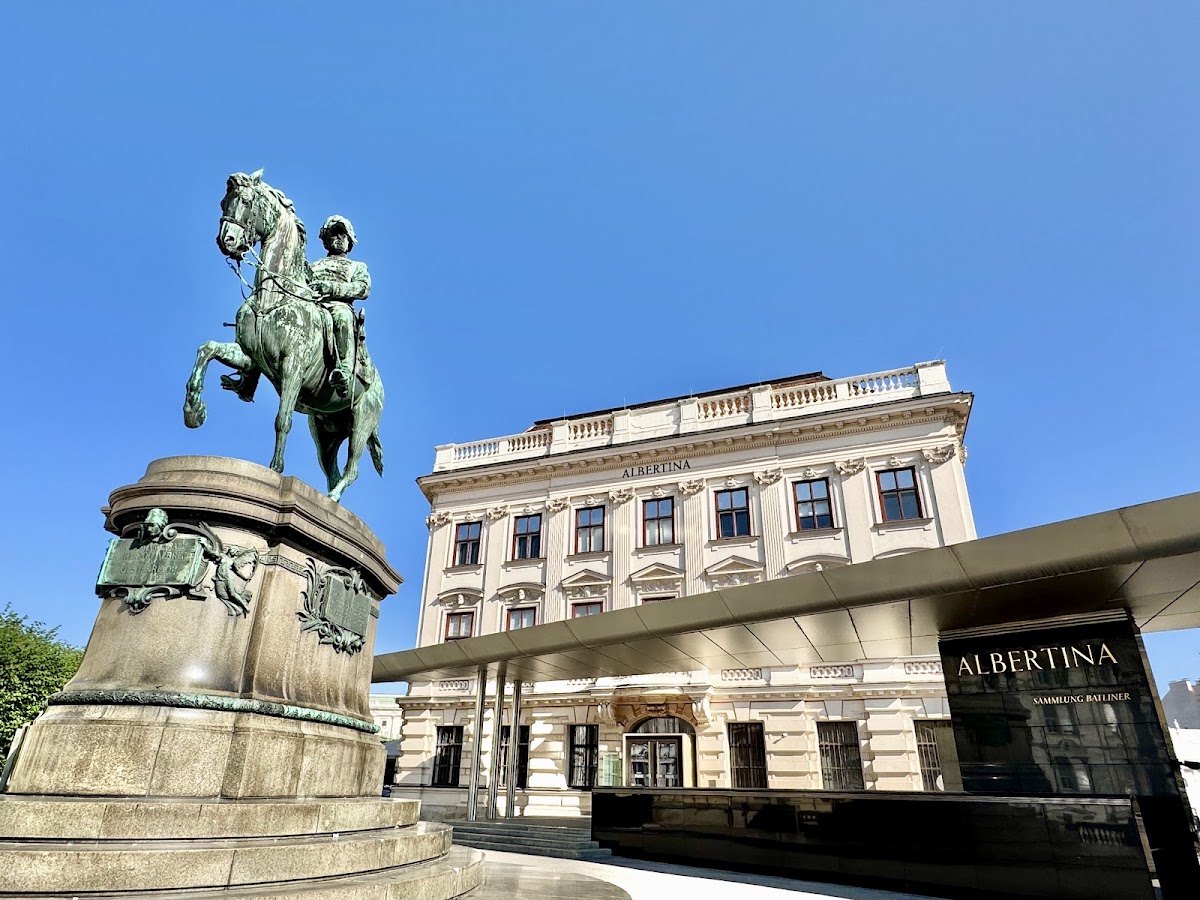
The final leg of my Viennese art pilgrimage was the Albertina Museum. As one of the Habsburgs' prominent residences, the Albertina exuded an imposing aura befriended its palace status. From its towering edifice, statues of horsemen seemed to gaze down upon the heart of Vienna, its interior holding a treasure trove of art transcending eras. This institution was not confined to a specific era or movement; it was a true crossroads of art, encompassing a broad spectrum of art history from the Renaissance to the present day. While it is particularly famous for Albrecht Dürer's 'Young Hare' and Claude Monet's 'Water Lilies' series, for me, the Albertina was a crucial link demonstrating how Fin de Siècle Viennese art encountered and evolved alongside other eras and movements.
The Albertina boasts one of the world's largest collections of drawings and prints. Every delicate line in Dürer's 'Young Hare' showcases the pinnacle of meticulous observation and representation, reminding us of the roots through which subsequent artists explored form and anatomy, and nature. These nearly perfect drawings were the essence of classical art. And in the subsequent galleries, encountering Claude Monet's 'Water Lilies' series, a master of Impressionism, I was once again captivated by the magic of light and color. Monet's attempt to capture fleeting impressions and the constantly changing movement of light, rather than merely reproducing reality, demonstrated a revolutionary shift in art from 'what to paint' to 'how to paint.' From the realism of the Renaissance to the visual revolution of Impressionism, the Albertina made me clearly realize where Viennese Fin de Siècle art stood within the grand flow of art history.
However, the Albertina provides a link to Fin de Siècle Viennese art not merely through contrast. Through the 'Batliner Collection,' this museum offers the opportunity to survey various currents of early 20th-century European modern art in one place, including Austrian Modernism (Gustav Klimt, Egon Schiele), German Expressionism, and Russian Avant-Garde. Here, the works of Klimt and Schiele gain a richer context within Dürer's tradition of perfect representation and Monet's innovative gaze, paradoxically demonstrating how their unique originality was a product of the period's profound reflections. The Albertina eloquently proclaimed that behind the birth of every painting lay the deliberations and experiments of countless preceding artists, and an artistic dialogue that spanned eras. This place was not merely preserving past legacies; it was a living testament to how art constantly changes, expands, and opens new eras. The Fin de Siècle art I experienced in Vienna was not an isolated island but a brilliant and intense flower that blossomed amidst a great art historical current.
Golden Glow and Shadows: The Profound Resonance of Fin de Siècle Vienna
My days in Vienna were more than just museum visits; they were a journey of deep communion with the soul of an era, and an encounter with fundamental questions of human existence. The ecstasy and hymn of love felt in Klimt's 'The Kiss,' the pain of existence and raw truth encountered in Schiele's self-portraits, and the art-historical context and continuous evolution realized at the Albertina. All these experiences powerfully stirred my heart, leaving an unforgettable impression and profound reflections.
Fin de Siècle Viennese art is not merely an artifact of the past. It encapsulates humanity's longing for beauty, anxiety about existence, and fundamental questions about life and death, all felt during a tumultuous era. Their works, a blend of golden glow and shadows, ecstasy and suffering, transcend time and still convey powerful messages to us today. Intertwined with the imperial traces remaining throughout the city, Vienna opened a special window for me to fully sense and understand that period. Though I leave this city, Klimt's golden dream and Schiele's intense shadows will forever live in my heart. Until the day I return to Vienna, the artistic spirit of the Fin de Siècle will continue to infuse my soul, offering deep inspiration to reflect on the meaning of life.
Visitor Info
| Duration | 총 3Sun |
| Budget | $150~$250 (입장료 및 교통비 포함) |
| Route | 벨베데레 궁전 -> 레오폴트 미술관 -> 알베르티나 미술관 |