4.6 Billion Years of Earth in Central Seoul
4.6 Billion Years of Earth in Central Seoul
Seodaemun Museum of Natural History — Earth's 4.6 Billion Years in Seoul
The Seodaemun Museum of Natural History, located at 51 Yeonhui-ro 32-gil, Seodaemun-gu, Seoul, offers a profound journey through Earth's 4.6-billion-year history. Situated on the eastern slope of Ansan Mountain, the museum's architecture harmonizes with its natural surroundings. It is adjacent to the Ansan Jarak-gil, a barrier-free forest trail, providing a unique blend of education and outdoor recreation.
This institution is dedicated to showcasing life's diversity and Earth's geological past, serving as a vital educational resource and a center for scientific research in South Korea. It attracts over 500,000 visitors annually, fostering an understanding of our planet's evolution and the importance of environmental conservation.
Architectural Design and Visitor Flow
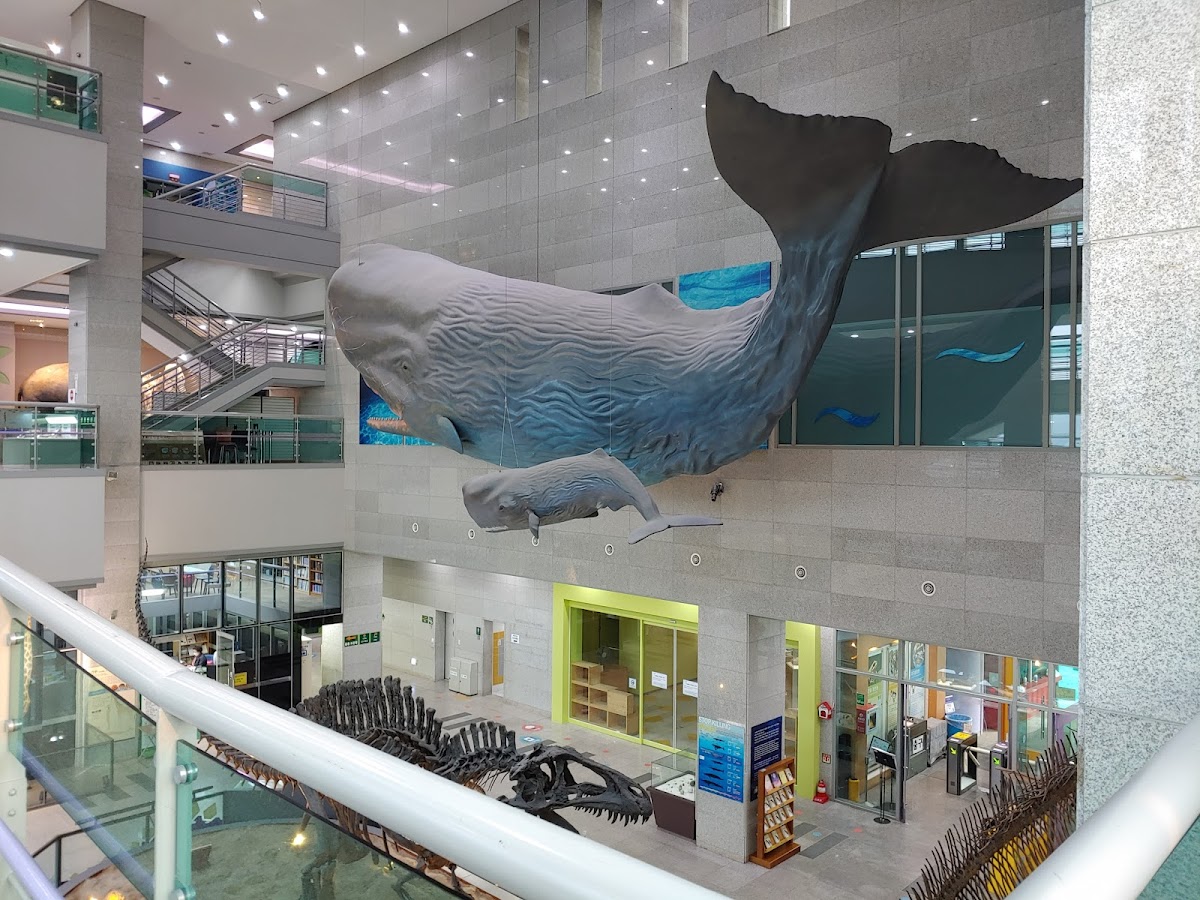
The museum's design reflects its purpose, with curved lines and fluid forms evoking geological strata and the continuous flow of life. A grand central atrium welcomes visitors, featuring a towering dinosaur skeleton illuminated by natural light. The visitor's path is a chronological journey, starting from the 3rd-floor Earth Environment Hall, progressing to the 2nd-floor Life Evolution Hall, and concluding at the 1st-floor Human and Nature Hall. A spiral ramp connects the floors, symbolizing the Earth's rings of time, while offering views of modern Seoul.
Key Exhibits and Collections
The 3rd-floor explores the birth of the universe and solar system, with exhibits including meteorite fragments and moon rock samples, alongside details of the Korean Peninsula's geological history. The 2nd-floor features a massive Acrocanthosaurus skeleton and Korean dinosaur footprint fossils, illustrating the evolution of life from microorganisms to complex organisms.
The 1st-floor presents intricate dioramas of diverse ecosystems, highlighting biodiversity and food chains. This section also addresses critical environmental issues like global warming and pollution, prompting reflection on human responsibility. The museum's extensive collection of fossils, minerals, taxidermied animals, and celestial objects supports both public education and scientific research, making Earth's complex history accessible and engaging for all ages.
Visiting Information (As of June 16, 2026)
- Location: 51 Yeonhui-ro 32-gil, Seodaemun-gu, Seoul, South Korea.
- Operating Hours: Closed Mondays. Tue-Fri: 9:00 AM - 5:00 PM. Sat-Sun: 9:00 AM - 6:00 PM. Last admission one hour before closing. Check official website for updates.
- Admission Fees: Adults 7,000 KRW, Youth (13-18) 5,000 KRW, Children (4-12) 3,000 KRW.
- Recommended Visit Duration: Approximately 2 hours.
- Transportation: Accessible by public transport (Subway Line 3 to Hongje or Myongji University Station, then bus). Limited parking available.
- Nearby Attractions: Ansan Jarak-gil for nature walks, and Yeonhui-dong for cafes, restaurants, and galleries.
Visitor Info
| Location | Translating |
| Hours | 09:00 - 18:00 (Mon closed) |
| Admission | Translating |
| Annual Visitors | Translating |
| Estimated Visit | 2hr |