From Paris's Left Bank to the Right, A World-Class Museum Stroll Along the Seine
From Paris's Left Bank to the Right, A World-Class Museum Stroll Along the Seine
A Museum Stroll Along the Seine: From Left Bank to Right Bank
This report details a museum exploration conducted between June 16 and 20, 2026, covering major art institutions situated along the Seine River in Paris. The recommended itinerary begins at the Musée d'Orsay, proceeds along the Seine embankment past the Louvre Museum, through the Le Marais district, and concludes at the Centre Pompidou.
This journey typically requires two full days for comprehensive visits, with an estimated budget of 150-250 euros per person. Spring (April-June) or autumn (September-October) are ideal seasons for comfortable walking. While primarily a walking tour, metro or bus transport can be utilized as needed.
Musée d'Orsay: A Former Railway Station on the Left Bank
The Musée d'Orsay is located at 1 Rue de la Légion d'Honneur, 75007 Paris, on the Left Bank of the Seine. It is easily accessible from the RER C Musée d'Orsay station or Metro Line 12 Solférino station. This magnificent building, originally a railway station, now stands as a museum, harmonizing with the historic Parisian cityscape.
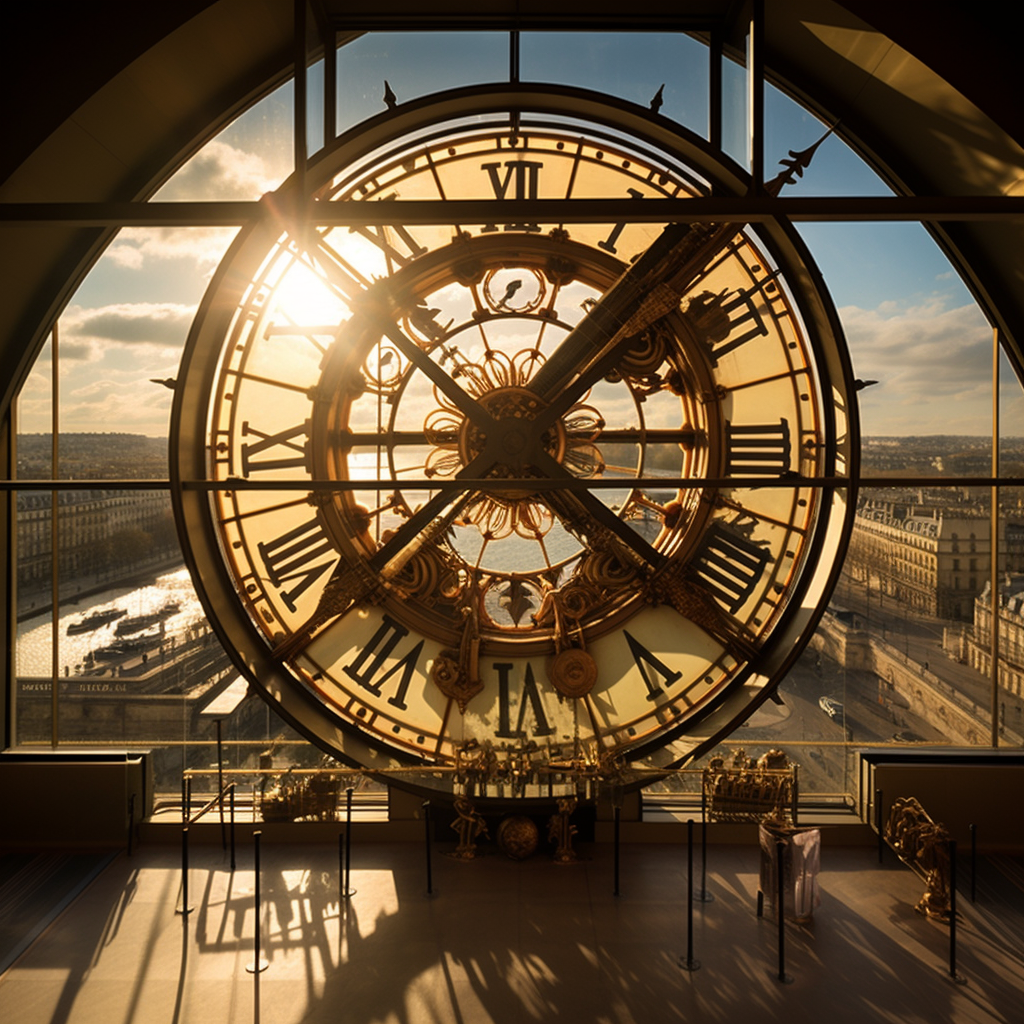
Constructed in 1900 for the Paris Universal Exhibition, the Gare d'Orsay featured grand arched ceilings, a monumental clock tower, and a glass roof. After its operational life as a train station concluded, it faced demolition before being transformed into a museum in 1986 under the vision of architect Gae Aulenti.
Collections and Spaces at Musée d'Orsay
The Musée d'Orsay houses approximately 3,000 artworks, primarily focusing on Impressionist and Post-Impressionist masterpieces from 1848 to 1914. The collection includes works by Claude Monet, Pierre-Auguste Renoir, Edgar Degas, and Vincent van Gogh. Notable pieces include Jean-François Millet's <The Angelus> and Gustave Courbet's <A Burial at Ornans>, alongside Monet's <Water Lilies> series and Renoir's <Bal du moulin de la Galette>.
A highlight of the museum is the colossal clock window on the fifth floor, which offers a unique framed view of the Sacré-Cœur Basilica on Montmartre Hill. The central hall, once train platforms, is now a gallery bathed in natural light from the glass roof, showcasing a blend of industrial heritage and artistic display.
Journeying to the Right Bank: The Centre Pompidou
After visiting the Musée d'Orsay, the recommended route involves a walk along the Seine towards the Right Bank, passing the Louvre Museum, and continuing into the Le Marais district to reach the Centre Pompidou. This segment offers scenic views of Parisian landmarks.
The Centre Pompidou, situated at 55 Rue Rambuteau, 75004 Paris, is a distinctive architectural landmark in the Le Marais district. Opened in 1977, its radical design, with all functional elements like pipes, ducts, and escalators exposed on the exterior, initially sparked controversy but has since become an iconic symbol of modern architecture.
Centre Pompidou: A Hub for Modern and Contemporary Art
The Centre Pompidou functions as a multidisciplinary cultural complex, housing the National Museum of Modern Art (Musée National d'Art Moderne), a public library, an industrial design center, and a music and acoustic research institute. It serves as a vital center for exploring 20th and 21st-century art.
Its extensive collection comprises approximately 75,000 works, ranging from masterpieces by Pablo Picasso, Henri Matisse, and Wassily Kandinsky to experimental pieces by contemporary artists. Key artworks include Henri Matisse's <Woman in a Romanian Blouse>, Pablo Picasso's <Man with a Guitar>, Salvador Dalí's <Sleep>, and René Magritte's <The Two Mysteries>. The transparent external escalators provide panoramic views of Paris as visitors ascend through the building.
Visitor Information
- Musée d'Orsay Admission: Adult 16€, under 18 free. Free on the first Sunday of each month.
- Musée d'Orsay Hours: Closed Mondays. Tue-Wed 09:30-18:00, Thu 09:30-21:45, Fri-Sun 09:30-18:00.
- Musée d'Orsay Transport: RER C Musée d'Orsay station or Metro Line 12 Solférino station.
- Centre Pompidou Status: The main building is currently closed for long-term renovation. Full closure from late September 2025, with reopening planned for 2030.
- Centre Pompidou Admission: Not applicable due to long-term closure.
- Centre Pompidou Transport: Metro Rambuteau station or Hôtel de Ville station (5-minute walk).
- Official Information: For current programs and collection displays outside the main building, consult the official website (https://www.centrepompidou.fr/en/centre-pompidou-is-transforming-itself/renovation-project-centre-pompidou-2030).
Visitor Info
| Estimated Visit | Translating |
| Translating | Translating |
| Translating | Translating |
| Recommended Route | Translating |
| Transport | Translating |