Beyond the Louvre: An Artistic Promenade Awakening Parisian Sensibilities – Hidden Gem Museums
Beyond the Louvre: An Artistic Promenade Awakening Parisian Sensibilities – Hidden Gem Museums
Parisian Art Walk: Beyond the Louvre's Grandeur
This report details a field trip conducted from June 16 to 20, 2026, focusing on three prominent Parisian museums beyond the Louvre: the Musée d'Orsay, the Musée de l'Orangerie, and the Centre Pompidou. These institutions collectively cover a significant span of art history, from the mid-19th century to contemporary works, enriching Paris's cultural landscape. The visit aimed to document each museum's location, historical context, architectural distinctiveness, key collections, and visitor flow.
Musée d'Orsay: A Former Railway Station on the Seine
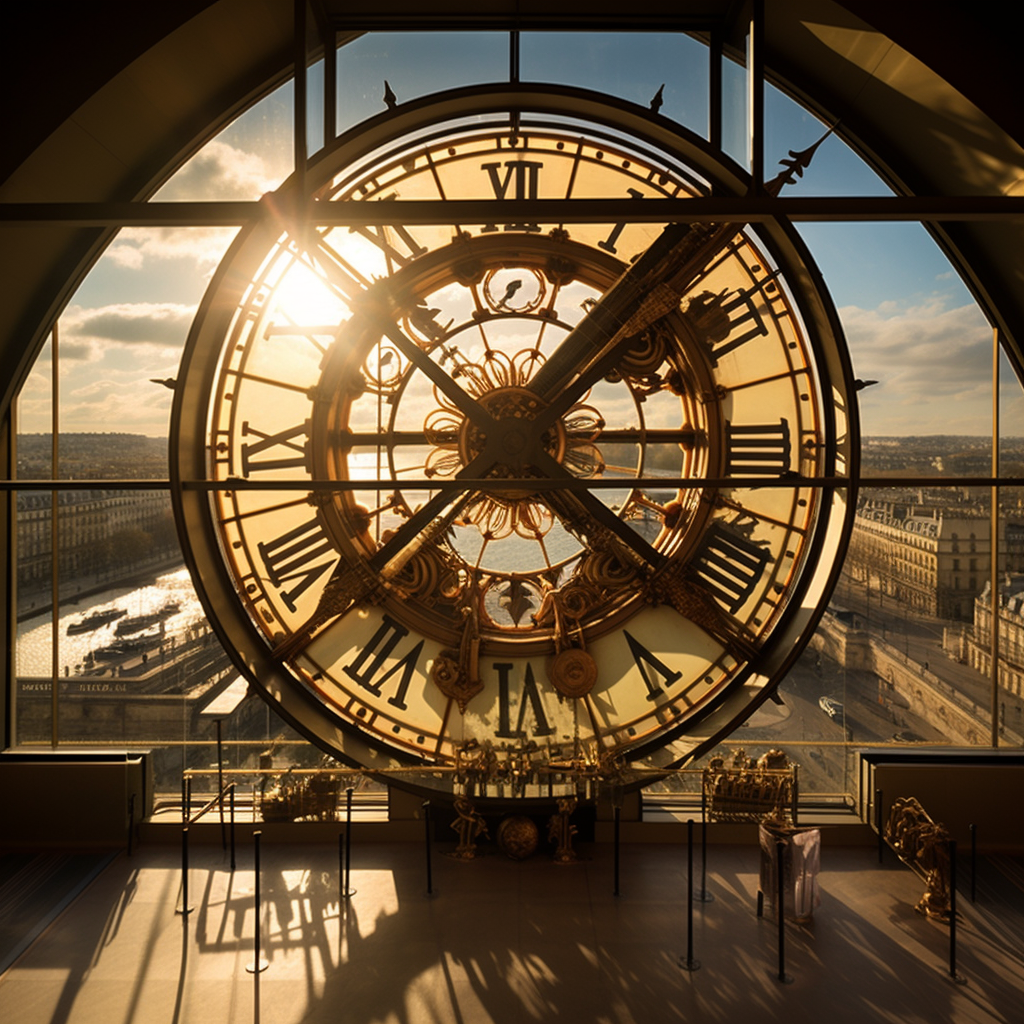
The Musée d'Orsay is located at 1 Rue de la Légion d'Honneur, 75007 Paris, on the left bank of the Seine River, directly opposite the Louvre Museum and Tuileries Garden. Originally built as the Gare d'Orsay for the 1900 Paris Universal Exhibition, this grand Beaux-Arts structure, designed by architect Victor Laloux, served as a major railway station until 1939. Its impressive glass roof, iron framework, and iconic clock tower are remnants of its industrial past. In 1986, after extensive renovation by architect Gae Aulenti, it reopened as a museum dedicated to art from 1848 to 1914, bridging the gap between the Louvre's classical collections and the Centre Pompidou's modern art.
The museum houses over 3,000 works, primarily focusing on Impressionist and Post-Impressionist masterpieces. Key artists in its collection include Claude Monet, Pierre-Auguste Renoir, Edgar Degas, Vincent van Gogh (including 'Starry Night Over the Rhône'), Paul Cézanne, and Édouard Manet. The collection spans paintings, sculptures, photography, and decorative arts, offering a comprehensive view of artistic and societal changes during this pivotal period. The museum's layout, across three main floors, allows visitors to explore different art movements, culminating in panoramic views of Paris from behind the iconic clock face on the top floor.
Musée de l'Orangerie: Monet's Water Lilies in the Tuileries Garden
Situated at 20 Quai des Tuileries, 75001 Paris, within the western part of the Tuileries Garden, the Musée de l'Orangerie was originally an 18th-century orangery for the Tuileries Palace. It was transformed and opened as a museum in 1927, specifically to house Claude Monet's monumental 'Water Lilies' (Nymphéas) series. Monet himself was deeply involved in the design of the two oval exhibition rooms on the ground floor, ensuring the natural light and continuous display would create an immersive experience. These eight large canvases, each up to 17 meters long, encircle the viewer, creating a sense of being enveloped by the tranquil pond at Giverny.
The museum's basement level features the Jean Walter and Paul Guillaume collection, presenting a diverse range of works from the early 20th century. This collection includes pieces by Pierre-Auguste Renoir, Paul Cézanne, Henri Matisse, Pablo Picasso, Amedeo Modigliani, and Henri Rousseau, offering a vibrant contrast to the meditative calm of Monet's 'Water Lilies'. The Musée de l'Orangerie is conveniently located a short walk from the Musée d'Orsay, making them a popular combined itinerary.
Centre Pompidou: A High-Tech Architectural Statement in Le Marais
The Centre Pompidou, located at 55 Rue Rambuteau, 75004 Paris, stands as a striking example of high-tech architecture in the historic Le Marais district. Opened in 1977 and designed by architects Renzo Piano and Richard Rogers, its radical 'inside-out' design exposes all functional elements—pipes, ducts, and escalators—on the exterior, color-coded for their purpose (blue for air conditioning, yellow for electricity, green for plumbing, red for circulation). This innovative approach freed up the interior space, allowing for flexible exhibition layouts.
The Centre Pompidou houses the National Museum of Modern Art, one of Europe's largest collections of 20th and 21st-century art, with approximately 75,000 works. Its collection includes masterpieces by Pablo Picasso, Henri Matisse, Wassily Kandinsky, Andy Warhol, and Jackson Pollock, covering movements from Fauvism and Cubism to Pop Art and Minimalism. The external tube-like escalators offer visitors panoramic views of Paris as they ascend. Beyond the museum, it functions as a comprehensive cultural complex, including a public library, an industrial design center, and a music research institute.
Centre Pompidou: Upcoming Renovation and Closure
The main building of the Centre Pompidou is slated for a major renovation project. It will undergo a full closure starting in late September 2025, with an anticipated reopening in 2030. During this period, parts of the Centre Pompidou's collection and programs may be exhibited at external or partner venues. Visitors are strongly advised to check the official website for the latest information regarding exhibitions and operational status before planning a visit.
Visitor Information
- Musée d'Orsay: Located at 1 Rue de la Légion d'Honneur, 75007 Paris. Open Tue-Sun (Thu extended hours), Mon closed. Adult admission €16. Recommended visit time: 3-4 hours. Advance online booking is advised.
- Musée de l'Orangerie: Located at 20 Quai des Tuileries, 75001 Paris. Open Mon, Wed-Sun, Tue closed. Adult admission €12.5. Recommended visit time: 1-2 hours. Advance online booking is advised.
- Centre Pompidou: Located at 55 Rue Rambuteau, 75004 Paris. Currently undergoing long-term renovation closure from late September 2025, reopening in 2030. Please check the official website for updates on programs and temporary exhibitions.
Visitor Info
| Estimated Visit | Translating |
| Translating | Translating |
| Recommended Route | Translating |