The National Art Center, Tokyo — A Feast of Art, Embracing Inspiration
The National Art Center, Tokyo – A Wave of Artistic Inspiration within Timeless Architectural Aesthetics
Rising majestically in the vibrant heart of Roppongi, Tokyo, The National Art Center, Tokyo (NACT) is more than just a cultural facility; it is a colossal, living heart of art. As its name suggests, NACT transcends the mere preservation of past heritage, continuously exploring the possibilities of 'new' era art, leaving a profound impression on its visitors. With an astounding rating of 4.4 from 21,263 reviews, NACT has spearheaded the dynamic currents of Japanese contemporary art since its opening in 2007, exuding a magnetic charm that draws art lovers from around the globe.
A Poetic Dance of Glass and Steel: Kisho Kurokawa's Masterpiece
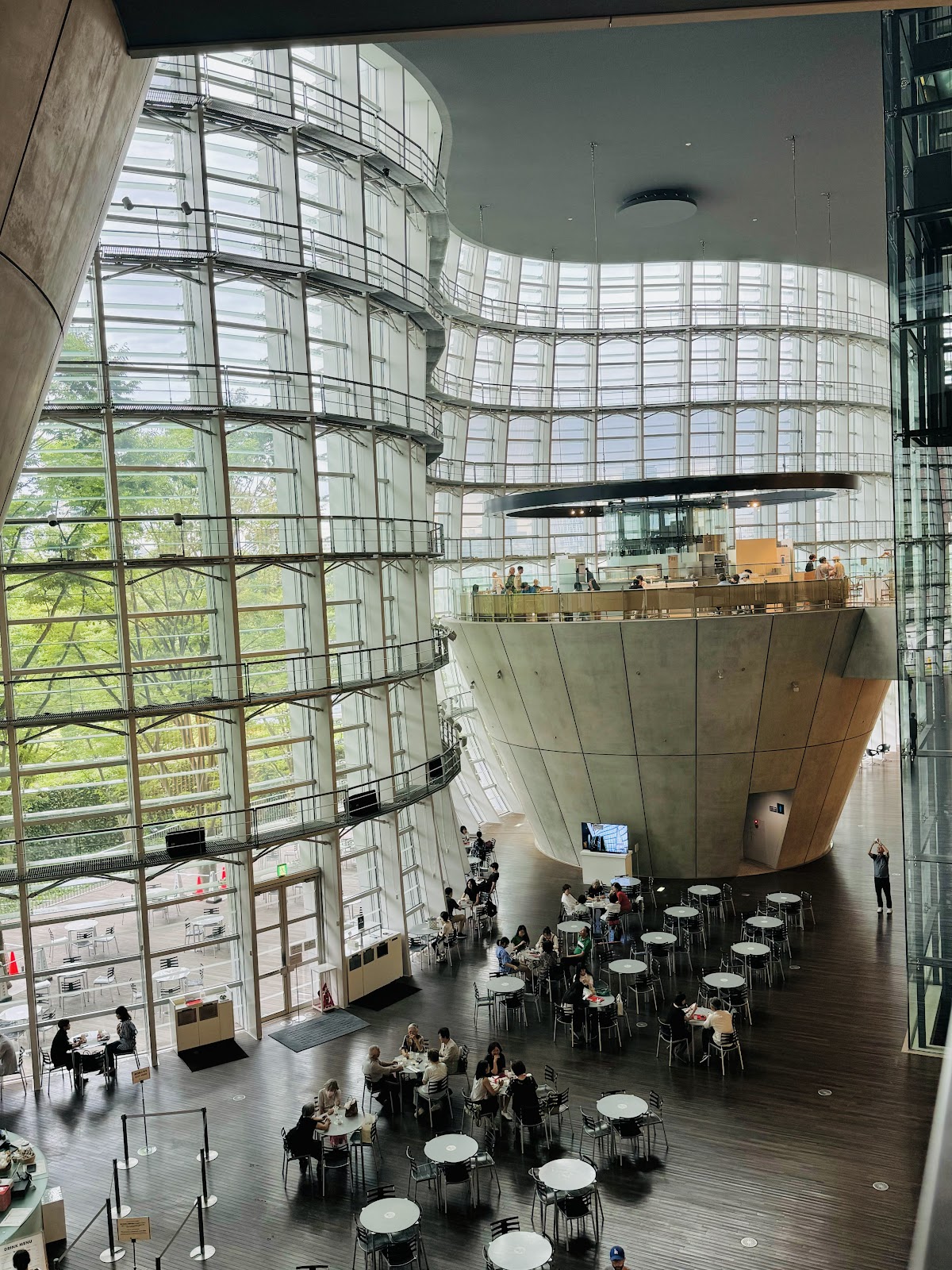
The National Art Center itself is already a monumental work of art. Conceived by the late world-renowned architect Kisho Kurokawa, this building is celebrated as a masterpiece encapsulating his original 'Metabolism' architectural philosophy. Its grand glass facade, gracefully undulating like colossal waves, creates a striking contrast with the surrounding urban landscape, while simultaneously radiating a mysterious light that changes moment by moment with the sun's reflection. Particularly, the massive glass conical atriums, appearing to sprout from deep within the earth like the roots of giant trees, overwhelm the viewer's gaze, inspiring a sense of awe. This design reinterprets the aesthetic of Japanese architecture, which seeks harmony with nature, in a modern context, giving the impression of an organic entity deeply rooted in the city.
The moment one steps inside, visitors are enveloped by an overwhelming sense of openness and an unexpected tranquility. The four-story high atrium, soaring upwards, is bathed in natural light streaming through expansive glass panels, creating an illusion of being inside a colossal transparent membrane. The interplay of soft shadows cast by the glass and the brightly illuminated spaces fosters an ideal environment for appreciating art, instilling artistic inspiration in the hearts of visitors. The gentle murmur of conversations and footsteps echoing subtly from the ceiling reverberates softly through the high ceilings and glass walls, infusing the space with vitality. The museum's vast and flexible exhibition spaces are designed to accommodate diverse forms and aesthetics of contemporary art, thoughtfully allowing visitors to interact with artworks along a comfortable and unhurried path. Thus, NACT's architecture itself offers a holistic artistic experience, where light, space, and human experience converge.
The Dynamics of No Permanent Collection: An Ever-Evolving Artistic Current
One of the most distinctive features of NACT is its lack of a permanent collection for display. Instead, it focuses on continuously presenting timely and high-quality temporary exhibitions through close collaboration with esteemed art organizations both domestically and internationally. This operational model ensures that the museum never stagnates, constantly presenting 'new' artistic discourse and trends, and evolving in step with the changing times. The excitement of encountering entirely new exhibitions with each visit becomes a compelling reason to return.
Over the years, NACT has hosted a wide range of exhibitions, from masterpieces by art historical giants to the cutting edge of contemporary art, earning widespread acclaim from countless visitors. The 'Henri Matisse: Lifework' exhibition, which delved deep into Matisse's exploration of color and form, allowed visitors to feel his passionate brushstrokes and reverence for life. 'Egyptian Mummies: The Mystery of a Thousand Years' offered a glimpse into millennia of history through enigmatic artifacts of ancient Egyptian civilization, providing an opportunity for contemplation on humanity's timeless wisdom and mortality. Furthermore, 'The Birth of Beauty,' highlighting the delicate yet fervent beauty of French Romantic art, and 'Monet: Painting Light,' through which one could savor the essence of Impressionism via Claude Monet's series, were invaluable experiences that fostered a deep understanding of each era and culture, immersing visitors in the emotions that art bestows. Such exhibitions go beyond mere appreciation of artworks; they spark profound conversations that resonate with the spirit and sensibility of each period, leading us to reflect on our inner selves.
An Immersive Experience for the Senses: The Harmony of Space and Art
As one wanders through the museum's interior, the subtly modulated lighting and spatial arrangements in each exhibition room stimulate the visitor's senses, facilitating a deeper immersion into the artworks. Sometimes, soft, indirect lighting creates a tranquil atmosphere, inviting contemplation; at other times, intense spotlights highlight specific details of a work, leaving a powerful impression. The wide, unhurried pathways and natural flow of movement demonstrate a thoughtful consideration for visitors, allowing them ample time to linger before artworks and engage with art at their own pace. Even amidst a bustling crowd, one can feel a calm energy rather than commotion, a testament to the aesthetic power inherent in this space.
In particular, the moment of looking down from the 4th-floor atrium is an experience not to be missed. It feels like a miniature city spread across a vast glass canvas, or perhaps an abstract painting created by the interplay of art and architecture. Taking a moment to pause here, simultaneously experiencing Tokyo's skyline stretching beyond the glass and the grandeur of the museum's interior, creates an unforgettable memory. Under the soft sunlight, a moment of reflection over a fragrant cup of coffee, contemplating artistic inspiration, will be a sweet respite from the fatigues of travel.
Practical Advice for Your Tokyo Art Tour
Here are a few practical tips to enhance your visit to The National Art Center, Tokyo. Firstly, it is essential to check exhibition schedules on the official website in advance. As mentioned, NACT primarily hosts temporary exhibitions, meaning the content will vary entirely depending on your visit date. Especially for popular exhibitions, tickets may sell out early, so we strongly recommend booking online promptly if you have an interest in a specific show. On-site ticket purchases may involve long queues.
Secondly, the museum houses excellent facilities to enhance your visit. 'Salon de Thé Rondo,' nestled beneath the glass conical atrium, is a perfect spot for light meals or sweet desserts, offering a unique spatial experience. Furthermore, at 'Brasserie Paul,' located on the 3rd floor, you can savor refined French cuisine, adding a gourmet experience to your artistic journey. If you wish to cherish the memories of your exhibition experience, be sure to visit the souvenir shop, 'Souvenir Shop SOUVENIR FROM TOKYO.' Here, you'll find limited-edition goods related to the exhibitions, uniquely designed stationery, and special souvenirs reflecting the works of contemporary Japanese artists, making it an ideal place to find a cherished keepsake.
Thirdly, for a more leisurely visit, we recommend visiting on weekday mornings. Weekends and public holidays can be very crowded with both domestic and international visitors. The Roppongi area is a prime cultural and artistic hub in Tokyo, so combining your museum visit with exploring the surrounding area is an excellent plan. Within walking distance are 'Roppongi Hills' and 'Tokyo Midtown,' offering luxury shopping, dining at Michelin-starred restaurants, and exploring other contemporary art spaces like the Mori Art Museum, allowing you to enjoy a rich day-long experience. In particular, the night view of Tokyo from the observation deck of Mori Tower in Roppongi Hills will offer an unforgettable spectacle.
The National Art Center, Tokyo is not merely a place to view paintings; it is a destination that offers a unique experience of gaining new inspiration in a space where architecture and art harmoniously converge, discerning the currents of the times, and engaging in profound dialogue with our inner selves. If you wish to create a deeply moving and long-lasting memory during your trip to Tokyo, we sincerely recommend immersing yourself in the diverse charms of art here. Upon leaving the museum, your heart will be filled with the profound resonance that art provides, along with the wisdom to view the world through fresh eyes.
Visitor Info
| Admission | Varies by exhibition (Sun부 Free 전시 있음) |
| Hours | 10:00 - 18:00 (Fri요Sun, Sat요Sun, 공휴Sun은 20:00까지. 입장 마감은 폐관 30min 전) |
| Location | 7-22-2 Roppongi, Minato-ku, Tokyo 106-8558, Japan |
| Getting There | 도쿄 메트로 히비야선 롯폰기Stn 4a Exit walk 5min, 오에도선 롯폰기Stn 7번 Exit walk 4min |
| Estimated Visit | 2-3hr (관심 있는 전시 규모에 따라 다름) |