A Journey Through Time: Exploring the Israel Museum, Jerusalem
A Journey Through Time: Exploring the Israel Museum, Jerusalem
The Israel Museum, Jerusalem: A National Repository of History and Art
The Israel Museum, located at 71117, Jerusalem, Israel, serves as the national museum of Israel. It is a comprehensive repository of the nation's cultural heritage and a significant cultural institution on the global stage. The museum's architecture is designed to harmonize with Jerusalem's hilly terrain, featuring a low profile that blends into the landscape.
Architectural Icon: The Shrine of the Book
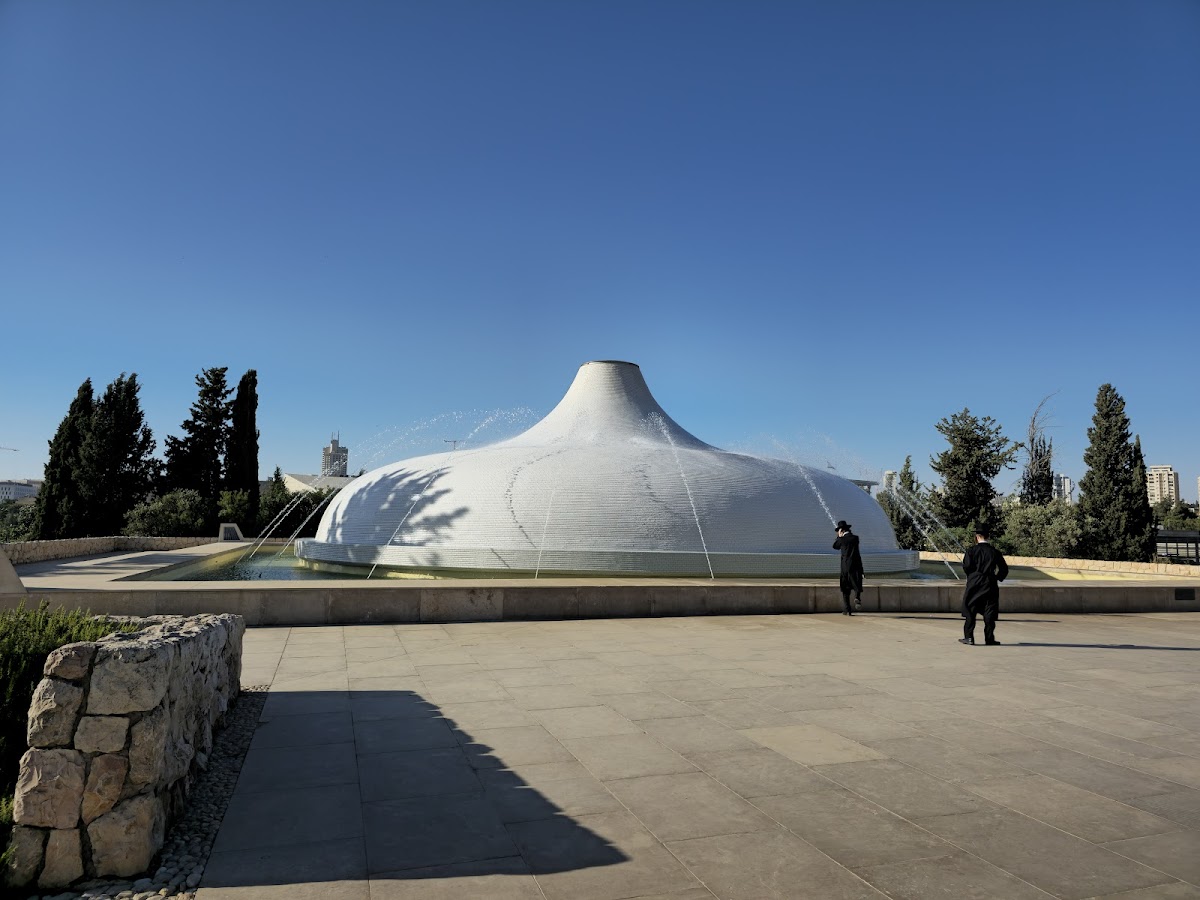
A prominent feature of the museum is the Shrine of the Book, which houses the ancient Dead Sea Scrolls. Its distinctive white dome, shaped like the lids of the jars in which the scrolls were found in the Qumran caves, stands in stark contrast to an adjacent black basalt wall. This architectural juxtaposition symbolizes the 'Sons of Light' and 'Sons of Darkness' as described in ancient Jewish texts. Inside, a cave-like passage leads visitors to the preserved scrolls, illuminated by subtle natural light filtering through the dome.
Vast Collections: From Prehistory to Modernity
The museum's vast collections span archaeology, fine arts, and Jewish ethnography, encompassing artifacts from prehistoric times to the present day. It holds particular strengths in the archaeology of the Holy Land and Jewish art and life. Key archaeological exhibits trace the history of the region through Canaanite, Egyptian, Mesopotamian, Roman, and Byzantine periods, illustrating Israel's role as a crossroads of civilizations.
The Dead Sea Scrolls: Ancient Wisdom Preserved
The Dead Sea Scrolls are undoubtedly the highlight of the museum. These ancient manuscripts, discovered in the Qumran caves, are over 2,000 years old and offer crucial insights into biblical studies and the diverse Jewish sects of the 1st century CE. The Isaiah Scroll, one of the best-preserved, showcases ancient Hebrew script meticulously penned on parchment, providing a tangible link to ancient Jewish faith and wisdom.
Jewish Ethnography: A Global Diaspora
The Jewish Ethnography wing features reconstructed interiors of synagogues from various Jewish communities around the world, including Cochin (India), Venice (Italy), and Horb (Germany). These exhibits vividly demonstrate how Jewish identity has been maintained and evolved across different cultures and geographical locations, highlighting the rich diversity within the Jewish diaspora.
Art and Gardens: A Dialogue Across Time
Beyond its historical artifacts, the Israel Museum also houses a significant collection of fine art, from ancient pieces to works by contemporary masters. The Billy Rose Art Garden, an outdoor sculpture park, presents modern sculptures in conversation with the ancient landscape of Jerusalem. The museum's layout encourages a journey through time, allowing visitors to connect with the past, understand the present, and contemplate the future.
Surrounding Attractions and Visit Information
Adjacent to the Israel Museum is the Bible Lands Museum Jerusalem, offering a deeper dive into the biblical era. Nearby, the Knesset (Israeli Parliament) and the Supreme Court represent modern Israeli democracy, contrasting with the museum's ancient narratives. The beautiful Rose Garden (Gan HaVradim) provides a peaceful respite.
- Operating Hours:
- Tuesday: 10:00 AM – 9:00 PM (extended hours)
- Friday: 10:00 AM – 2:00 PM
- Sunday, Monday, Wednesday, Thursday, Saturday: 10:00 AM – 5:00 PM
- Admission: Adult 59 ILS, Student/Senior 39 ILS, Children free (subject to change, website check recommended)
- Transportation: Accessible by bus (e.g., lines 14, 24, 32, 32A) or light rail from central Jerusalem, followed by a short walk.
- Recommended Visit Time: At least 3-4 hours for major exhibits; a full day for comprehensive viewing.
Visitor Info
| Location | 71117, Jerusalem, Israel |
| Hours | Translating |
| Admission | Translating |
| Getting There | Translating |
| Estimated Visit | Translating |
Featured Works

아르만 바르토스 & 프레데릭 키슬러 (Armand Bartos & Frederick Kiesler)
책의 성소 (Shrine of the Book)
사해 문서를 보관하는 상징적 건축물. 흰 돔 형태는 쿰란 항아리 뚜껑을 형상화.

미카엘 아비-요나 (Michael Avi-Yonah)
제2성전 모형 (Second Temple Model)
헤롯 대왕 시대의 예루살렘 제2성전을 1:50 축소 모형으로 재현.

미상 (쿰란 공동체) (Unknown (Qumran))
사해 문서 (Dead Sea Scrolls)
기원전 2세기-기원후 1세기. 현존하는 가장 오래된 성경 필사본.