The State Hermitage — 3 Million Masterpieces Inside the Winter Palace
The State Hermitage — 3 Million Masterpieces Inside the Winter Palace
The State Hermitage Museum: A Grand Complex on Palace Square
The State Hermitage Museum, located on Palace Square in St. Petersburg, Russia, is one of the world's largest and oldest museums. It comprises five interconnected historic buildings, with the magnificent Winter Palace as its centerpiece. Situated along the Neva River, the museum forms a crucial part of the city's historic landscape, a short 5-minute walk from Admiralteyskaya Metro Station.
Beyond being a mere art gallery, the Hermitage is a timeless repository of inspiration, housing over three million works of art. The grandeur of the Winter Palace and its surrounding structures are architectural masterpieces in themselves, offering an immersive experience into centuries of human creativity. With over 250 years of history, the Hermitage Museum stands as a testament to humanity's artistic legacy.
The Winter Palace: A Rococo Masterpiece (1754-1762)
The Winter Palace, the primary building of the Hermitage complex, was constructed between 1754 and 1762. Designed by the renowned architect Bartolomeo Rastrelli, it is a magnificent example of Rococo architecture. Rastrelli, a master of Russian Baroque, imbued the palace with elaborate decorations and opulent details, reflecting its role as the official residence of the Russian emperors and a symbol of imperial power.
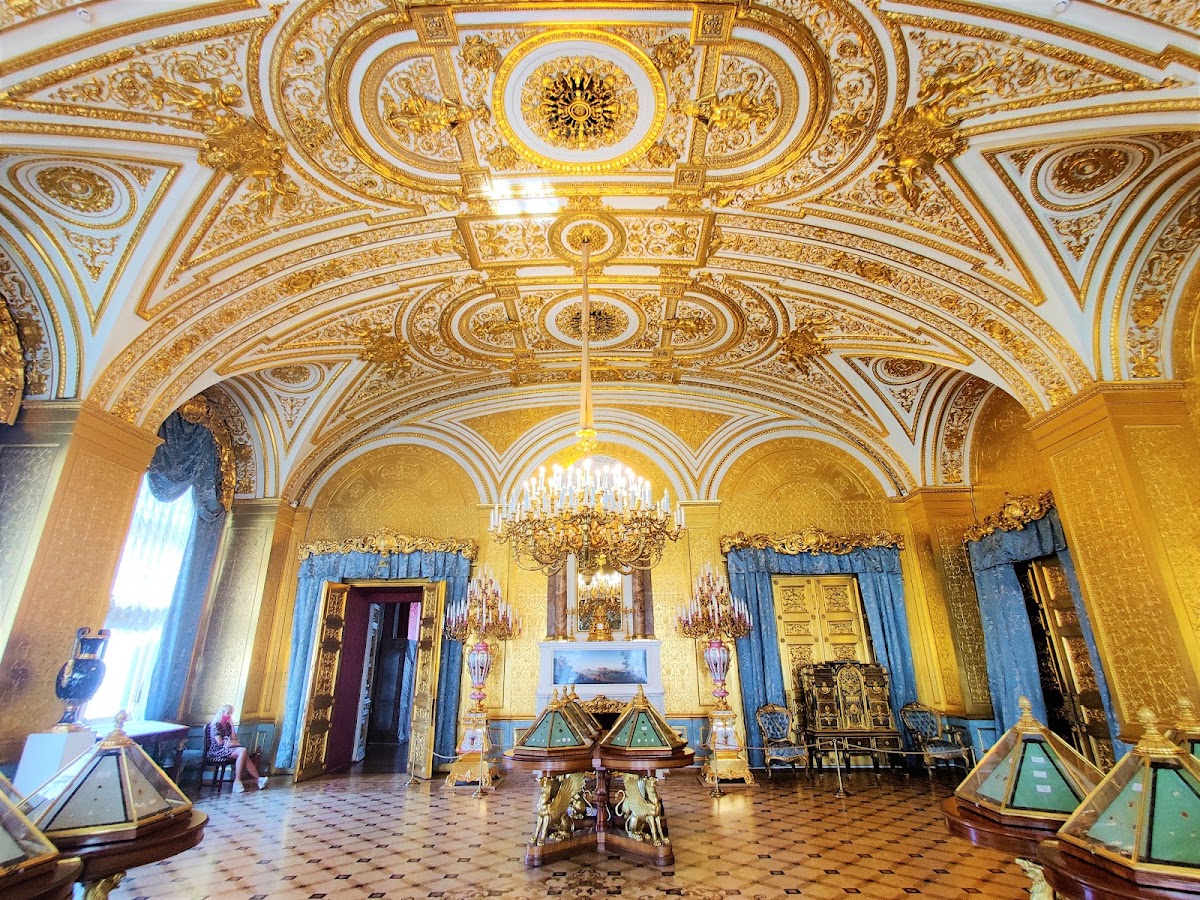
Its distinctive green and white facade, adorned with intricate sculptures and gilded accents, creates a striking visual. The interiors are equally lavish, featuring marble, frescoes, and tapestries. Exploring the palace alone can take half a day, as its architectural splendor is as much a part of the experience as the art it houses.
Catherine the Great's Founding Collection (1764)
The Hermitage Museum's origins trace back to 1764 when Catherine the Great began her private art collection. Her initial acquisition of 225 Flemish and Dutch paintings from the Berlin merchant Johann Gotzkowsky marked the beginning of her profound passion for art. This collection reflected her personal taste and her ambition to elevate Russia's cultural standing.
Catherine designated a secluded part of the palace as her private gallery, naming it 'l'ermitage,' meaning 'hermitage' or 'retreat' in French. This private sanctuary, where she could quietly contemplate art away from public view, laid the foundation for what would become one of the world's largest museums.
Public Opening and Expansion (1852)
In 1852, under the decree of Emperor Nicholas I, the Hermitage collection was opened to the public. This decision marked a significant shift, transforming the imperial collection into a national treasure accessible to all Russians. Following its public debut, the museum rapidly expanded its holdings, acquiring a diverse range of artworks.
Nicholas I actively supported the museum's growth, overseeing the construction of new wings and the renovation of existing structures. During this period, the Hermitage began to solidify its identity as a leading national art museum, steadily enriching its collection with European masterpieces and establishing itself as a cultural beacon.
Nationalization Post-1917 Revolution
The 1917 Russian Revolution brought about a profound transformation for the Hermitage Museum. Following the revolution, the Winter Palace and its entire art collection were nationalized, becoming the property of the Russian state. This pivotal event ensured the preservation of the imperial art collection as a cultural heritage for all citizens.
Post-nationalization, the museum's collection expanded dramatically by incorporating artworks from other imperial palaces and aristocratic estates. This influx of art solidified the Hermitage's status as one of the world's largest national museums. Despite the tumultuous early 20th century, the museum continued its mission to safeguard and showcase humanity's artistic legacy.
A Complex of Five Historic Buildings
The Hermitage Museum is a sprawling complex centered around the Winter Palace, encompassing four other historic buildings: the Small Hermitage, Old Hermitage, New Hermitage, and the Hermitage Theatre. These structures are interconnected, allowing visitors to move seamlessly between them and explore the vast collections. Each building boasts distinct architectural styles and interior decorations, reflecting its historical period and purpose.
This integrated design enhances the museum's grandeur and depth. Each building holds significant historical value, showcasing the architectural prowess and artistic tastes of the Russian Empire. Together, these five buildings serve not only as exhibition spaces but also as living testaments to Russian history and architectural art.
A Vast Collection of 3 Million Items
The Hermitage Museum boasts an immense collection of approximately three million items, spanning the entirety of human art history. Its holdings range from prehistoric artifacts, ancient Egyptian, Greek, and Roman antiquities, to medieval European art, Renaissance, Baroque, Rococo masterpieces, 19th-century Impressionist and Post-Impressionist works, and 20th-century modern art. This vast scope firmly places it among the world's top three museums, alongside the Louvre and the British Museum.
The collection includes paintings, sculptures, drawings, prints, decorative arts, archaeological finds, weaponry, coins, and medals. Each gallery is meticulously curated to focus on specific eras, regions, or art movements, offering visitors an unparalleled journey through the great moments of human civilization. This comprehensive collection truly makes the Hermitage a treasure trove of global cultural heritage.
Masterpieces of the Renaissance: Leonardo da Vinci and Raphael
The Hermitage Museum proudly houses masterpieces by two of the greatest Renaissance artists, Leonardo da Vinci and Raphael. Notably, it possesses two of the approximately fifteen surviving authentic works by Leonardo: the Benois Madonna and the Madonna Litta, displayed together in one room. These two paintings offer crucial insights into Leonardo's early and middle period styles.
Raphael's early tondo, the Conestabile Madonna, is another significant piece in the Hermitage's collection. This work, created in Raphael's early twenties, showcases his delicate expression and perfect composition, embodying the ideal beauty of Renaissance art. These works represent the pinnacle of Renaissance artistic achievement and are essential viewing points within the museum.
Dutch Golden Age: Rembrandt and Caravaggio
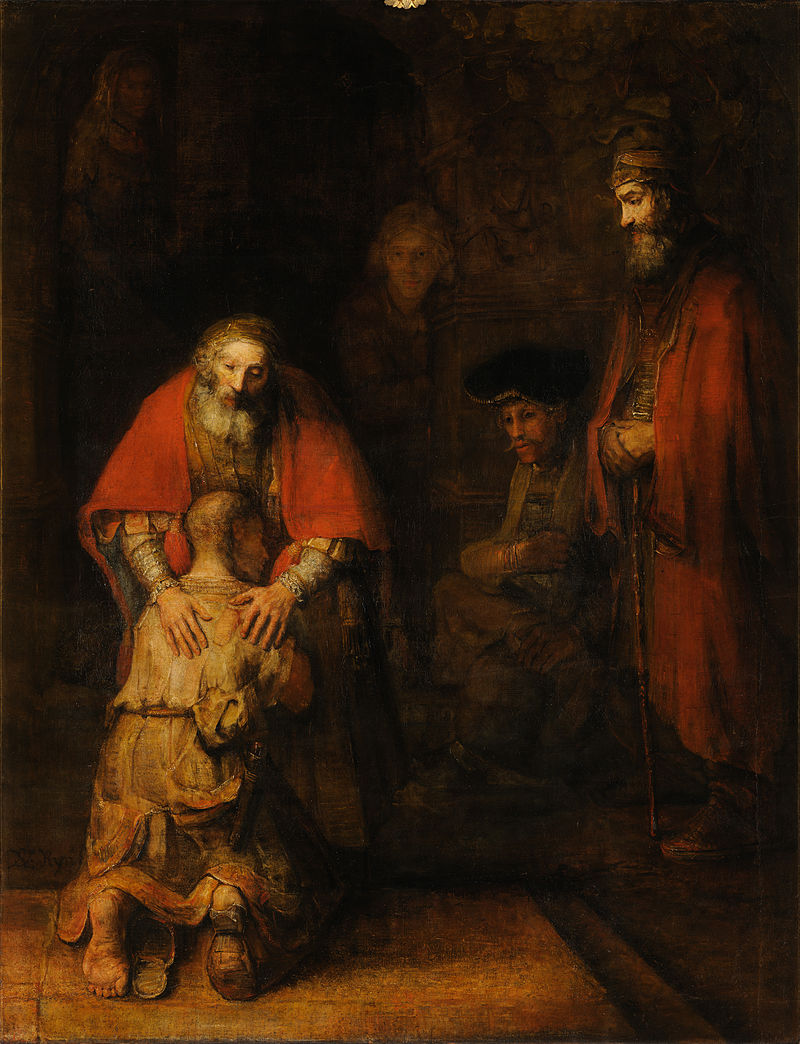
Rembrandt's iconic masterpiece, The Return of the Prodigal Son, is one of the most important works in the Hermitage Museum. This late-period painting by the Dutch Golden Age master dramatically uses light and shadow to convey profound themes of forgiveness and love, showcasing his artistic depth and moving many visitors deeply.
Caravaggio's The Lute Player, a seminal work by the pioneer of Italian Baroque painting, is also a highlight. This painting is frequently cited when studying tenebrism, a technique that uses stark contrasts of light and dark to emphasize the emotions and vividness of its subjects. The works of Rembrandt and Caravaggio are crucial for understanding significant movements in European painting history.
20th-Century Modernism: Matisse and Impressionists
The Hermitage Museum also holds a substantial collection of significant 20th-century modernist art. Henri Matisse's monumental wall murals, Dance and Music, commissioned by the businessman Sergei Shchukin, are celebrated as symbols of the 20th-century color revolution. These works, with their vibrant colors and simplified forms, opened new horizons in modern art.
Across Palace Square, the fourth floor of the General Staff Building houses a concentrated collection of masterpieces by Impressionist and Post-Impressionist artists such as Claude Monet, Paul Cézanne, Paul Gauguin, and Pablo Picasso. This space provides a comprehensive overview of the crucial artistic movements in Europe from the late 19th to early 20th centuries.
Navigating the Museum: Architecture as Art
With over 400 galleries, it is physically impossible to see everything in the Hermitage Museum in a single day. For an efficient visit, it is advisable to prioritize key artists like Leonardo da Vinci, Rembrandt, and Matisse, then consider a half-day itinerary that includes ancient Egyptian and Greek artifacts, and the Scythian Gold collection.
The museum's interior decorations are significant attractions in themselves. The Jordan Staircase in the Winter Palace, with its opulent marble and gilded adornments, exudes breathtaking beauty. Rooms like the Malachite Room and Malachite Hall, decorated with rare malachite, are works of art in their own right. Intricate mechanical art pieces, such as the Peacock Clock, are also not to be missed.
The Role of the General Staff Building: Impressionist Hub
The General Staff Building, located opposite Palace Square, serves as an important annex of the Hermitage Museum. Accessible with the same ticket as the Winter Palace, this building primarily houses 19th and early 20th-century Impressionist, Post-Impressionist, and early Modernist works. It offers a contemporary contrast to the classical art found in the main palace complex.
The General Staff Building typically sees fewer visitors than the main palace, allowing for a more relaxed viewing experience. It is an essential space for understanding key turning points in Western art history through works by artists like Monet, Cézanne, Gauguin, and Picasso. A visit to this building is highly recommended after exploring the main complex.
Visitor Information: Hours, Admission, and Transport
The State Hermitage Museum is closed on Mondays. It operates from 11:00 AM to 8:00 PM on Tuesdays, Fridays, and Saturdays, and from 11:00 AM to 6:00 PM on Wednesdays, Thursdays, and Sundays. Admission is 500 rubles (approximately $5 USD), with free entry on the third Thursday of each month. Online ticket purchase is recommended to reduce waiting times.
The museum is located at Palace Square, 2, Sankt-Peterburg, Russia, 190000. It is easily accessible, approximately a 5-minute walk from Admiralteyskaya Metro Station. A visit to see the highlights typically takes 4-5 hours, while a comprehensive exploration of the entire collection requires more than a full day. Audio guides are not available in Korean, so it is advisable to download an English or Russian app beforehand.
Visitor Info
| Admission | Translating |
| Hours | Translating |
| Location | Palace Square, 2, St Petersburg 190000 |
| Getting There | Translating |
| Estimated Visit | Translating |
| Tips | Translating |
Featured Works

Leonardo da Vinci
Madonna Litta
레오나르도 다 빈치(및 제자)의 작품으로, 아기 예수에게 젖을 물리는 성모 마리아를 묘사했습니다. 어머니의 자애로운 시선과 아기의 순수함이 완벽한 조화를 이루며, 르네상스 성모자상의 전형을 보여줍니다. 에르미타주 미술관이 소장한 두 점의 레오나르도 작품 중 하나로, 러시아 미술 컬렉션의 보물입니다.
Rembrandt
Return of the Prodigal Son
렘브란트의 말년 걸작으로, 성경 속 탕자의 귀환 이야기를 깊은 감동으로 표현했습니다. 누더기를 입고 무릎 꿇은 아들과 그를 포용하는 아버지의 손은 용서와 사랑의 보편적 상징이 되었습니다. 렘브란트 특유의 빛과 어둠의 드라마틱한 대비가 정점에 이른 작품으로, 에르미타주 미술관의 가장 감동적인 소장품입니다.