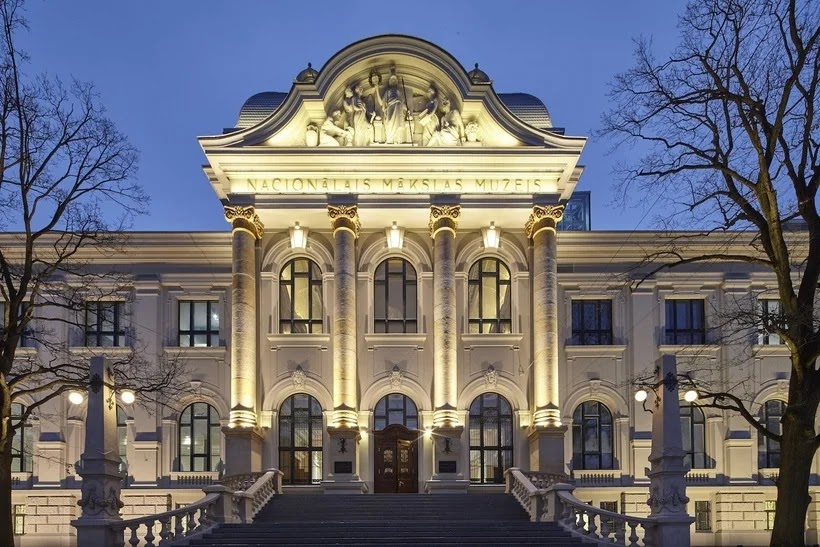
Whispers of the Baltic, Riga: An Ecstasy of Art Nouveau's Flourishing Art City
Whispers of the Baltic, Riga: An Ecstasy of Art Nouveau's Flourishing Art City
Riga's Art Nouveau Heart: The Latvian National Museum of Art
Riga, the capital of Latvia, stands as a prominent city on the Baltic Sea, renowned globally for its extensive Art Nouveau architecture, particularly from the late 19th to early 20th centuries. The city's Old Town is a UNESCO World Heritage site, and the Art Nouveau district, where the Latvian National Museum of Art is centrally located at Jaņa Rozentāla laukums 1, draws significant international attention.
The museum is conveniently situated a 10-15 minute walk east of Riga's Old Town and is also accessible on foot from Riga Central Station. Surrounded by wide boulevards like Kalpaka bulvāris and green parks, the museum's architecture harmonizes with its urban landscape, affirming its status as a key cultural institution within the city.
A 1905 Landmark: Symbol of Latvian Cultural Revival
Established in 1905, the Latvian National Museum of Art emerged from the late 19th-century Latvian national cultural revival movement. It was conceived as a vital national institution dedicated to preserving and exhibiting Latvia's rich artistic heritage. Historically, it holds the distinction of being the first building specifically constructed for a museum in the Baltic region, embodying Riga's artistic aspirations and technological prowess of the early 20th century.
Since its inception, the museum has systematically collected, researched, and exhibited Latvian art from the late 19th century to the present day. Its collections have expanded through various historical periods, vividly illustrating the evolution of Latvian art and the formation of its national identity. The museum's establishment played a crucial role in fostering national pride and solidifying Latvia's cultural self-awareness.
Architectural Splendor: A Grand Art Nouveau Exemplar
The museum building itself is considered one of the most magnificent examples of Riga's Art Nouveau style. Its exterior uniquely blends the grandeur of Baroque architecture with the fluid, elegant curves characteristic of Art Nouveau. The facade is adorned with intricately sculpted figures, botanical motifs, and colorful tile decorations, all reflecting the distinctive architectural trends of early 20th-century Riga.
Inside, a grand central hall and sweeping staircase create an imposing atmosphere. A glass dome ceiling floods the interior with natural light, illuminating delicate stained glass, murals, and sculptures that epitomize Art Nouveau aesthetics. Each floor's corridors and exhibition rooms offer distinct ambiances, making the building an artistic experience in itself.
2016 Reopening: Modernization and Renewal
In 2016, the Latvian National Museum of Art underwent a comprehensive renovation, reopening with modern facilities. This extensive refurbishment focused on enhancing the exhibition environment and improving visitor amenities. The project involved repairing aging infrastructure and incorporating contemporary technologies to optimize the preservation and display of its collections. The reopening solidified the museum's position as a central hub for Latvian art.
While modernizing, significant efforts were made to preserve the original Art Nouveau beauty and historical value of the 1905 building. New spaces for exhibitions and educational programs were added, and improved accessibility allows a broader audience to engage with Latvian art. This demonstrates the museum's commitment to serving as a cultural bridge between the past and the present.
Collection Highlights: Late 19th to Early 20th Century Latvian Art
The museum's collection vividly traces the evolution of Latvian art and identity from the mid-19th century to the present, with a particular emphasis on the 'Golden Age' of Latvian art from the late 19th to early 20th centuries. During periods of foreign domination, art served as a crucial medium for Latvians to express their national spirit and aspirations for independence.
Artists of this era moved beyond German and Russian artistic influences, embracing Latvia's unique nature, landscapes, national folklore, and lyrical sensibilities. They adopted various European art movements such as Symbolism, Realism, and Art Nouveau, reinterpreting them through a distinctly Latvian lens to forge a unique artistic identity. The museum's rich collection from this period vividly illustrates the formation and development of Latvian artistic 'nationality'.
Vilhelms Purvītis: Master of Latvian Landscape
The works of Vilhelms Purvītis hold a significant place within the Latvian National Museum of Art's collection. Recognized as a master of Latvian landscape painting, Purvītis captured the country's four seasons, particularly snow-covered winter scenes and early spring thaws, with exceptional light and color. His paintings convey a palpable vibrancy, making even the cold winter air feel alive.
Purvītis's notable work, 'Winter,' exemplifies how beautifully and poetically the harsh Latvian winter could be rendered through his brush. His art transcends mere landscape depiction, profoundly embodying the Latvian spirit and a deep affection for nature. This reflects a profound understanding and lyrical perspective on the Latvian natural world.
Jānis Rozentāls: Harmony of Symbolism and Art Nouveau
Jānis Rozentāls is another pivotal artist represented in the museum's collection. Influenced by Symbolism and Art Nouveau, he depicted Latvian life and mythology with a modern sensibility. His works often evoke a mysterious and dreamlike atmosphere, symbolically portraying the complex inner world of the Latvian intellectual class of his time.
Rozentāls's significant painting, 'Princess with a Monkey,' is characterized by the princess's delicate expression and attire, alongside the monkey's playful demeanor. This work invites diverse interpretations, leaving a lasting impression on viewers. Rozentāls's art encapsulates his dedication and passion in exploring Latvian selfhood and seeking new artistic languages at the intersection of tradition and modernity.
Journey of Latvian Artistic Spirit: Art's Role in Historical Context
The museum's collection also reveals the efforts of Latvian artists to preserve their identity during the somber period of Soviet occupation. Works from this era, sometimes metaphorically, sometimes intensely, depicted the nation's suffering and hope. These pieces serve as poignant evidence of how art resisted, documented, and offered hope amidst challenging historical contexts.
Furthermore, the modern and experimental works of Niklāvs Strunke, alongside numerous paintings by anonymous artists capturing the Baltic Sea's charm, attest to the diversity and richness of Latvian art. The museum functions as a valuable window into deeply understanding the lives, dreams, and reverence for nature held by the Latvian people.
Museum Flow and Visitor Experience: Exploring Art in Art Nouveau Spaces
The Latvian National Museum of Art provides a well-structured visitor flow, allowing a natural progression through the history of Latvian art. Visitors enter through the grand central hall and ascend and descend the Art Nouveau staircases to explore the exhibition rooms on each floor. The journey begins with early Latvian art from the late 19th century, moving chronologically through its 'Golden Age' to contemporary works, illustrating artistic evolution over time.
Each exhibition room is meticulously designed with lighting and spatial arrangements tailored to the historical context and artistic movement of the works displayed. The inherent beauty of the Art Nouveau architecture visually harmonizes with the exhibited artworks, providing an immersive artistic experience. The museum transcends a mere exhibition space, leaving a profound impression on visitors as a living testament to Latvia's artistic aspirations and national pride.
Visitor Information: Latvian National Museum of Art
Admission to the Latvian National Museum of Art is €6 for adults. Discounted rates for students, seniors, and children are available and recommended to be checked on the official website. Admission fees may vary for special exhibitions.
Operating hours are Tuesday to Friday from 10:00 to 18:00. On Saturdays and Sundays, the museum operates from 10:00 to 17:00, and it is closed on Mondays. It is advisable to check the official website for the latest information before visiting.
The museum is located approximately a 10-15 minute walk from Riga's Old Town and is also accessible on foot from Riga Central Station. Trams 1, 3, 5, 7, or 11 can be taken to the 'A. Pumpura iela' or 'Mākslas muzejs' stops for convenient access.
Individual visitors can generally purchase tickets on-site without prior reservation. A charming cafe within the museum offers light refreshments and desserts. In the surrounding Art Nouveau district, various restaurants and outdoor terrace cafes, including upscale options like 'Restorāns Vincents' and casual eateries serving local Latvian cuisine, are available.
Visitor Info
| Estimated Visit | Translating |
| Translating | Translating |
| Recommended Route | Translating |