Berlin Museum Island: Walking Through 5,000 Years of Human Civilization
Hello, dear readers. I am an editor for a digital magazine specializing in museum and art travel. Today, I invite you on a journey to a treasure trove of human civilization, a UNESCO World Heritage site located in the heart of Berlin, Germany: Museum Island (Museumsinsel). This captivating island, situated on the Spree River, is, as its name suggests, home to several museums, offering a unique opportunity to encounter approximately 5,000 years of human history, from ancient civilizations to modern art, all in one place. Here, timeless artifacts and artworks whisper stories of the past, providing deep inspiration and intellectual pleasure. I would like to offer you a complete guide for your Berlin cultural journey, focusing on three must-visit locations on this mysterious island: the Pergamon Museum, the Neues Museum, and the Alte Nationalgalerie.
Essential Tips Before Visiting Museum Island
- Utilize a Museum Pass: If you plan to visit multiple museums on Museum Island, purchasing a Berlin Welcome Card or a Museum Pass can be economical. The 3-day Museum Pass, in particular, offers free entry to all museums belonging to the Berlin State Museums, making it highly useful.
- Check Opening Hours and Book in Advance: Popular museums can have long queues, especially on weekends or during peak season. It is advisable to book tickets online in advance or to check the opening hours of the museums you plan to visit. Please note that the Pergamon Museum is currently undergoing extensive renovations, so be sure to confirm which exhibition areas are accessible.
- Wear Comfortable Shoes: Museum Island is quite large, and significant walking is required within each museum. I strongly recommend wearing comfortable shoes that allow you to walk all day.
- Guided Tours or Audio Guides: To gain a deeper understanding of the main collections in each museum, I recommend renting an audio guide or participating in scheduled guided tours. Some museums offer audio guides with Korean language support.
- Baggage Storage: Large bags or backpacks may be restricted from entry into the museums, so please use the lockers or cloakrooms provided at the entrance.
First Stop: Neues Museum, a Repository of Ancient Egyptian Civilization
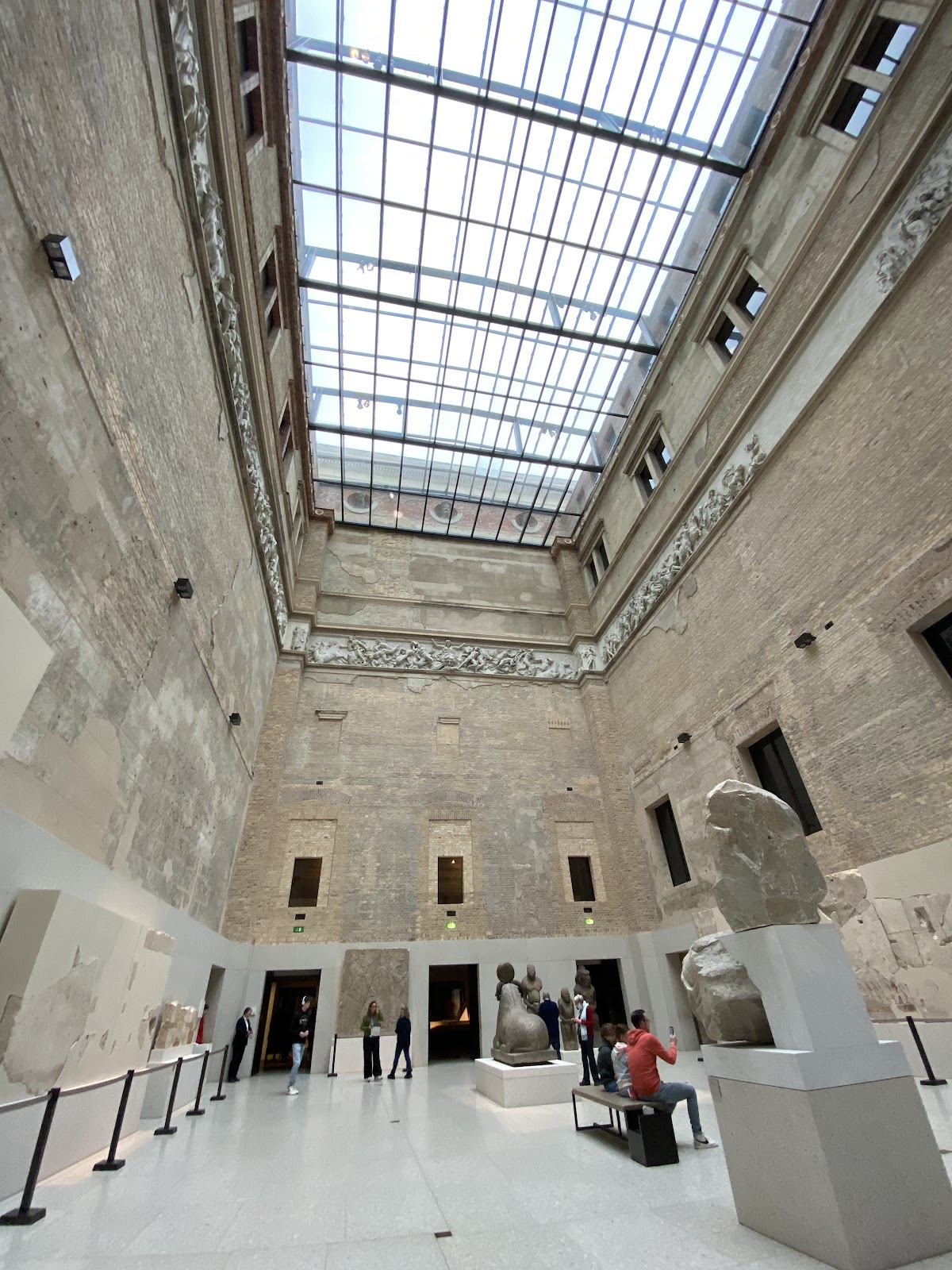
My recommended itinerary begins at the Neues Museum. Opened in 1859, the Neues Museum was severely damaged during World War II but was meticulously restored by British architect David Chipperfield and reopened in 2009. It is renowned for its Ancient Egyptian collection and prehistoric and early historical collections. The moment you step into the museum, you will be captivated by the mysterious atmosphere of ancient civilizations.
The first masterpiece you will encounter is the iconic bust of Queen Nefertiti, a symbol of the New Kingdom of Egypt. Estimated to have been created around 1340 BCE, this bust captivatingly showcases perfect proportions and an elegant posture. Nefertiti's delicate expression and vibrant coloring seem to speak to us across more than three millennia. There is always a large crowd around the bust, so please take your time to appreciate it.
In addition to the Nefertiti bust, the Neues Museum features papyrus collections, mummies, and various funerary items, offering a glimpse into the lives and afterlife beliefs of ancient Egyptians. Furthermore, the prehistoric artifacts, ranging from the Paleolithic to the Bronze Age in Northern Europe, are also highly fascinating. Particularly famous is the Berlin Gold Hat, whose intricate craftsmanship as a Bronze Age ceremonial hat will surely amaze you.
- Main Collections: Bust of Queen Nefertiti, Berlin Gold Hat, Papyrus Collection, Mummies.
- Viewing Tips: Photography may be restricted in the bust exhibition room, so please follow the instructions. After admiring the ancient Egyptian and prehistoric artifacts mainly on the first and second floors, also take time to appreciate the beautiful architecture of the building itself.
- Admission Fee: Adults 14 euros (discount or free with Berlin Welcome Card or Museum Pass)
- Operating Hours: Generally Tuesday-Sunday 10:00 - 18:00 (Thursdays extended until 20:00) Always confirm exact information on the official website.
Second Stop: Pergamon Museum, Crossroads of Human Civilization
Leaving the Neues Museum, a short walk brings us to another centerpiece of Museum Island, the Pergamon Museum. Opened in 1930, this museum has gained worldwide renown for its magnificent scale and unique exhibits. Please note that due to extensive renovations, access to some major exhibition areas, including the Pergamon Altar and the Ishtar Gate, may be restricted or unavailable. Always check the official website for the latest information before your visit. However, even the accessible sections promise a profoundly moving experience.
One of the highlights here is the Ishtar Gate of Babylon. Constructed around the 6th century BCE by Nebuchadnezzar II of the Neo-Babylonian Empire, this gate is made of glazed blue bricks and features intricate reliefs of lions and dragons. The moment you face this colossal gate, which was moved entirely into the museum, you will feel the prosperity and majesty of ancient Babylon. Dedicated to the goddess Ishtar, this gate is a work of architectural art in itself.
Additionally, in the Museum of Islamic Art section, you can discover diverse and beautiful artworks from the Islamic world, dating from the 8th to the 19th century. Exquisite mosaics, beautiful calligraphy, splendid textiles, and ceramics showcase the delicacy and richness of Islamic culture. The Aleppo Room, which may have restricted access due to ongoing renovations, is also a significant exhibit. This room, brought from a wealthy merchant's house in Aleppo, Syria, vividly displays the ornate interior decoration of the 17th-century Ottoman Empire.
- Main Collections: Ishtar Gate of Babylon, Aleppo Room (may be restricted due to renovations), Islamic Art Collection. (Pergamon Altar currently closed)
- Viewing Tips: The Pergamon Museum is very large with numerous artifacts, so it is best to decide which sections you wish to view in advance to move efficiently. Please confirm the current renovation status before planning your visit.
- Admission Fee: Adults 12 euros (admission fees and operating methods are highly subject to change due to ongoing renovations, please check the official website)
- Operating Hours: Generally Tuesday-Sunday 10:00 - 18:00 (Thursdays extended until 20:00) Always confirm exact information on the official website.
Third Stop: Alte Nationalgalerie, the Quintessence of German Romantic Art
The journey on Museum Island concludes at the Alte Nationalgalerie, which preserves the beauty of 19th-century German Romantic art. Opened in 1876, this art gallery captivates with its magnificent architecture, reminiscent of the Pantheon in Rome. It primarily houses 19th-century European, particularly German, paintings and sculptures.
At the Alte Nationalgalerie, you can encounter works from various art styles, including Romanticism, Biedermeier, Impressionism, and early Modernism. The works of Caspar David Friedrich, a master of German Romanticism, are particularly moving. While his iconic work, ‘Wanderer above the Sea of Fog’, is not housed here, his other significant works, such as ‘Monk by the Sea’ and ‘Cross in the Mountains’, vividly convey the awe, solitude, and mysterious sublimity that humans feel in the face of nature. His works transmit spiritual messages through landscapes, inviting viewers into deep contemplation.
Furthermore, you can also admire the realistic works of Adolph Menzel and masterpieces by French Impressionist artists. Menzel's ‘Iron Rolling Mill’ vividly depicts the labor scene of the Industrial Revolution era, and works by Claude Monet, Auguste Renoir, Édouard Manet, and others are also on display, allowing for an overview of the history of European art.
- Main Collections: German Romantic and Realist paintings by artists such as Caspar David Friedrich and Adolph Menzel, French Impressionist works.
- Viewing Tips: Major works are exhibited on the second and third floors. Do not miss appreciating the beautiful staircases and sculptures within the museum building itself. The view from the terrace, offering a panoramic sight of the Spree River and the Berlin Cathedral, is also superb.
- Admission Fee: Adults 12 euros (discount or free with Berlin Welcome Card or Museum Pass)
- Operating Hours: Generally Tuesday-Sunday 10:00 - 18:00 (Thursdays extended until 20:00) *Always confirm exact information on the official website.
Things to Do and Eat Around Museum Island
After a tiring museum tour, your body and mind need to be rejuvenated with delicious food. There are various restaurants and cafes around Museum Island. While there are cafeterias inside the museums for quick meals, if you desire a more special experience, I recommend exploring the surrounding areas outside the island.
- Insel Restaurant: Located next to the Bode Museum, where you can enjoy a meal with a beautiful view of the Spree River.
- Berlin Cathedral Cafe: You can relax with coffee and dessert at the cafe inside the Cathedral.
- Hackescher Markt Area: Located about a 10-minute walk from Museum Island, the Hackescher Markt area is dense with unique boutiques, charming cafes, and restaurants of various cuisines. In particular, Hackesche Höfe is a complex cultural space with several interconnected courtyards in beautiful Art Nouveau style, perfect not only for dining but also for shopping and relaxation. There are various options from traditional German restaurants to Italian and Asian fusion.
- Lustgarten: Taking a moment to rest in Lustgarten, a large park in front of the Berlin Cathedral, or observing the daily lives of locals, can also be a pleasant experience. On nice days, many people enjoy picnics there.
In Conclusion
Berlin's Museum Island is not merely a collection of museums. It is a living history book where the great heritage of human civilization breathes, and timeless works of art offer us inspiration and insight. From the mystery of ancient Egypt, the grandeur of the ancient Near East, to the delicacy of 19th-century European art—the ability to experience all this on a single island is a special gift that only Berlin can offer. In addition to the three museums I've guided you through today, there are many other fascinating spaces like the Bode Museum and the Altes Museum, so feel free to adjust your itinerary according to your interests. I sincerely hope that your journey to Museum Island will provide you with unforgettable memories and profound impressions. I look forward to meeting you at our next travel destination. Thank you.
Visitor Info
| 소요 시간 | 최소 1Sun (하루 종Sun) |
| 예산 (1인) | 50-70유로 (입장료 및 식사 포함) |
| 추천 시기 | 봄, 가을 (쾌적한 날씨) |
| 추천 동선 | 노이에스 박물관 → 페르가몬 박물관 → 알테 내셔널갤러리 (or 관심사에 따라 유동적) |
| 교통편 | 베를린 대중교통 (S-반, U-반, 트램, Bus) 이용, 프리드리히슈트라세 Stn or 하케셔 마르크트 Stn 하차 |

