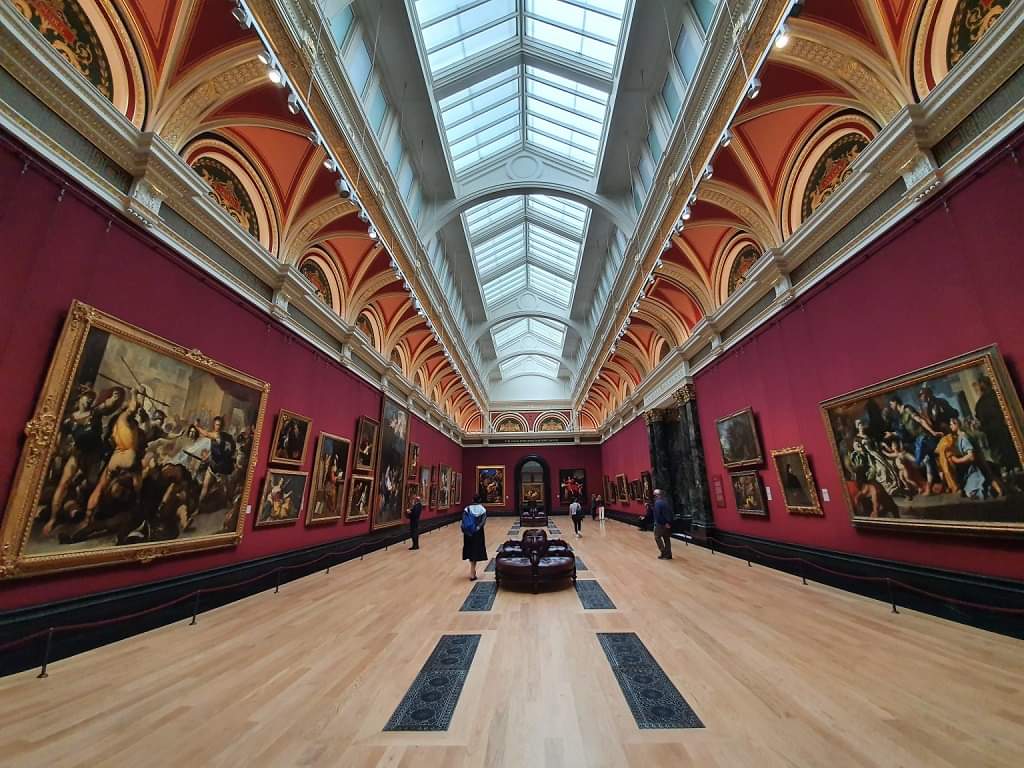
Strolling Through Eras of Art: Your Complete Guide to the National Gallery of Art, Washington D.C.!
Strolling Through Eras of Art: Your Complete Guide to the National Gallery of Art, Washington D.C.!
The National Gallery of Art, Washington D.C. — Two Buildings on the National Mall
The National Gallery of Art (NGA) is at 401 Constitution Ave. NW, Washington, D.C., on the eastern end of the National Mall. It comprises the West and East Buildings, connected by an underground concourse. The NGA, established in 1937, offers free access to art. The West Building (1941, John Russell Pope) is neoclassical, while the East Building (1978, I. M. Pei) is modernist. A visit requires 3-4 hours, or a full day for both buildings.
West Building: Classical Art and Architecture
The West Building's foundation came from Andrew W. Mellon's 1937 donation. Its design, inspired by the Roman Pantheon, features a domed rotunda and Indiana limestone exterior. It houses European and American paintings and sculptures from the 13th to early 20th century. Key works include Leonardo da Vinci's 'Ginevra de' Benci' and pieces by Vermeer, Rembrandt, Monet, Renoir, and Degas.
East Building: Modernism and Contemporary Collections
The East Building, designed by I. M. Pei, utilizes a triangular motif, efficiently adapting to its irregular site. Its interior features a grand central atrium, flooded with natural light. This building focuses on modern and contemporary art from the 20th century onwards, with works by Picasso, Matisse, Pollock, Rothko, and Warhol. Seurat's studies for 'A Sunday on La Grande Jatte' are also notable. The building underwent extensive renovations from 2014 to 2016.
Visiting Information for the National Gallery of Art, Washington D.C.
- Location: 401 Constitution Ave. NW, Washington, DC 20565, USA
- Operating Hours: Weekdays 10:00 AM - 5:00 PM, Weekends 11:00 AM - 6:00 PM (Closed on December 25 and January 1)
- Admission: Free
- Transportation: Metro Green/Yellow Line (Archives-Navy Memorial-Penn Quarter) or Red Line (Judiciary Square)
- Recommended Visit Time: Minimum 3-4 hours (full day for both buildings)
London's National Gallery: European Masterpieces
Located at 44 Trafalgar Sq, London, the National Gallery opened in 1824. It houses over 2,300 European paintings from the 13th to 19th centuries, including Van Gogh's 'Sunflowers,' Da Vinci's 'The Virgin of the Rocks,' and Turner's 'The Fighting Temeraire.' Permanent exhibitions are free. Open daily 10:00 AM - 6:00 PM (Fridays until 9:00 PM), closed Dec 24-26, Jan 1. Accessible via multiple Tube stations.
Manila's National Museum of Fine Arts: Philippine Heritage
The National Museum of Fine Arts in Manila, Philippines, at P Padre Burgos Ave, is set in a 1920s neoclassical building. It showcases Philippine art from the 19th century to contemporary works, prominently featuring Juan Luna's national treasure 'Spoliarium' and works by Fernando Amorsolo. Admission is free. Open Tuesday to Sunday, 10:00 AM - 5:00 PM. Near Rizal Park, accessible by LRT-1 Central Terminal Station.
Canberra's Parliament House: Architectural Landmark and Art Collection
Australia's Parliament House, at 1 Capital Circle, Capital Hill, Canberra, is a Romaldo Giurgola-designed structure integrated into its landscape, with a walk-on grass roof. It holds a significant collection of Australian art from 1970 onwards. Admission is free. Open daily 9:00 AM - 5:00 PM (check official website for holiday closures). Parking is available.
Visitor Info
| Location | Translating |
| Hours | Translating |
| Admission | Free |
| Getting There | Translating |
| Estimated Visit | Translating |
Featured Works

레오나르도 다 빈치 (Leonardo da Vinci)
지네브라 데 벤치 (Ginevra de' Benci)
1474년경. 미국에 있는 유일한 다 빈치 회화 작품.

요하네스 베르메르 (Johannes Vermeer)
빨간 모자를 쓴 소녀 (Girl with a Red Hat)
1665년경. 베르메르 특유의 빛의 마법이 빛나는 소품 초상화.
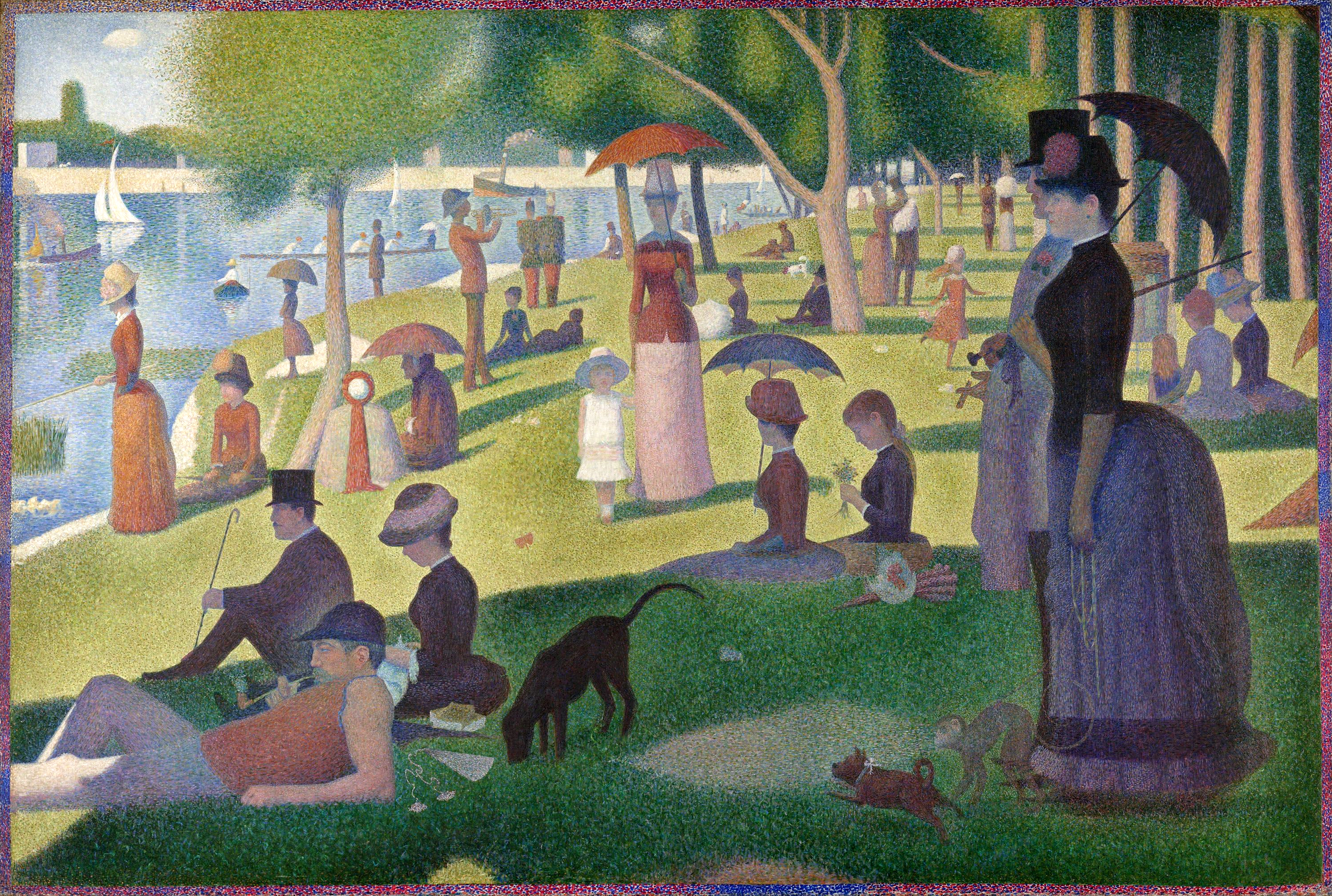
조르주 쇠라 (Georges Seurat)
A Sunday on La Grande Jatte (A Sunday on La Grande Jatte)
1886년작. 점묘법의 대표작. (시카고 미술관 소장, NGA에는 습작 소장)