Copenhagen's Hidden Gems: The Louisiana Museum of Modern Art and the Aesthetics of Nordic Design
Copenhagen's Hidden Gems: The Louisiana Museum of Modern Art and the Aesthetics of Nordic Design
The Louisiana Museum of Modern Art: A Synthesis of Art, Architecture, and Landscape
Located in Humlebæk, north of Copenhagen, the Louisiana Museum of Modern Art stands as a prominent cultural landmark. Its address is Gl Strandvej 54, 3050 Humlebæk, Denmark. The museum is accessible by a 35-minute train ride from Copenhagen Central Station to Humlebæk, followed by a 10-minute walk. Situated along the Øresund coast, it offers a serene escape where nature and art converge.
Established in 1958 by Knud W. Jensen, a key figure in Danish culture and a collector, Louisiana was founded on the belief that art should be accessible to all. This philosophy is deeply embedded in its design and operation, aiming to create a space where art can be experienced comfortably within a natural setting. The museum evolved from an elegant 19th-century country house, continuously expanded by Danish architects Jørgen Bo and Vilhelm Wohlert.
Architectural Harmony and Dynamic Flow
The architectural brilliance of Louisiana lies in its seamless integration with the surrounding landscape. Bo and Wohlert designed the museum to respect its natural environment, with structures that appear to grow organically from the ground. This approach reflects core Scandinavian design principles of simplicity, functionality, and harmony with nature. The buildings are low-slung, avoiding disruption to the scenic views.
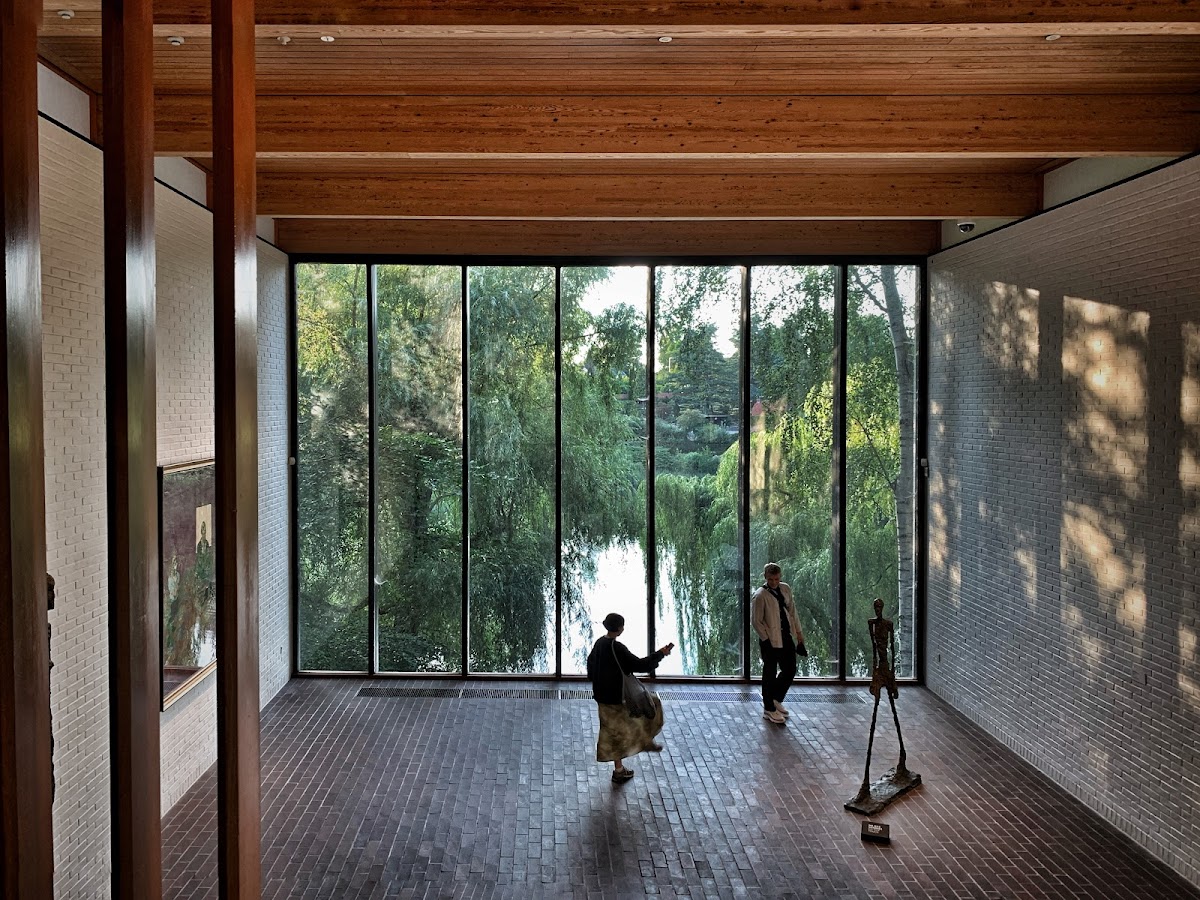
A defining feature is the continuous interplay between indoor and outdoor spaces. Long glass corridors offer panoramic views of the Øresund Sea on one side and the sculpture park on the other. These transparent pathways serve not just as transitions but as canvases, capturing light, shadow, and the ever-changing external scenery. This open design allows visitors to encounter art and nature without artificial boundaries, enhancing the immersive experience.
Sculpture Park and Diverse Collections
The outdoor sculpture park is a highlight, featuring monumental works by artists such as Alexander Calder, Henry Moore, and Richard Serra. These sculptures are strategically placed within the natural landscape, where the sea, lush trees, and the museum's architecture form a living backdrop. The museum's windows frame these outdoor vistas, turning them into dynamic artworks.
Louisiana's collection spans modern and contemporary art, including a permanent installation of Yayoi Kusama's 'Gleaming and Lights of the Souls.' Beyond its permanent displays, the museum hosts 6 to 10 temporary exhibitions annually, showcasing diverse themes and contemporary artistic trends. This makes Louisiana a leading institution for modern and contemporary art in Scandinavia.
Visitor Information and Amenities
To ensure a fulfilling visit, planning is recommended. The museum is open Tuesday to Friday from 11:00 AM to 10:00 PM, and Saturday to Sunday from 11:00 AM to 6:00 PM, closed on Mondays. Adult admission is 145 DKK, with free entry for visitors under 18. An estimated 3-4 hours are recommended for a comprehensive visit.
The museum offers several amenities, including a restaurant with stunning views of the Øresund, serving fresh Nordic cuisine. A shop features Danish design items, and a three-story Children's Wing hosts daily workshops, catering to families. These facilities enhance the overall experience, making Louisiana a multifaceted cultural destination.
Visitor Info
| Estimated Visit | Translating |
| Translating | Translating |
| Translating | Translating |
| Recommended Route | Translating |