A Journey Across the Spanish Soul: Walking on the Canvas of Passion from Madrid to Barcelona
A Journey Across the Spanish Soul: Walking on the Canvas of Passion from Madrid to Barcelona
A Journey Across the Spanish Soul: Madrid to Barcelona Expedition
This report documents an art expedition to Spain from June 16-20, 2026, focusing on major art institutions in Madrid and Barcelona. The journey aimed to explore the evolution of Spanish art, starting in Madrid and concluding in Barcelona. The Madrid segment covers the Museo del Prado, Museo Reina Sofía, and the Crystal Palace in Retiro Park. The itinerary then includes travel to Barcelona and a visit to the Picasso Museum.
The recommended duration for this trip is 5-7 days, with approximately 3 days in Madrid, 2-3 days in Barcelona, and 1 day for inter-city travel. An estimated budget of $1500-$2500 covers accommodation, meals, transportation, and museum admissions. High-speed rail is recommended for travel between Madrid and Barcelona.
Madrid: A Cultural Hub of Spain
Madrid, the capital of Spain, is centrally located on the Iberian Peninsula, serving as a vibrant cultural center. It hosts a concentration of art institutions, notably the "Golden Triangle of Art" comprising the Prado Museum, Reina Sofía Museum, and Thyssen-Bornemisza Museum, all within walking distance. These institutions collectively offer a comprehensive view of Spanish art history, from classical to contemporary periods.
Museo del Prado: Neoclassical Grandeur and Golden Age Masters
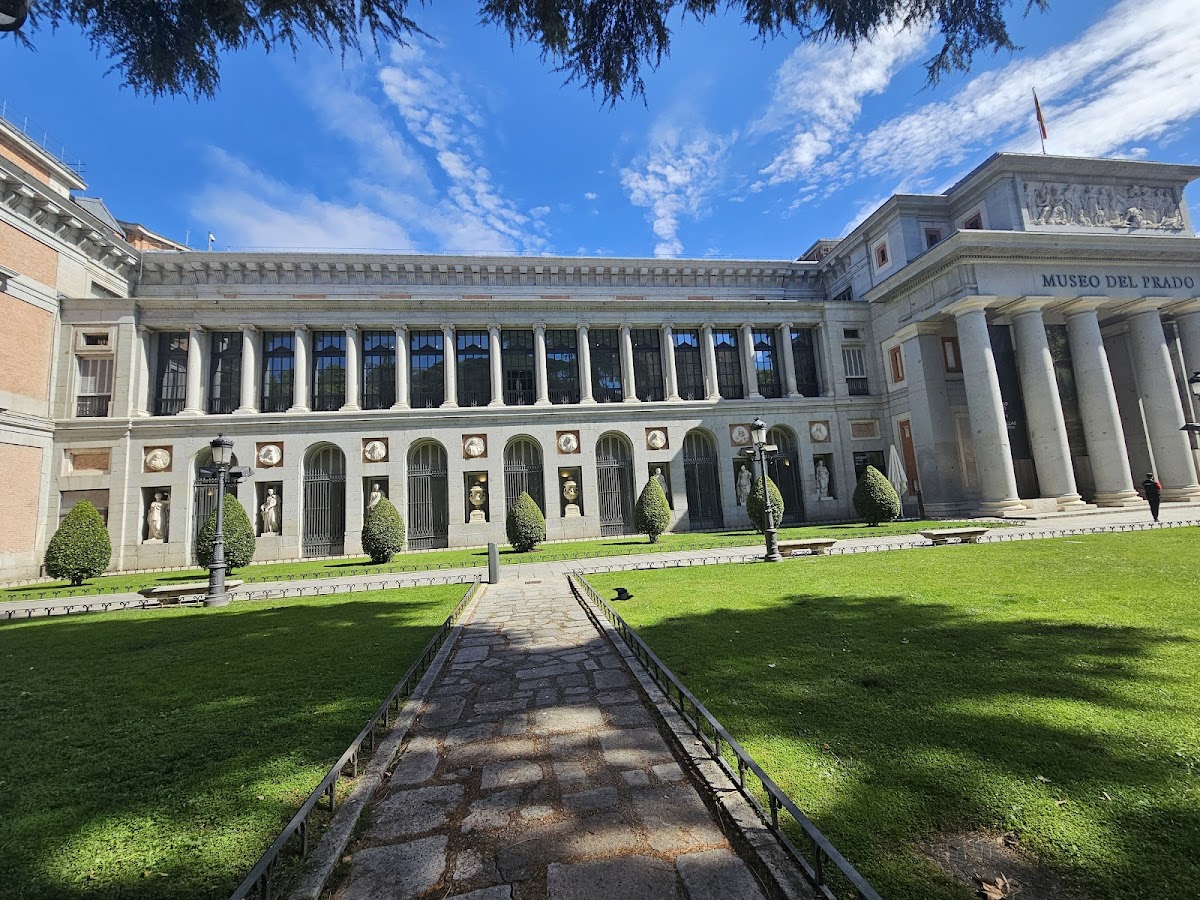
Located at C. de Ruiz de Alarcón, 23, Retiro, 28014 Madrid, the Museo del Prado is adjacent to Retiro Park. It is easily accessible from Banco de España (5-min walk) or Atocha (10-min walk) metro stations. The museum's grand Neoclassical architecture, designed by Juan de Villanueva in the late 18th century, was originally intended as a natural science museum before its transformation into a royal art museum.
Opened in 1819, the Prado houses over 8,000 masterpieces, primarily from the Spanish Royal Collection. Its collection spans from the 16th to the early 19th centuries, with a strong emphasis on Spanish Golden Age artists like Diego Velázquez, Francisco Goya, and El Greco. Key works include Velázquez's 'Las Meninas', Goya's 'The Third of May 1808' and 'The Nude Maja', and El Greco's 'The Holy Trinity'.
Visiting hours are Monday-Saturday 10:00-20:00, and Sunday 10:00-19:00. Admission is 15€ for adults, with free entry during specific evening hours (Mon-Sat 18:00-20:00, Sun 17:00-19:00).
Museo Reina Sofía: Modern Art and Historical Witness
Situated at C. de Sta. Isabel, 52, Centro, 28012 Madrid, the Museo Reina Sofía is a short 3-minute walk from Atocha metro station. This museum, originally an 18th-century hospital (Hospital de San Carlos), was converted into an art museum and officially opened in 1992. It features a modern extension designed by Jean Nouvel, blending historical and contemporary architecture.
The Reina Sofía is dedicated to Spanish modern and contemporary art from the 20th century onwards. Its most famous exhibit is Pablo Picasso's 'Guernica', a powerful indictment of the bombing of Guernica during the Spanish Civil War. The museum also showcases works by Salvador Dalí and Joan Miró, reflecting Spain's turbulent 20th-century history and artistic innovation.
Operating hours are Monday, Wednesday-Saturday 10:00-21:00, and Sunday 10:00-14:30 (closed Tuesdays). Admission is 12€ for adults, with free entry during specific evening hours (Mon, Wed-Sat 19:00-21:00, Sun 13:30-14:30).
Crystal Palace, Retiro Park: A Glass Gem
The Crystal Palace, located at P.º de Cuba, 4, Retiro, 28009 Madrid, is a stunning glass and iron structure within the beautiful Retiro Park. Built in 1887 by Ricardo Velázquez Bosco for a Philippine flora exhibition, it now serves as a special exhibition venue for contemporary art, managed by the Reina Sofía Museum.
This architectural marvel maximizes natural light, creating an immersive experience where the surrounding park's greenery and light become part of the art. Admission is free, and it operates daily from 10:00-18:00, aligning with Retiro Park's opening hours.
Journey to Barcelona and the Picasso Museum
Following the Madrid exploration, the journey continued to Barcelona on June 19, 2026, via Spain's high-speed rail (AVE), a comfortable 2.5-3 hour trip from Madrid's Atocha station to Barcelona Sants. Barcelona, the capital of Catalonia, is a vibrant Mediterranean city renowned for its Modernist architecture by Gaudí and its significant contributions to modern art.
The Picasso Museum in Barcelona is a key destination, focusing on Pablo Picasso's formative years and early works. It provides insight into his artistic development during his time in Barcelona, complementing the later works found in Madrid's Reina Sofía Museum.
Visitor Info
| Estimated Visit | Translating |
| Translating | Translating |
| Recommended Route | Translating |