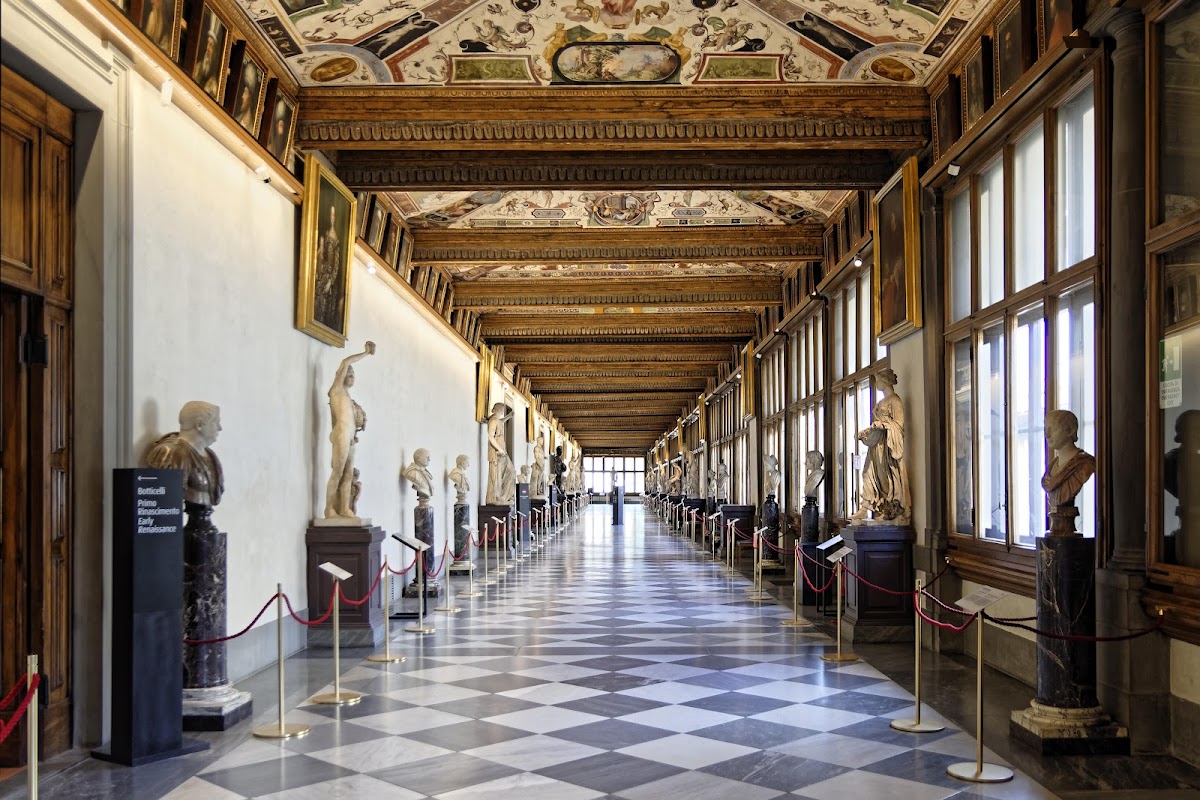
Galleria degli Uffizi — Walking Through the Renaissance in Florence
Greetings, fellow travelers! As a writer whose journeys often lead me to the hallowed halls of the world's great museums, I'm thrilled to transport you today to the very heart of the Renaissance: Florence, Italy. This city, a masterpiece in itself, holds countless treasures, but none shine quite as brightly as the Galleria degli Uffizi. Perched majestically along the Arno River, the Uffizi is far more than just a building; it is a monumental testament to one of humanity's most brilliant artistic epochs. To step inside is to embark on a profound journey back in time, tracing the footsteps of the powerful Medici family and the immortal strokes of masters like Botticelli, Leonardo, and Michelangelo. Prepare to be swept away on an emotional odyssey through the sacred grounds of the Renaissance, right here, right now, with me.
The Uffizi's very existence is a grand narrative, deeply intertwined with the Medici dynasty. What began in the 16th century as administrative offices ("uffizi" means "offices") for the Florentine magistrates, conceived by Giorgio Vasari under Cosimo I de' Medici, gradually transformed into a magnificent repository of art. The Medici, not merely wealthy patrons but astute collectors and visionaries, amassed an unparalleled collection that laid the foundation for what we see today. As I walk through the iconic U-shaped courtyard, flanked by niches housing statues of great Florentine artists and thinkers, I can almost feel the historical weight, the whispers of centuries of power, intellect, and artistic fervor. This wasn't just a place for art; it was a symbol of Medici influence, a grand gesture of their enduring legacy.
Ascending to the upper floors, the long, sun-drenched corridors, adorned with classical sculptures and tapestries, are a prelude to the visual feast awaiting. Each room is a chapter in the story of the Renaissance, carefully curated to unfold the evolution of Florentine art. My breath invariably catches in the rooms dedicated to Sandro Botticelli. Here, bathed in a soft, ethereal light, hang his two monumental masterpieces: "The Birth of Venus" and "Primavera." Standing before "The Birth of Venus," one cannot help but be mesmerized by the delicate, almost translucent quality of Venus's skin, her serene gaze, and the impossibly graceful flow of her hair. It's a painting that defies time, celebrating classical beauty and pagan mythology with an exquisite tenderness. Nearby, "Primavera" bursts forth with vibrant life, a complex allegorical garden teeming with mythological figures, each flower and leaf rendered with astonishing detail. The sheer scale and intricate storytelling in these works reveal Botticelli's genius and the intellectual depth of the Florentine court. It’s a moment of pure, unadulterated awe, a tangible connection to the artistic soul of the 15th century.
Moving through the gallery, the narrative continues to unfold with breathtaking pace. I find myself lingering before Leonardo da Vinci's "Annunciation," captivated by the innovative use of perspective and the almost palpable tension in the angel Gabriel's approach. His figures possess a profound inner life, a subtle dynamism that sets them apart. Michelangelo's "Doni Tondo" (Holy Family) bursts with vibrant, almost sculptural forms, showcasing his unparalleled mastery of the human anatomy even in painting. The Uffizi doesn't just display these works; it contextualizes them, allowing you to trace the artistic dialogues and influences that shaped this golden age. You encounter the bold realism of Caravaggio's "Medusa," its terrifying beauty leaping from the canvas, a stark contrast to the harmonious idealism of earlier periods. Then there's Raphael's delicate portraits, Titian's sumptuous colors, and the contemplative works of Piero della Francesca, each piece a window into a different facet of the Renaissance spirit. The view from the corridor windows, overlooking the Arno and the Ponte Vecchio, reminds you that this extraordinary collection is housed within a city that is, itself, an enduring work of art. The Uffizi is not merely a collection of masterpieces; it is a meticulously preserved journey through the human imagination at its most sublime, a vibrant echo of a time when art truly redefined the world.
Practical Tips
To ensure a smooth and enriching visit to the Galleria degli Uffizi, strategic planning is key. I cannot stress enough the importance of booking your tickets online well in advance, often several weeks or even months ahead, especially during peak tourist seasons. This will allow you to bypass the notoriously long queues, which can easily eat up precious hours of your day. Aim for an early morning entry right at opening time (typically 8:15 AM) or a late afternoon slot, about two to three hours before closing, to experience fewer crowds and a more tranquil atmosphere. The museum is closed on Mondays, so plan accordingly. The Uffizi is centrally located, just a stone's throw from Piazza della Signoria and the Arno River, making it easily accessible on foot from most parts of central Florence. Allow a minimum of three to four hours to properly explore the main collections, though art enthusiasts could easily spend an entire day. Consider renting an audio guide or joining a small-group guided tour to enhance your understanding of the artworks and their historical context. Wear comfortable shoes, as there is a significant amount of walking involved, and remember that large bags and backpacks must be checked at the entrance. Photography without flash is generally permitted for personal use, but always double-check current regulations. For a delightful break, there is a cafe with outdoor seating offering stunning panoramic views over Florence, a perfect spot to reflect on the artistic wonders you've just witnessed.
Visitor Info
| Admission | 26유로 (3-10Mon), 16유로 (11-2Mon). 온라인 Reservation required |
| Hours | Tue-Sun 08:15-18:30 (Closed Mon) |
| Location | Piazzale degli Uffizi 6, Firenze |
| Estimated Visit | 하이라이트 2hr. 전체 3-4hr |
| Tips | 오전 8:15 개관 직후 or 오후 16시 after 입장이 한산 |
| Route | 2층 보티첼리 방(10-14번) → 레오나르도 방 → 카라바조 방 |
Featured Works
Sandro Botticelli
The Birth of Venus
보티첼리의 대표작으로, 조개 위에 서서 바다에서 탄생하는 비너스를 묘사했습니다. 르네상스 시대 고전 신화의 부활을 상징하는 이 작품은 이상적 여성미의 전형을 제시합니다. 바람의 신 제피로스와 꽃의 님프, 계절의 여신 호라이가 비너스를 맞이하는 장면은 우아한 곡선과 부드러운 색채로 표현되어 시적 아름다움을 자아냅니다.
Sandro Botticelli
Primavera
보티첼리의 또 다른 걸작으로, 봄의 도래를 고전 신화적 알레고리로 표현했습니다. 비너스를 중심으로 삼미신, 머큐리, 플로라 등 신화 속 인물들이 꽃이 만발한 정원에 모여 있습니다. 500종 이상의 식물이 사실적으로 묘사되어 있으며, 르네상스 인문주의와 메디치 가문의 문화적 후원을 반영하는 작품입니다.
Leonardo da Vinci
Annunciation
레오나르도 다 빈치의 초기 작품으로, 대천사 가브리엘이 성모 마리아에게 수태를 알리는 장면을 그렸습니다. 젊은 레오나르도의 천재성이 이미 드러나는 이 작품은 원근법의 정교한 사용, 자연 풍경의 섬세한 묘사, 인물의 우아한 자세가 특징입니다. 우피치 미술관의 핵심 소장품 중 하나입니다.