Under the LA Sun: An Art Drive from Getty's Classics to Broad's Modernity
Under the LA Sun: An Art Drive from Getty's Classics to Broad's Modernity
The Getty Center: A Luminous Fortress of Art in Los Angeles
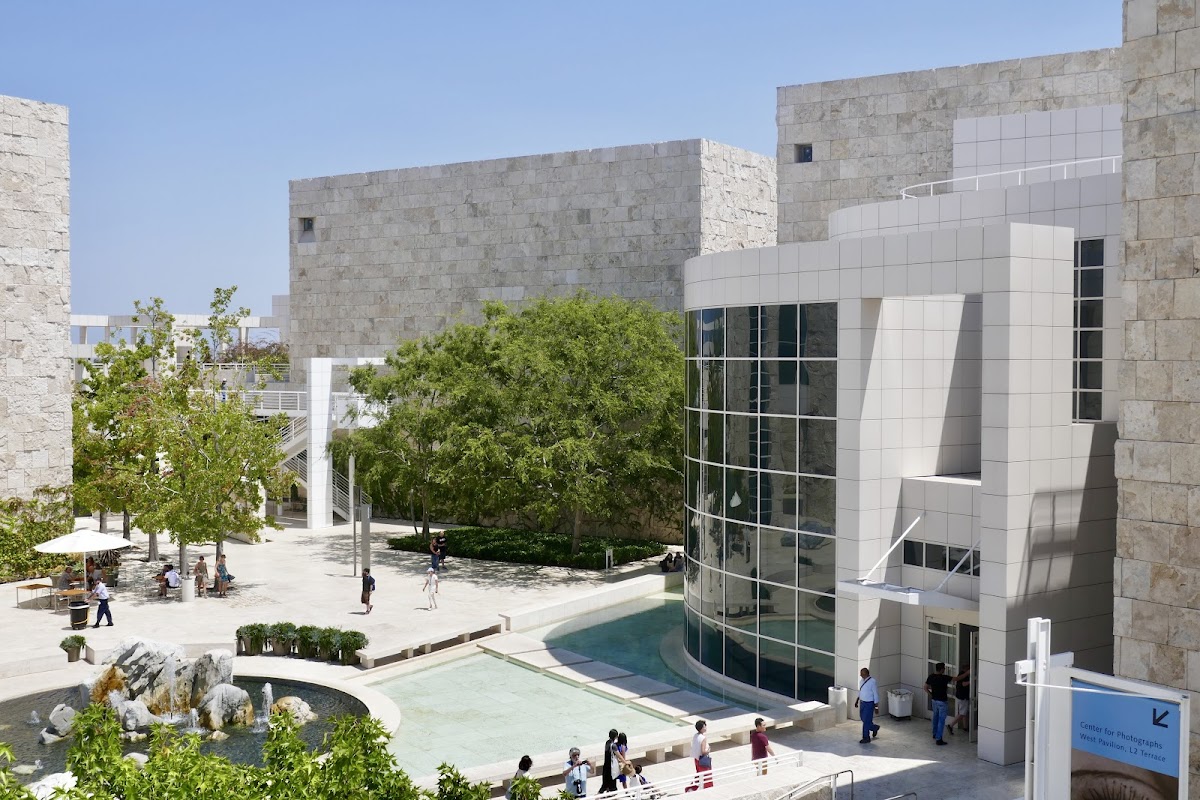
Perched atop the Brentwood hills in Los Angeles, the Getty Center stands as a beacon of art and architecture. Opened in 1997, this sprawling complex, designed by Richard Meier, offers panoramic views of the city skyline, the Pacific Ocean, and the Santa Monica Mountains. The journey begins with a tram ride from the parking area, ascending to a campus constructed primarily from 1.2 million square feet of Italian travertine marble.
Meier's design emphasizes the interplay of natural light, which constantly transforms the appearance of the cream-colored stone and illuminates the interiors. Large windows and skylights draw the Southern California sun into the galleries, enhancing the vibrant colors and textures of the artworks. The Getty's collection spans European paintings, sculptures, and decorative arts from before the 17th century, French decorative arts from the 18th and 19th centuries, and photographs from the late 19th century to the present. Masterpieces by artists like Rembrandt, Rubens, Monet, and Van Gogh's "Irises" are among its more than one million holdings.
Beyond the galleries, the Central Garden, a living artwork by Robert Irwin, invites contemplation with its organic forms, cascading water features, and diverse plant species. Terraces and outdoor spaces throughout the center provide breathtaking vistas, making the Getty Center a holistic experience where architecture, nature, and art converge. It is a place where visitors can immerse themselves in classical beauty while enjoying the expansive Californian landscape.
The Broad: A Dynamic Hub for Contemporary Art Downtown
In the heart of downtown Los Angeles, The Broad, which opened in 2015, presents a vibrant collection of contemporary art. Founded by philanthropists Eli and Edythe Broad, the museum houses over 2,000 works, offered to the public free of charge. Its distinctive architecture, known as the "veil and vault" design, features a honeycomb-like exterior "veil" that filters natural light into the galleries, while an interior "vault" serves as both art storage and a visual element within the visitor's journey.
The Broad's collection showcases a wide array of modern masters, including Jeff Koons, Cindy Sherman, Yayoi Kusama, and Andy Warhol. A highlight for many is Yayoi Kusama's "Infinity Mirror Room – The Souls of Millions of Light Years Away," an immersive installation of LED lights and mirrors that creates an illusion of infinite space, offering a profound and brief sensory experience. Jeff Koons' "Balloon Dog (Blue)," a monumental stainless steel sculpture, also captivates visitors with its playful yet sophisticated presence on the second floor.
Works by Andy Warhol, such as his "Campbell's Soup Cans" and iconic silkscreen portraits, explore themes of mass production and popular culture, reflecting the museum's focus on art that engages with contemporary society. Other prominent artists like Jean-Michel Basquiat, Roy Lichtenstein, and Takashi Murakami contribute to the museum's diverse representation of modern artistic movements. The Broad serves as a dynamic platform for exploring the evolving landscape of contemporary art, inviting dialogue and new perspectives.
Visitor Information: Planning Your LA Art Journey
For the Getty Center, admission to the permanent collection and architecture is free, though parking costs $20. It is closed on Mondays and major holidays. Operating hours are 10:00 AM to 6:30 PM Tuesday-Friday and Sunday, and 10:00 AM to 9:00 PM on Saturdays. While no advance reservation is currently required, checking the official website before visiting is recommended. A visit of 3-4 hours is suggested to fully appreciate the art, gardens, and panoramic views, especially around sunset.
The Broad offers free admission to its permanent collection, with a fee for special exhibitions. It is closed on Mondays and major holidays. Hours are 11:00 AM to 5:00 PM Tuesday-Wednesday and Friday, 11:00 AM to 8:00 PM on Thursday, and 10:00 AM to 6:00 PM on Saturday-Sunday. Due to its popularity, online advance reservations are strongly advised, particularly for the "Infinity Mirror Room," which often requires separate booking or a significant wait. Allow 2-3 hours for a comprehensive visit. Both museums are accessible via public transportation, with the Getty Center requiring a tram ride from its parking area, and The Broad being a short walk from the Civic Center/Grand Park Metro station.
Visitor Info
| Estimated Visit | Translating |
| Translating | Translating |
| Translating | Translating |
| Recommended Route | Translating |