New Delhi: The Heart of Indian Civilization Woven by Time and Art
New Delhi, located at the heart of India, signifies more than just a capital city. It is a vibrant, colossal canvas where chaos and order, ancient and modern, coexist, constantly transforming yet retaining an immutable spirit. Amidst the honking of rickshaws, the lively atmosphere of spice-laden markets, and the grandeur of history permeating every corner, I embarked on a journey to discover the deep and luminous light emanating from India's art and culture. In particular, the 5,000-year historical legacy of the National Museum and the diverse contemporary art of the National Gallery of Modern Art marked the beginning of a special pilgrimage, allowing me to experience both the majestic flow of time India has traversed and its dynamic energy towards the future. Moments of discovering artistic inspiration in every breath of the city and listening to the profound echoes of Indian civilization awaited me.
The National Museum: Immersed in 5,000 Years of Time
The moment I stepped through the grand doors of the National Museum, I was seized by a peculiar sensation, as if defying the flow of time itself. Like a colossal temple imbued with the soul of ancient India, this museum embraced a magnificent history spanning 5,000 years. My first steps led me to the enigmatic artifacts of the Indus Valley Civilization. Delicate seals, pottery, and small figurines unearthed from Harappa and Mohenjo-Daro allowed me to feel the breath of artisans transcending millennia. From the meticulously crafted bronze statues and clay goddesses, I imagined the prosperity of a lost civilization and their spiritual world. Following this, the epitome of Buddhist art, the Gandhara style Buddha statues, greeted me. The Westernized beauty of Buddha, influenced by Greco-Roman culture, left a profound impression, showcasing a exquisite fusion of Eastern and Western civilizations. A tranquil message of peace and enlightenment seemed to emanate silently from the serene smile on Buddha's face.
The golden age art of the Gupta dynasty evoked another wave of admiration. Deities expressed with smooth curves and vibrant expressions encapsulated both near-perfect beauty and religious sublimity. Each delicate sculpture bore witness to the exceptional skill and deep devotion of the artists of that era. Wandering through these grand halls, I realized that India was not merely a country, but a vast civilization in itself. The intricate miniature paintings of the Mughal Empire, filling the walls, vividly depicted the opulent court life, hunting scenes, and mythological tales in a rich palette of colors. The fine lines drawn with tiny brushes and the intense contrast of colors felt incredibly lifelike, as if time had stopped. These paintings were not just artworks, but living records capturing scenes from history.
The textiles and costume collection eloquently displayed India's outstanding craftsmanship. Intricate patterns embroidered on silk and cotton, and opulent garments adorned with gold and silver threads, hinted at the refined taste and affluence of the royalty and nobility of the time. Each fabric contained the sweat and spirit of generations of weavers, and the softness and durability of the fibers felt at my fingertips once again evoked the glory of the past. I felt as if I had traveled back in time, stepping directly into their lives. Strolling through the vast corridors and halls of the museum, I was not merely viewing artifacts, but experiencing a full immersion into the mighty river of Indian time. This place, where the glory and decline of ancient kingdoms, religious fervor, and artistic evolution were condensed, was an essential treasure trove for understanding India's deep-rooted identity. My eyes shone, eager not to miss a single historical trace, and my heart beat wildly in response to the stories of each era. All these artifacts whispered the grand narrative of India in their own voices.
The National Gallery of Modern Art: The Diverse Breath of Modern India
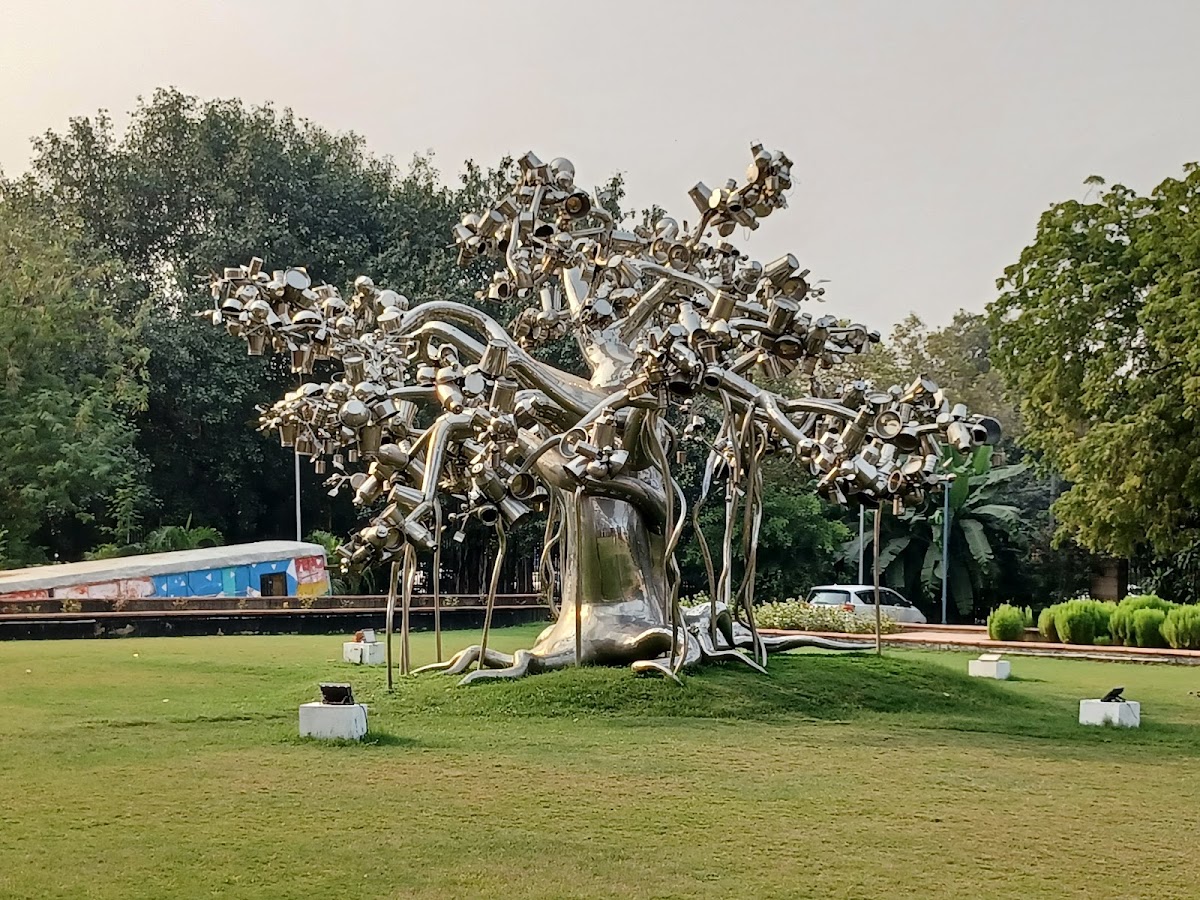
After fully savoring the ancient grandeur at the National Museum, I made my way to the National Gallery of Modern Art (NGMA). I wanted to shed the weight of the past and experience the dynamic and vibrant artistic energy of modern India. This beautiful building, once a palace of the former British King George V, despite its antiquated exterior, had transformed its interior into an exhibition space filled with innovation and experimental spirit for modern art. The atmosphere upon entering the museum was distinctly different. Rather than quiet reverence, a lively vigor and creative energy permeated the space.
NGMA offers a panoramic view of the trajectory of Indian modern art from the early 20th century to the present. From the works of early artists who inherited the traditional aesthetics of the Bengal School while incorporating Western painting techniques, to intense contemporary pieces exploring the changing Indian society and identity post-independence, the museum vividly demonstrated how India's spiritual and social transformations were reflected in art. I found myself lingering before the works of masters who represent Indian modern art, such as Rabindranath Tagore, Amrita Sher-Gil, and M.F. Husain. Tagore's paintings exuded the depth of Eastern thought and reverence for nature, while Sher-Gil's works resonated deeply with their intense colors and the collision of inner human struggles. Husain's dynamic and bold brushstrokes reinterpreted Indian myths, daily life, and history from a modern perspective, delivering powerful messages.
I strolled among the exhibited works, striving to understand the narratives each piece held. Intense color contrasts, abstract forms, and sometimes socially critical installation art represented India's colonial wounds, the euphoria of independence, and the complex issues of modern society. In the works of younger artists, the contemporary concerns of India—the harmonization of globalization and tradition, and the search for new identities—were clearly evident. New forms of art, such as digital art and media art, distinctly showed that Indian art is not confined to the past but is constantly evolving and moving towards the future. This space was not merely a gallery where paintings hung. It was a fierce intellectual arena where Indian thinkers responded to the questions of their time, sometimes resisting, sometimes singing of hope. Feeling the vibrant pulse of modern India throughout my being, I once again marveled at the diverse cultural inspiration and artistic depth. New Delhi, where the majesty of ancient civilization and the dynamism of modern art harmoniously blended, was truly a city of art.
A Message of Integration: New Delhi, A Living Work of Art
My artistic journey in New Delhi was more than just visiting historical sites or admiring artworks; it was a time for dialogue with the soul of India. The 5,000 years of history I encountered at the National Museum awakened me to both the greatness and transience of human civilization, while the contemporary art experienced at the National Gallery of Modern Art showcased India's resilience in making its voice heard amidst rapidly changing times. This grand symphony created by the wisdom whispered by ancient artifacts and the bold attempts of modern artists left me with profound emotion and inspiration. New Delhi was a dynamic city where past and present, tradition and innovation, clashed and harmonized to create new beauty. The experience here made me realize that India is not just a destination, but a living work of art itself. If you wish to fully experience the diverse culture and artistic depth of India, New Delhi's museums and art galleries will be the ultimate destination to enrich your soul. I hope you experience your own artistic discovery here.
Visitor Info
| Duration | 3-4Sun (예술 중심 여행) |
| Budget | 중간 (박물관 입장료, 현지 음식, 교통비 포함) |
| Best Season | 10Mon ~ 3Mon (서늘하고 건조한 시기) |
| Route | 국립박물관 → 국립현대미술관 (or Stn순), 주변 지Stn 탐방 |