Canvas of the Russian Soul: Into the Grandeur of the Tretyakov Gallery
Canvas of the Russian Soul: Into the Grandeur of the Tretyakov Gallery
The Tretyakov Gallery: A Chronicle of Russian Art in Moscow
The Tretyakov Gallery, located at Lavrushinsky Ln, 10, Moskva, Russia, 119017, stands as a pivotal institution for Russian art. Situated in the historic Zamoskvorechye district, south of the Moscow River, it offers a tranquil contrast to the bustling city center. The gallery is easily accessible, approximately a 5-minute walk from Tretyakovskaya Metro Station.
Founding Vision: Pavel Tretyakov's Legacy
The gallery's origins trace back to 1856 with Pavel Mikhailovich Tretyakov (1832-1898), a wealthy Moscow merchant. Driven by a desire to elevate Russian art, which he felt was overshadowed by Western European influences, Tretyakov began collecting works by Russian artists. His first acquisition, Igor Zakharov's 'The Clash,' marked the beginning of a lifelong endeavor. Tretyakov actively supported contemporary Russian artists, believing in the unique value of their creations.
In 1892, Tretyakov's vision culminated in a grand gesture: he donated his entire collection of over 2,000 works, along with his mansion, to the city of Moscow. This unprecedented act established the Tretyakov Gallery as a public institution, allowing all Russian citizens free access to art. Today, the gallery houses over 170,000 pieces, primarily focusing on the Golden Age of 19th-century Russian Realism.
Architectural Identity: The Russian Style
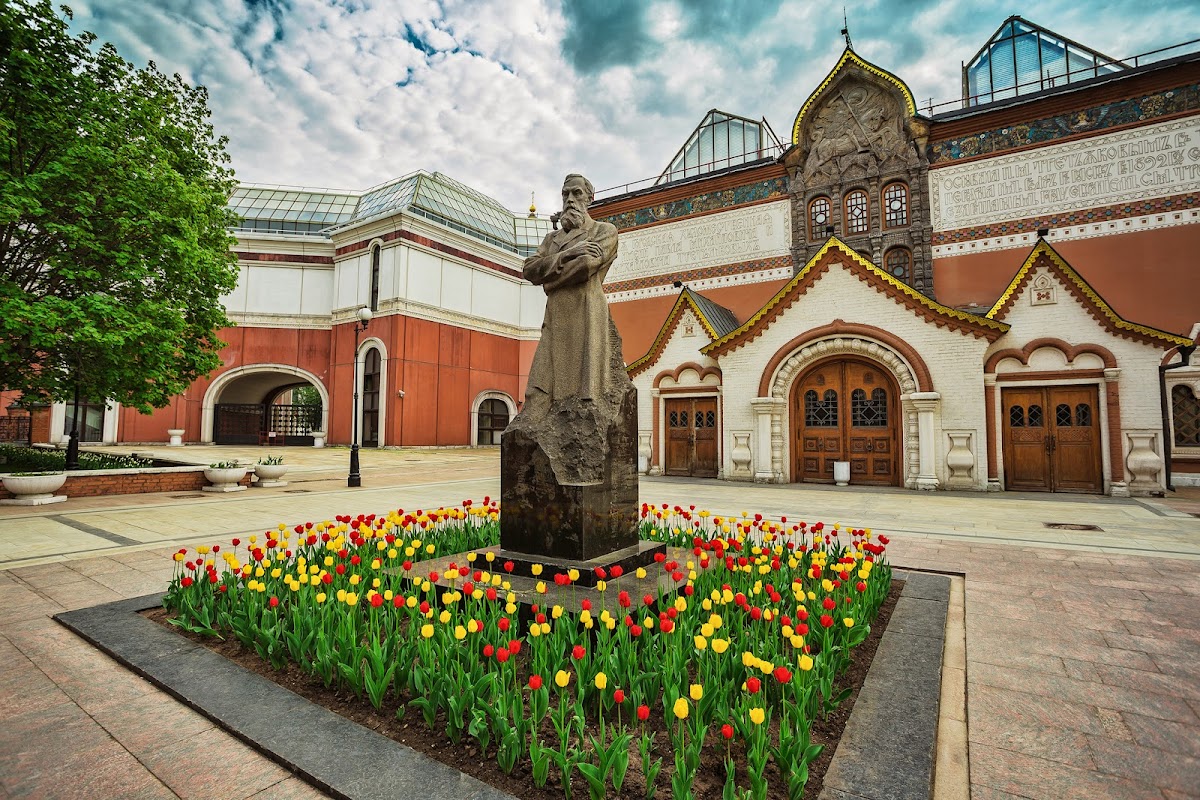
The main building of the Tretyakov Gallery is a distinctive example of the 'Russian Style' of architecture, designed by the renowned Russian artist Viktor Vasnetsov (1848-1926). Its red-brick facade, adorned with white decorative elements and a unique roofline, evokes the imagery of traditional Russian folklore. Intricate patterns and colorful tile work on the exterior reflect Russian national aesthetics and artistic spirit.
Inside, the gallery's layout guides visitors through a chronological journey of Russian art. The interior features antique wood and soft lighting, creating a grand yet intimate atmosphere. Natural light filters through windows, enhancing the colors and textures of the artworks. The building itself serves as an artistic statement, harmonizing with the masterpieces it contains.
Masterpieces of the Collection: A Glimpse into the Russian Soul
The Tretyakov Gallery's collection is a profound narrative of Russian life, spirit, and nature. Among its most celebrated works is Ilya Repin's 'Ivan the Terrible and His Son Ivan on November 16, 1581,' a powerful depiction of a historical tragedy. The painting's intense reds and dark shadows convey the Tsar's anguish and regret after accidentally striking his son.
Another iconic piece is 'Morning in a Pine Forest,' a collaboration between Ivan Shishkin and Konstantin Savitsky. This work captures the grandeur and mystery of the Russian wilderness, with a misty forest bathed in morning light and playful bear cubs adding a touch of life. Valentin Serov's 'Girl with Peaches' offers a contrasting image of pure, everyday beauty, depicting a young girl in a sunlit room, her gaze engaging directly with the viewer.
Other notable works include Ivan Kramskoi's enigmatic 'An Unknown Woman,' whose mysterious gaze captivates observers, and Vasily Surikov's 'Morning of the Streltsy Execution,' a dramatic portrayal of a pivotal historical event. Alexander Ivanov's monumental 'The Appearance of Christ Before the People' showcases the depth of Russian religious art, a work he dedicated over two decades to complete.
Visitor Information
The Tretyakov Gallery is closed on Mondays. Operating hours are Tuesday, Wednesday, and Sunday from 10:00 AM to 6:00 PM (last entry 5:00 PM), and Thursday, Friday, Saturday from 10:00 AM to 9:00 PM (last entry 8:00 PM). Admission for adults is approximately 500 RUB. It is advisable to check the official website (https://www.tretyakovgallery.ru) for the most current information on hours, ticket prices, and special exhibitions. Online ticket booking is recommended, especially during peak seasons, to minimize waiting times.
The gallery is conveniently located near Tretyakovskaya Metro Station (Orange and Yellow Lines), with Polyanka (Green Line) and Novokuznetskaya (Green Line) stations also within walking distance. The surrounding Zamoskvorechye district offers charming streets, historic churches like the Church of St. Nicholas in Pyzhi, and various cafes and restaurants for a complete cultural experience.
Visitor Info
| Location | Lavrushinsky Ln, 10, Moskva, Russia, 119017 |
| Hours | Translating |
| Admission | Translating |
| Getting There | Translating |
| Estimated Visit | Translating |
Featured Works

알렉산드르 이바노프 (Alexander Ivanov)
민중 앞에 나타난 그리스도 (The Appearance of Christ Before the People)
이바노프가 20년간 그린 러시아 미술사의 기념비적 대작

이반 시시킨 (Ivan Shishkin)
소나무 숲의 아침 (Morning in a Pine Forest)
러시아에서 가장 사랑받는 그림 중 하나

빅토르 바스네초프 (Viktor Vasnetsov)
보가티르 (Bogatyrs)
러시아 전설의 세 영웅을 그린 민족주의 대표작