Barcelona: A Modernist Architectural Stroll Where Gaudí's Dreams Live On
Barcelona: A Modernist Architectural Stroll Where Gaudí's Dreams Live On
A Modernist Architectural Stroll Across Europe: An Expedition Log (June 16-20, 2026)
This log documents an exploration of modernist architecture and art across various European cities from June 16 to 20, 2026. While the initial plan envisioned a journey centered on Gaudí's architectural marvels in Barcelona, this record focuses on key modernist hubs in other cities: the Bröhan Museum in Berlin, the Museo Reina Sofía in Madrid, and the Victoria and Albert Museum in London. Each location distinctly showcases the aesthetic and social transformations of the modernist era through its architectural features and collections.
The Bröhan Museum, Berlin: A Specialized Museum of Modern Design
Located at Schloßstraße 1a, Berlin, the Bröhan Museum sits near the historic Charlottenburg Palace. This museum specializes in decorative arts, graphic design, and painting from the late 19th to mid-20th century, covering Art Nouveau, Art Deco, and Functionalism. Its intimate scale offers a focused experience, allowing visitors to appreciate the intricate craftsmanship and design principles of these periods.
The museum's collection spans 1889 to 1939, a period of rapid artistic and design evolution in Europe. Key exhibits include delicate glasswork by Émile Gallé and exquisite jewelry by René Lalique, alongside furniture, ceramics, and metalwork. The displays are arranged to evoke the living spaces of the era, providing a vivid sense of the aesthetic and lifestyle of the time.
Museo Reina Sofía, Madrid: A Hub for Spanish Modern Art
The Museo Reina Sofía, situated at C. de Sta. Isabel, 52 in the heart of Madrid, is a pivotal institution for Spanish modern art. Opened in 1992, it occupies a former hospital building, transformed into a contemporary art space. The museum's extensive collection covers art from the 20th century onwards, capturing the dynamic trajectory of Spanish artistic expression.
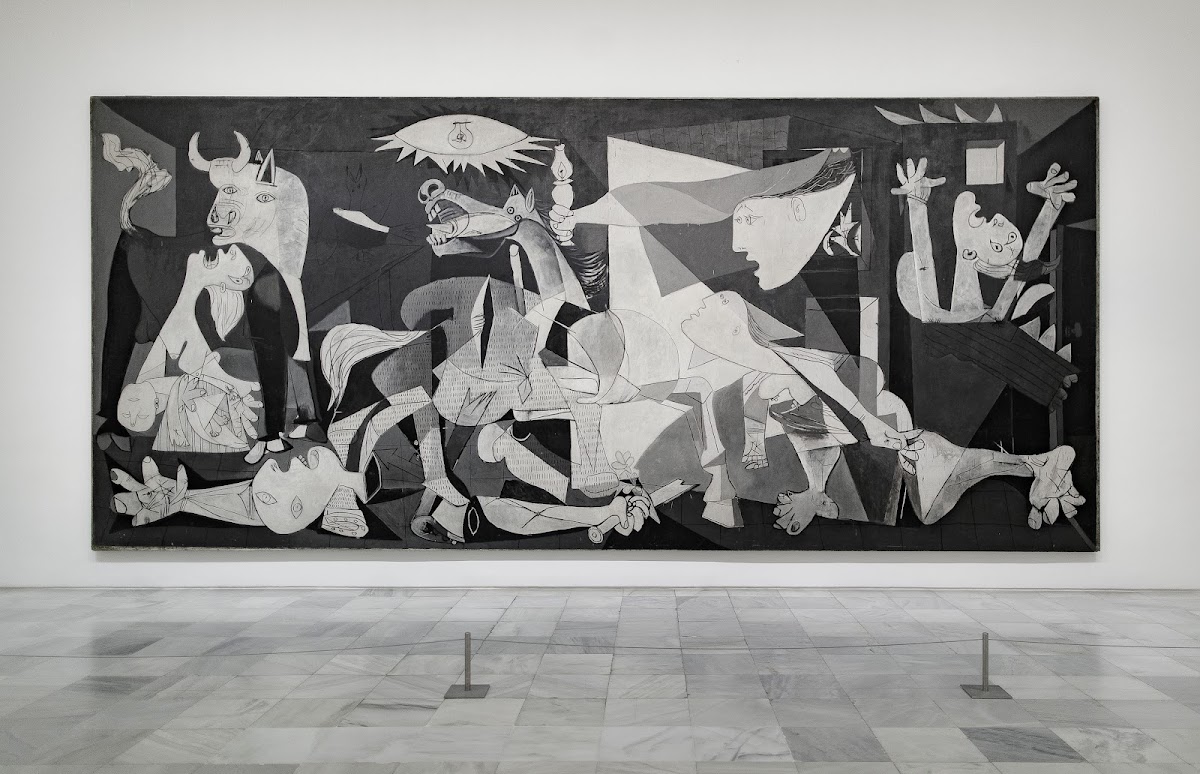
The museum's most iconic piece is Pablo Picasso's 'Guernica,' a monumental work depicting the horrors of the Spanish Civil War. This powerful black, white, and gray canvas conveys intense sorrow and outrage, utilizing Cubist and Surrealist elements to portray human and animal suffering. Beyond 'Guernica,' the museum features surrealist works by Salvador Dalí and abstract creations by Joan Miró, illustrating the diverse spectrum of Spanish modern art and its historical context.
Victoria and Albert Museum, London: A Palace of Design and Decorative Arts
The Victoria and Albert Museum (V&A) in South Kensington, London, is one of the world's leading museums of art, design, and performance. Established in 1852, it houses over 5 million objects, ranging from ancient artifacts to contemporary design. The museum's architecture is a grand Victorian edifice, continually expanded with modern elements, creating a dialogue between historical grandeur and contemporary design.
The V&A's architectural journey is evident in its grand central hall, ornate ceilings, and the integration of modern additions like the John Madejski Garden and the Exhibition Road Quarter. These spaces demonstrate how architecture can enhance the display of art and guide visitor flow. The museum itself is a testament to the design and craftsmanship of various eras, reflecting its mission to inspire creativity and appreciation for art and design.
Visitor Information
Bröhan Museum, Berlin
- Admission: Adults 8€, reduced 5€. Check official website for special exhibitions.
- Opening Hours: Closed Mondays. Tuesday to Sunday, 11:00 AM - 6:00 PM.
- Location: Schloßstraße 1a, 14059 Berlin, Germany.
- Transport: U2 Sophie-Charlotte-Platz station, 3-minute walk.
Museo Nacional Centro de Arte Reina Sofía, Madrid
- Admission: Adults 12€. Free entry on Monday/Wednesday-Saturday after 7:00 PM, and Sunday after 1:30 PM.
- Opening Hours: Closed Tuesdays. Monday, Wednesday-Saturday, 10:00 AM - 9:00 PM. Sunday, 10:00 AM - 2:30 PM.
- Location: C. de Sta. Isabel, 52, Centro, 28012 Madrid, Spain.
- Transport: Metro Line 1 Atocha station, 3-minute walk.
Victoria and Albert Museum, London
- Admission: Free for permanent collections. Special exhibitions may have a fee.
- Opening Hours: Daily, 10:00 AM - 5:45 PM. Fridays extended to 10:00 PM.
- Location: Victoria and Albert Museum (Stop M), London SW7 2RZ, UK.
- Transport: Tube South Kensington station, 3-minute walk.
Visitor Info
| Estimated Visit | Translating |
| Translating | Translating |
| Translating | Translating |
| Recommended Route | Translating |