The Heart of Brazil, Breathing Art
The Heart of Brazil, Breathing Art
Pinacoteca de São Paulo — A Cultural Anchor in Luz District
The Pinacoteca de São Paulo is located at Praça da Luz, 2, Bom Retiro, São Paulo, Brazil. It stands approximately a 5-minute walk east from Luz Station, served by São Paulo Metro Line 1 (Blue) and Line 4 (Yellow). The museum is situated between the Jardim da Luz, São Paulo's oldest public garden, and the historic Estação da Luz. These three landmarks form a cultural triangle within the vibrant Luz district, blending urban life with historical heritage.
Opened in 1905, the Pinacoteca is Brazil's oldest art museum. It occupies the former building of the Liceu de Artes e Ofícios (São Paulo Arts and Crafts School), constructed in 1900. The museum houses an extensive collection spanning from 19th-century Brazilian academic art to early 20th-century Brazilian modernism and contemporary works. This central location serves as a crucial space for exploring the historical trajectory and cultural identity of Brazilian art.
A Century of Brazilian Art — From 1905 to the Present
The Pinacoteca de São Paulo's establishment in 1905 marked a significant milestone in Brazilian cultural history, making it the oldest art museum in the city. Initially, its focus was on collecting and exhibiting 19th-century Brazilian academic art, reflecting the strong European academic influence prevalent in Brazilian art at the time. Over the decades, the museum's collection expanded considerably.
Today, the Pinacoteca's collection encompasses approximately 16,000 works, ranging from the early 20th-century Brazilian Modernist movement to contemporary art. This broad scope illustrates Brazil's artistic evolution, showcasing how artists moved beyond European influences to forge a distinct national identity. The museum serves as a vital repository, offering a comprehensive overview of Brazilian art history and its dynamic shifts.
Paulo Mendes da Rocha's Vision — Architectural Transformation
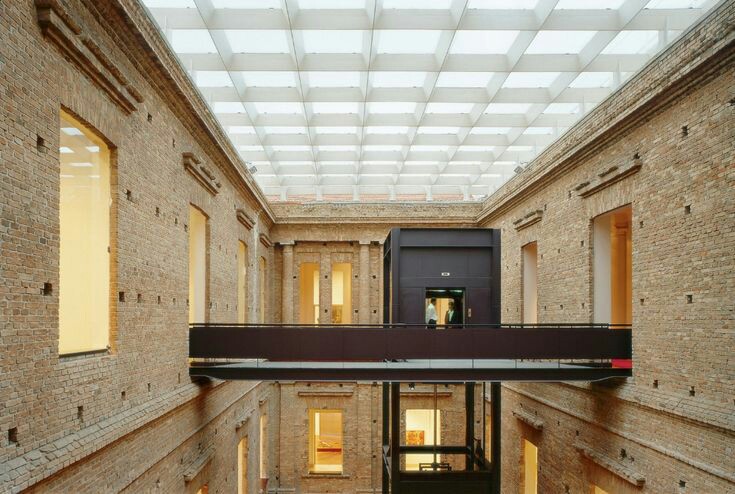
The Pinacoteca building, originally constructed in 1900 for the Liceu de Artes e Ofícios, underwent a transformative renovation in the late 1990s by the acclaimed Brazilian architect Paulo Mendes da Rocha. His design respected the building's historical integrity while injecting modern elements to create a functional and aesthetically compelling museum space. Rocha's signature approach is evident in the harmonious blend of the original red brickwork with contemporary steel structures and glass roofs.
The interior features a series of elevated steel walkways that crisscross the vast central courtyard. These walkways are not merely circulation paths but integral parts of the architectural experience, allowing visitors to perceive the space and its interaction with light from multiple perspectives. Rocha's design masterfully utilizes natural light, which filters through high glass ceilings, illuminating the red brick walls and creating a warm, almost ethereal atmosphere throughout the galleries.
The 'Saudade' Collection — José Ferraz de Almeida Júnior
Among the Pinacoteca's extensive collection, José Ferraz de Almeida Júnior's masterpiece, 'Saudade,' stands out. This painting profoundly embodies 'Saudade,' a unique Brazilian sentiment that transcends simple nostalgia or longing. It represents a complex blend of wistfulness, melancholy, and a deep yearning for a person, place, or time that is gone.
The canvas depicts a woman seated in a modest interior, gazing distantly, her expression serene yet imbued with profound sorrow and longing. Soft light streaming through a window gently illuminates her face and the room, adding a dreamlike and contemplative quality to the work. Almeida Júnior's meticulous brushwork and color palette capture every detail, from the folds of her dress to the intricate emotions reflected in her gaze. This painting is a powerful testament to Brazilian art's ability to convey deep cultural identity and resonate with the national psyche.
Luz Garden and Luz Station — A Cultural Triangle
A visit to the Pinacoteca is complemented by exploring its immediate surroundings. Adjacent to the museum is the Jardim da Luz, São Paulo's oldest public garden, established in 1825. This serene oasis features lush tropical plants, classical sculptures, and tranquil ponds, offering a peaceful escape from the urban bustle. The contrast between the museum's red brick architecture and the garden's verdant greenery creates a picturesque setting.
A short walk across the garden leads to Estação da Luz (Luz Station), another architectural marvel. Built in the late 19th century with materials imported from England, the station's grand facade resembles London's Victoria Station. Historically a vital hub during Brazil's coffee export boom, it remains a bustling metro and train station today. The station's high arched ceilings and intricate decorations evoke its past prosperity. Together, the Pinacoteca, Jardim da Luz, and Estação da Luz form a cohesive cultural district, providing visitors with a rich experience of Brazilian art, nature, and history.
Visitor Information
The Pinacoteca de São Paulo offers a compelling journey through Brazilian art. The recommended viewing time is approximately 2 to 3 hours to fully appreciate both the architectural design and the diverse collection. The exhibition flow typically guides visitors from 19th-century academic works to 20th-century modernism and contemporary art, utilizing the distinctive steel walkways to navigate between floors.
- Admission: General admission is approximately R$20. Discounts are available for Brazilian students and visitors over 60. Entry is free for all visitors on Saturdays. International students are advised to check the official website for potential discounts.
- Operating Hours: The museum is open from 10:00 AM to 6:00 PM, Wednesday through Monday. It is closed on Tuesdays. Operating hours may vary on public holidays, so checking the official website before your visit is recommended.
- Transportation: The museum is easily accessible via the São Paulo Metro. Alight at 'Luz' Station (Blue Line 1 or Yellow Line 4), and the museum is within a 5-minute walk. Luz Station itself is an architectural landmark, adding to the visitor experience. Numerous city bus routes also stop near the museum.
- Reservations: Advance reservations are not typically required for general admission. However, during weekends, public holidays, or special exhibition periods, the museum can be crowded. For specific visit times or special exhibitions, purchasing tickets online through the official website in advance is advisable. Group visits may require prior arrangement.
- Nearby Dining: The Luz district, being close to São Paulo's city center, offers various dining options. Casual Brazilian restaurants (such as 'Restaurante Kilo') and cafes are abundant near the museum. The 'Mercado Municipal de São Paulo,' about a 10-minute walk away, is a vibrant market where visitors can sample fresh fruits, cheeses, and the famous mortadella sandwich. The museum also has a cafeteria for light meals and coffee.
Visitor Info
| Admission | Adult R$40 (Tue Free) |
| Hours | Translating |
| Location | Avenida Paulista, 1578 - Bela Vista, São Paulo - SP, 01310-200, Brazil |
| Getting There | Translating |
| Estimated Visit | Translating |