Guggenheim Museum Bilbao — Spain's Shining Jewel, An Ecstasy of Art and Architecture
Guggenheim Museum Bilbao, Spain: Where the Symphony of Architecture and Art Resonates
The city of Bilbao, a port in northern Spain where a cool breeze once brushed against cheeks, was once shadowed by the remnants of a decaying industrial past. Yet, it has reborn as a global hub of culture and art, now boasting a magnificent structure that appears like a colossal silver sculpture, instantly captivating visitors. This is none other than the Guggenheim Museum Bilbao, designed by the masterful Frank Gehry. Since its opening in 1997, this museum has transcended its role as a mere exhibition space to become an undisputed landmark symbolizing Bilbao's identity, a magical place that draws countless travelers from around the world. Its impressive rating of 4.5 stars from over 92,000 reviews is no coincidence; it is powerful evidence of the 'Bilbao Effect' that this architecture has had on both the city and its people.
Waves of Titanium: Architecture Becomes Art Itself
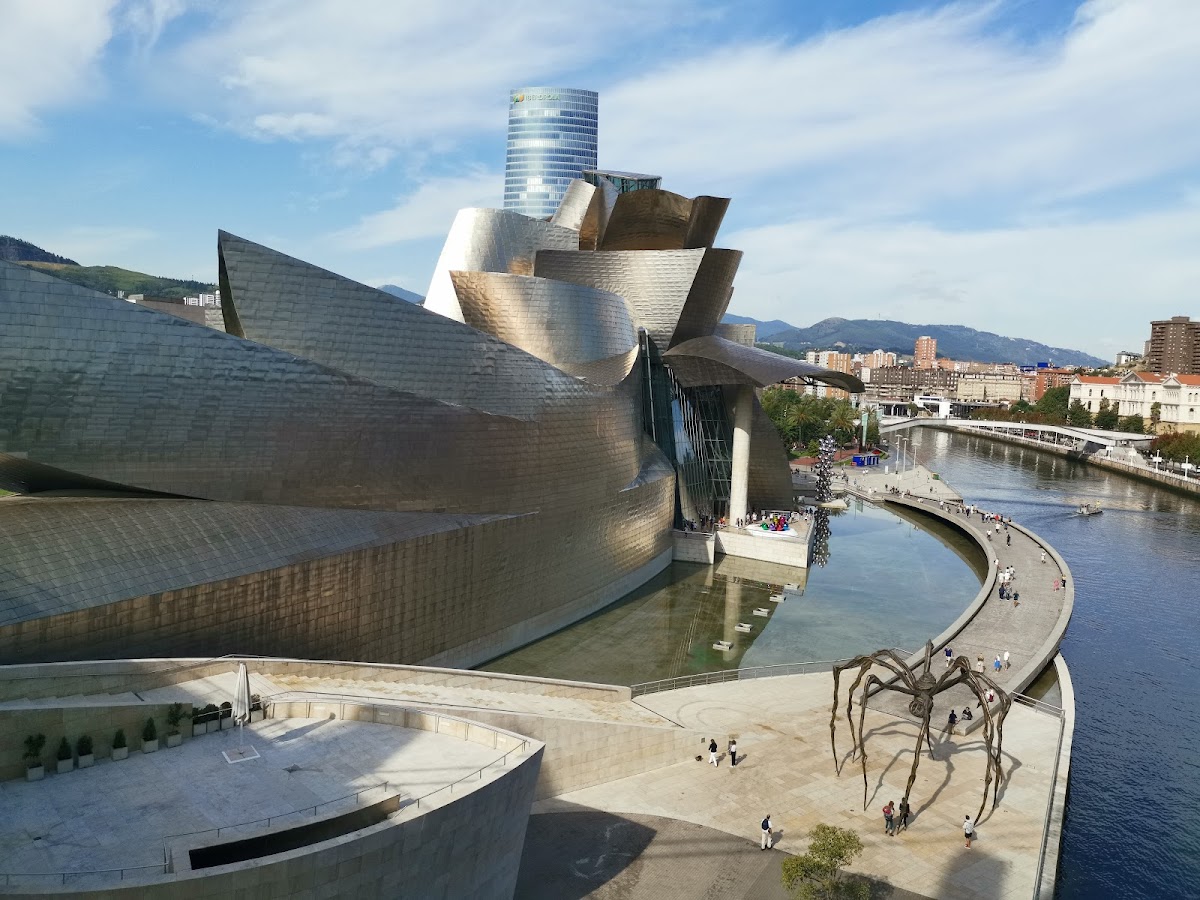
The moment one first steps before the museum, a breathtaking spectacle unfolds, eliciting gasps of awe. The organic curves and unpredictable, irregular forms of its exterior, clad in tens of thousands of thin titanium panels, create an illusion as if a giant silver fish is gracefully swimming on the waters of the Nervión River, or perhaps as if enormous petals are unfurling. Depending on the angle of the sunlight and the movement of the clouds, the titanium surface shimmers with constantly changing colors and textures, emitting an enchanting glow. Especially at sunset, when bathed in the golden light, it casts fantastic shadows upon the river. Frank Gehry, in designing this museum, imbued it with dynamic and futuristic imagery, reflecting Bilbao's earnest desire to revive its old industrial city through art. His architectural philosophy, 'architecture is art,' is powerfully demonstrated through this museum beyond any logical argument. The building itself acts as a colossal sculpture, constantly engaging in dialogue with its surroundings and infusing them with vitality.
Art's Guardians Inside and Out of the Museum
While the Guggenheim Museum Bilbao is grand on its own, the outdoor sculptures adorning its surroundings are also indispensable attractions. The first to greet visitors is Jeff Koons' gigantic dog sculpture, 'Puppy.' Covered in tens of thousands of vibrant live flowers, Puppy serves as a symbol of Bilbao and conveys a pure, warm message of welcome. The types of flowers change with each season, allowing one to always feel a new sense of life. Behind the museum, by the river, another commanding artwork resides: Louise Bourgeois' spider sculpture, 'Maman.' Over 9 meters tall, this massive spider embodies a mother cradling her eggs, evoking complex emotions of fragility and strength, protection and threat, simultaneously. These two artworks, harmonizing with the museum's modern architecture, offer an even richer artistic experience and further solidify Bilbao's artistic identity.
The Aesthetics of Space: The Mystery of the Interior Woven by Light and Steel
Upon entering the museum, a mysterious space, distinct from the exterior's grandeur, awaits visitors. The colossal 165-meter-long atrium, boasting overwhelming height and openness, is the heart of the museum and the highlight of Frank Gehry's architecture. Under the soft natural light pouring from the ceiling, the internal space, composed of complex intertwined steel structures and glass, evokes a surreal feeling, as if one has entered a giant cave or the interior of a futuristic spaceship. Here, not only the magnificence of the architecture itself but also the modern art pieces exhibited within are dramatically highlighted. Gehry's architecture is designed for artworks, viewers, and space to organically interact, creating new meanings. As you walk along the uniquely curved passages connecting each floor of the atrium, you will simultaneously experience the excitement and wonder of exploring an unknown world.
The Quintessence of Contemporary Art: A Journey of Scale and Contemplation
The Guggenheim Museum Bilbao focuses more on special temporary exhibitions rather than permanent collections, renowned for showcasing world-class contemporary art. It presents the forefront of constantly evolving art through the works of the most innovative artists of the late 20th and early 21st centuries. In particular, one cannot discuss the museum's history without mentioning Richard Serra's monumental steel sculpture series, 'The Matter of Time.' Occupying one of the museum's largest galleries entirely, this work allows viewers to physically feel the immense weight and mass of the colossal steel, and the unpredictably curved flow of space. Walking through the gigantic Corten steel pieces, which connect like a maze, visitors experience a new perception of physical space, the passage of time, and their own existence. The dark, cold texture of the steel dramatically utilizes light and shadow, creating a space for deep contemplation. Additionally, visitors can encounter works by other masters of modern art, spanning various eras and genres such as Abstract Expressionism, Minimalism, and Conceptual Art, including Anish Kapoor's mirror installations and Gerhard Richter's abstract paintings. As special exhibitions by world-renowned masters may be held depending on the time of visit, it is highly recommended to check the museum's website for current exhibitions before your visit.
The Guggenheim Effect: The Power of Art That Revived a City
The Guggenheim Museum Bilbao is more than just a space for exhibiting beautiful architecture and artworks; it is a symbolic presence of the 'Bilbao Effect' that transformed the fate of a city. In the 1980s, Bilbao, facing a severe economic crisis due to the decline of the steel industry, boldly pursued a transformation into a cultural city, with the establishment of the Guggenheim Museum at its core. Frank Gehry's unconventional design captured global attention, and after the museum's opening, Bilbao rapidly saw an increase in tourists, succeeding in economic revitalization and improving the city's image. This is regarded as a successful case that showed the world how art and architecture can be powerful engines for urban regeneration. New hotels, restaurants, and shops emerged around the museum, and the desolate riverside was transformed into beautiful promenades and parks, even improving the quality of life for its citizens. The Guggenheim Museum became not just a building for Bilbao, but a symbol of hope and a springboard for a new future.
Tips for a Richer Experience at the Guggenheim Museum Bilbao
Here are some tips to maximize your experience at the Guggenheim Museum Bilbao:
- Allocate Ample Time: It is advisable to set aside at least three hours. Beyond simply appreciating the artworks, considerable time is needed to savor the architecture from various angles, explore the beautiful spaces inside and outside the museum, and take photographs.
- Best Time to Visit: If possible, visit early on a weekday morning to avoid crowds and enjoy the artworks and architecture more leisurely. The sight of the early morning sunlight reflecting off the titanium exterior, emitting a luminous glow, is a breathtaking spectacle not to be missed. Visiting in the late afternoon or at sunset to witness the fantastic appearance of the museum bathed in twilight is also highly recommended.
- Riverside Stroll: Take a stroll along the Nervión River surrounding the museum to discover another charm of the museum. The panoramic view of the museum from across the river is truly picturesque, an ideal spot to admire the harmonious blend of the city and its architecture.
- Utilize Audio Guides: To deepen your understanding of the museum's rich history and artworks, renting an audio guide (available in various languages, including Korean) is recommended. Knowing the stories behind the works and the artist's intentions will double your emotional connection.
- Gastronomic Experience: Indulging in a special gastronomic experience unique to Bilbao at the museum's Michelin-starred restaurant, 'Nerua Guggenheim Bilbao,' led by chef Josean Alija, is an excellent way to elevate your travel experience with art-like cuisine and the ambiance of Bilbao. Alternatively, exploring the charming pintxo bars around the museum will also create unforgettable memories.
- Combine with Nearby Attractions: While Bilbao itself is a fascinating city, planning your trip in conjunction with gems like San Sebastián in northern Spain or the La Rioja wine region will allow you to enjoy an even richer journey through northern Spain.
Encountering the Future of Art, Architecture, and Urban Regeneration
Visiting the Guggenheim Museum Bilbao is more than just a museum trip; it offers a unique experience where art, architecture, and urban regeneration perfectly harmonize. During your time here, you will likely ask profound questions such as, 'What is art?' and 'How can architecture transform our lives and cities?' The miracle of a decaying city revived by art, the enchanting experience at the Guggenheim Museum Bilbao, will undoubtedly provide indelible, luminous moments in your travels. This is not merely a tourist attraction. It is a living museum showcasing the essence of innovative architecture and contemporary art from the late 20th and early 21st centuries, and a symbol of hope announcing the city's resurgence. We invite you to unleash your artistic sensibilities to the fullest at this iconic symbol of Bilbao, hailed as a masterpiece of modern architecture.
Visitor Info
| Admission | Adult 18유로 (온라인 reservation 시 discount 가능) |
| Hours | Tue-Sun 10:00-19:00 (Mon요Closed Sun, 7-8Mon 및 특별 기간 연장 운영) |
| Location | Avenida Abandoibarra, 2, 48009 Bilbao, Biscay, Spain |
| Getting There | 빌바오 city center 트램 (Guggenheim Stn) or Bus 이용 |
| Estimated Visit | 최소 3hr 이상 권장 |