In the Heart of Paris, Encounter Rodin's Soul: A Complete Guide to Musée Rodin!
In the Heart of Paris, Encounter Rodin's Soul: A Complete Guide to Musée Rodin!
Paris's Artistic Core: Three Iconic Museums
On June 16, 2026, an exploration of the Musée Rodin in Paris, France, commenced. Located at 77 Rue de Varenne in the 7th arrondissement, this museum is dedicated to the art of sculptor Auguste Rodin (1840-1917). Paris hosts numerous world-renowned museums, including the Louvre and Musée d'Orsay. The Musée Rodin offers a distinct, tranquil experience, allowing for a deeper immersion into Rodin's life and works, contrasting with the grandeur of its larger counterparts.
The Musée d'Orsay, situated on the Seine River, occupies the former Gare d'Orsay railway station, built for the 1900 Universal Exposition. Transformed into a museum in 1986, it primarily showcases Impressionist and Post-Impressionist art from the mid-19th to early 20th centuries. Its architectural grandeur, with a vast arched ceiling and a monumental clock, provides a unique backdrop for its collection. The Louvre Museum, also on the Seine, began as a 12th-century fortress and evolved into a royal palace before opening as a public museum in 1793. It houses an extensive collection of approximately 35,000 works spanning various civilizations.
Musée Rodin: A Legacy Preserved in Hôtel Biron
The Musée Rodin officially opened on August 4, 1919. It is housed in the Hôtel Biron, an 18th-century Rococo mansion where Auguste Rodin lived and worked from 1908 until his death in 1917. Rodin bequeathed all his works, collections, and the right to use Hôtel Biron to the French government in 1916, leading to the museum's establishment. This decision ensured the preservation and public exhibition of his artistic legacy.
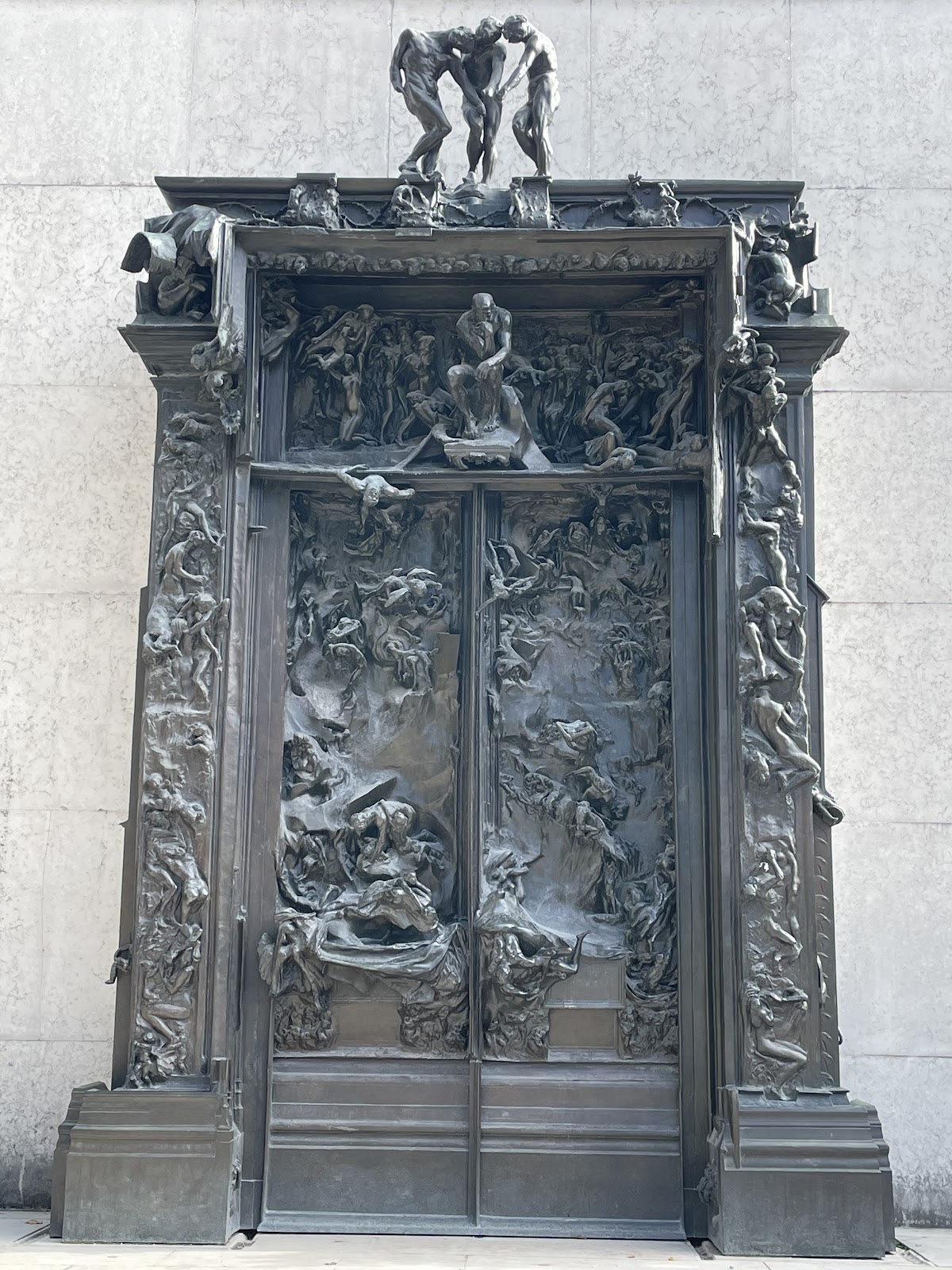
The museum's garden is a significant feature, displaying monumental works such as 'The Thinker,' 'The Burghers of Calais,' and 'The Gates of Hell' under natural light. 'The Thinker' commands attention in the garden's center, its pensive figure radiating energy. 'The Gates of Hell,' a lifelong project inspired by Dante's Inferno, showcases Rodin's ambition and profound insight into the human condition, featuring approximately 180 figures depicting suffering and despair.
Inside Hôtel Biron: Masterpieces and Rodin's Process
Within the Hôtel Biron, indoor exhibition rooms feature other masterpieces like 'The Kiss,' a marble sculpture that delicately expresses passionate emotion. These indoor spaces also present Rodin's drawings, smaller works, unfinished pieces, and some works by his student Camille Claudel. These materials offer insights into Rodin's artistic process, his creative struggles, and his relationship with Claudel.
Rodin's working methods, including his exploration of human movement and emotion through clay modeling, and his use of 'fragmentation' and 'assemblage,' are evident throughout the collection. He often created multiple versions of a single work in different materials and sizes, demonstrating his innovative approach to sculpture. The museum effectively conveys his artistic philosophy and its impact on 20th-century modern sculpture.
Visitor Information for the Paris Museums
Musée Rodin: Located at 77 Rue de Varenne, 75007 Paris. Open Tuesday to Sunday, 10:00 to 18:30; closed Mondays. Admission is 14 euros for the museum and garden, or 4 euros for the garden only. Accessible via Metro Line 13 (Varenne or Invalides stations). A visit typically takes 2-3 hours.
Musée d'Orsay: Located at 1 Rue de la Légion d'Honneur, 75007 Paris. Open Tuesday to Sunday, 09:30 to 18:00 (Thursdays until 21:45); closed Mondays. Admission is 16 euros for adults, free for under 18s. Free on the first Sunday of each month. Accessible via RER C (Musée d'Orsay station) or Metro Line 12 (Solférino station). Recommended visit time is 3-4 hours.
Louvre Museum: Located at 5 bis Rue du Louvre, 75001 Paris. Open Monday, Wednesday, Thursday, Friday, Saturday, Sunday, 09:00 to 18:00; closed Tuesdays. Admission is 22 euros for adults. Accessible via Metro Line 1 or 7 (Palais Royal – Musée du Louvre station). Online booking is essential due to its vast size and popularity. Official websites are recommended for the latest information on all museums.
Visitor Info
| Location | 77 Rue de Varenne, 75007 Paris, France |
| Hours | Translating |
| Admission | Translating |
| Getting There | Translating |
| Estimated Visit | Translating |
Featured Works

오귀스트 로댕 (Auguste Rodin)
지옥의 문 (The Gates of Hell)
1880-1917년작. 단테의 신곡에서 영감받은 높이 6m의 청동 조각 문.

오귀스트 로댕 (Auguste Rodin)
키스 (The Kiss)
1882년작. 파올로와 프란체스카의 비극적 사랑을 대리석으로 표현한 걸작.

오귀스트 로댕 (Auguste Rodin)
생각하는 사람 (The Thinker)
1904년작. 지옥의 문 상단에서 독립된 로댕의 대표작. 깊은 사색에 잠긴 인간을 표현.