Milan, City Where Timeless Beauty Breathes: From Da Vinci to Prada
Milan, City Where Timeless Beauty Breathes: From Da Vinci to Prada
Milan: A Journey Through Art and Architecture (June 16-20, 2026)
This report documents a comprehensive art and architecture survey conducted in Milan, Italy, from June 16 to 20, 2026. Milan, a global hub for fashion and design, also holds a rich artistic heritage spanning from Renaissance masterpieces to cutting-edge contemporary art. The itinerary focused on key cultural institutions that highlight this diverse artistic landscape.
The 3-night, 4-day journey included visits to Leonardo da Vinci's 'The Last Supper' at Santa Maria delle Grazie, the Pinacoteca di Brera, and the Fondazione Prada. The estimated budget was 1,500 EUR per person, excluding flights, with spring or autumn recommended for optimal visiting conditions. This route offers a structured exploration of Milan's timeless beauty and artistic depth.
Santa Maria delle Grazie: Home to Da Vinci's 'The Last Supper'
The Dominican convent of Santa Maria delle Grazie houses Leonardo da Vinci's iconic mural, 'The Last Supper.' Completed between 1495 and 1498, this Renaissance masterpiece depicts the dramatic moment Christ announces his betrayal. The work is renowned for its psychological depth and innovative composition.
Due to its delicate nature, access to 'The Last Supper' is strictly controlled, requiring advance booking and allowing only limited viewing times. Visitors are advised to consult the official website for reservation details and current visiting information.
Pinacoteca di Brera: A Repository of Italian Renaissance Art
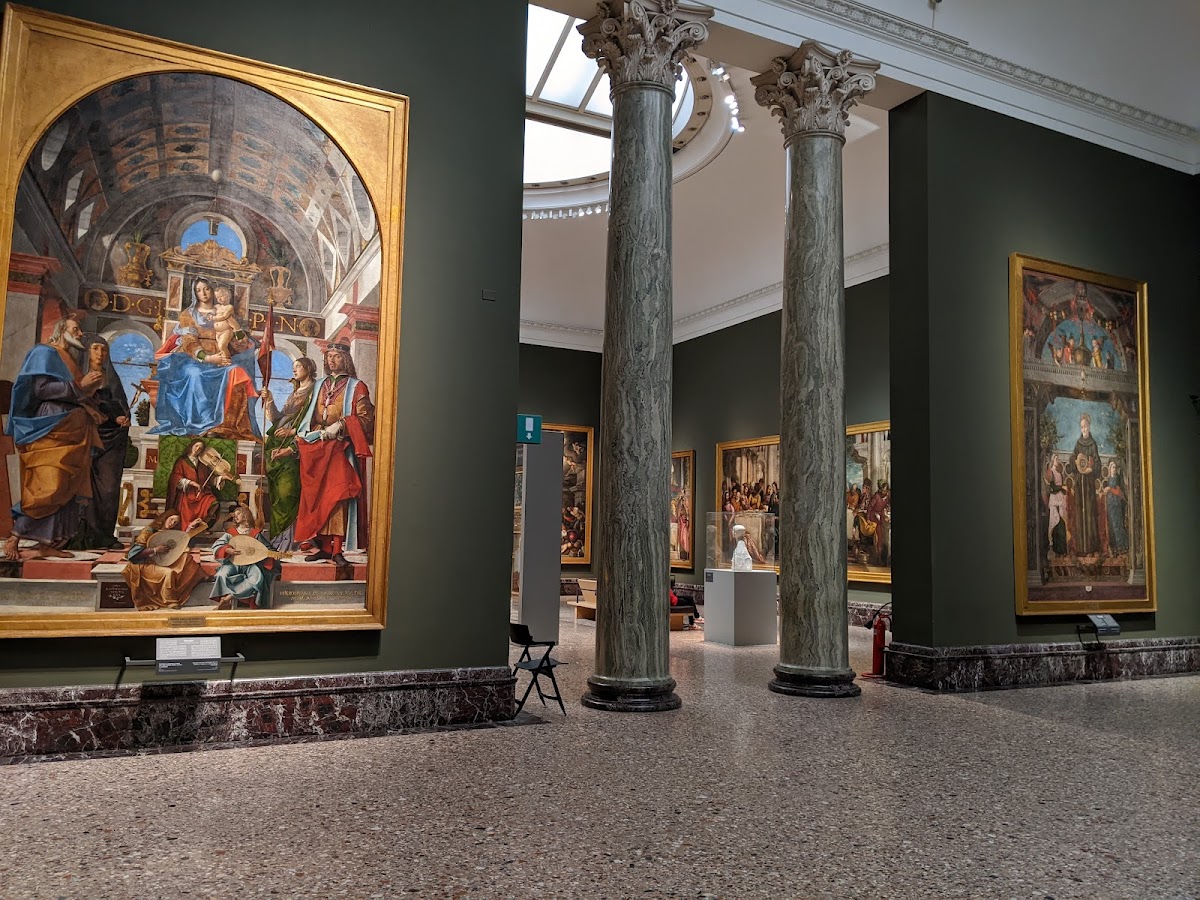
Located in Milan's charming Brera district at Via Brera, 28, the Pinacoteca di Brera is housed in a historic 17th-century monastery. It began as an academy collection in 1776 under Empress Maria Theresa and was officially opened as a public museum by Napoleon Bonaparte in 1809, showcasing artworks confiscated from churches and convents across northern Italy.
The museum's collection features over 1,200 works, primarily Italian paintings from the 15th to the 19th century, including masterpieces by Raphael, Caravaggio, Bellini, Mantegna, and Piero della Francesca. Notable works include Andrea Mantegna's 'Lamentation over the Dead Christ,' Raphael's 'The Marriage of the Virgin,' and Piero della Francesca's 'Brera Madonna.'
The Brera offers a deep dive into Italian art history, with its grand courtyard featuring a statue of Napoleon by Antonio Canova. Operating hours are Tuesday to Sunday, 8:30 AM to 6:00 PM, with Mondays closed. Admission is 5-8 EUR for adults. A visit typically lasts 30 minutes to 1 hour, though more time is recommended for in-depth appreciation.
Fondazione Prada: A Contemporary Art Experiment
The Fondazione Prada, situated at L.go Isarco, 2, in a former 1910s distillery, represents a significant institution for contemporary art. Reimagined by OMA and Rem Koolhaas, the site blends preserved industrial structures with new, striking architectural elements, including a gold-leaf 'Haunted House' and a modern 11-story 'Torre' with a rooftop restaurant offering panoramic city views.
Founded by Miuccia Prada and Patrizio Bertelli, the foundation explores the intersections of art, culture, and science through dynamic exhibitions, film, and research. It actively commissions new works and supports both emerging and established artists, fostering critical discourse within the global art community.
A highlight is Bar Luce, designed by filmmaker Wes Anderson, which offers a retro, whimsical atmosphere for relaxation. The museum is open Wednesday to Monday, 10:00 AM to 7:00 PM, closed on Tuesdays. Admission is 15 EUR for adults and 12 EUR for students. It is easily accessible via the Lodi T.I.B.B. metro station, a 5-minute walk away, and a visit typically requires about 2 hours.
Summary of Key Visitor Information
- Santa Maria delle Grazie (The Last Supper): Advance booking essential. Consult official website for hours and tickets.
- Pinacoteca di Brera: Via Brera, 28. Tue-Sun 08:30-18:00 (Mon closed). Adult 5-8€.
- Fondazione Prada: L.go Isarco, 2. Wed-Mon 10:00-19:00 (Tue closed). Adult 15€ / Student 12€.
Visitor Info
| Estimated Visit | Translating |
| Translating | Translating |
| Translating | Translating |
| Recommended Route | Translating |