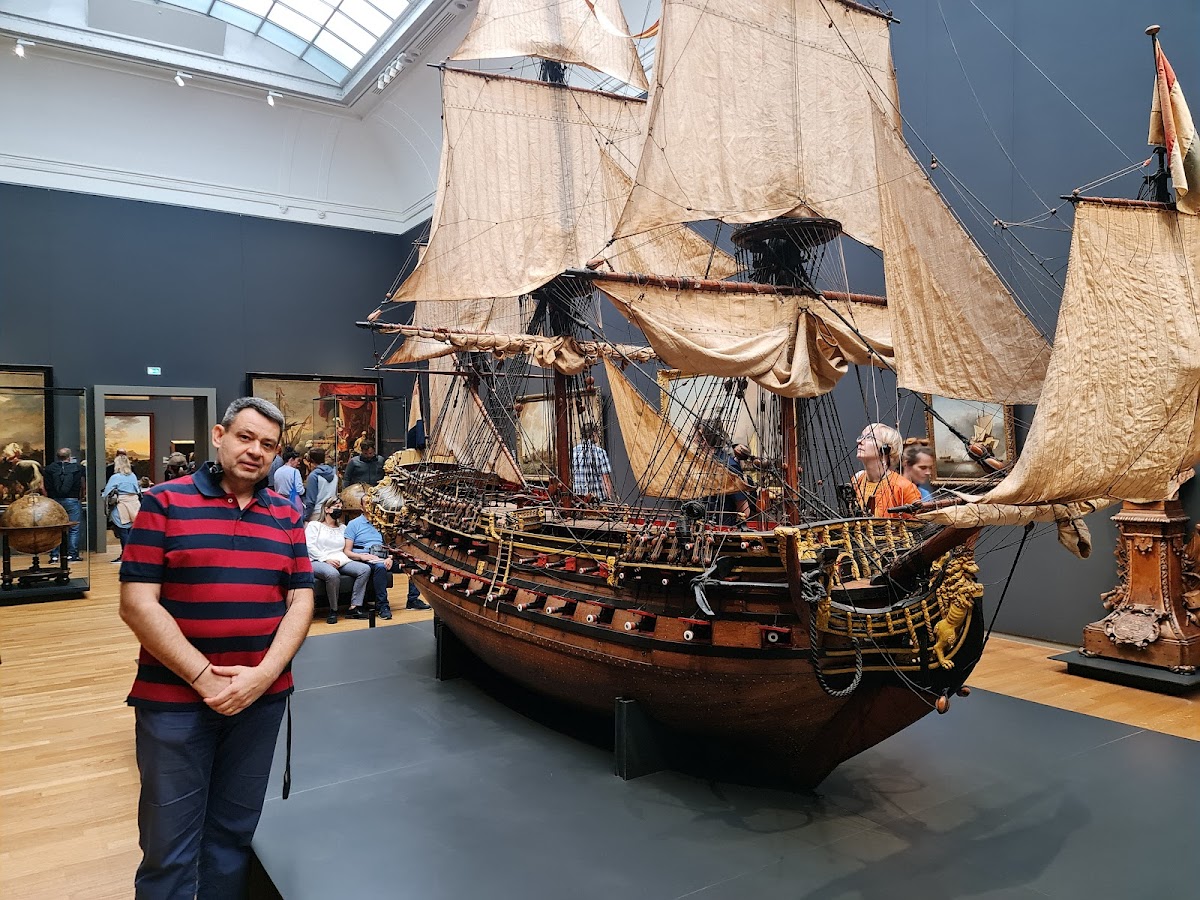
Amsterdam's Golden Triangle: Conquering Rijksmuseum to Van Gogh in One Day
Amsterdam's Golden Triangle: Conquering Rijksmuseum to Van Gogh in One Day
Amsterdam's Museumplein: A Hub of Art and Culture
Amsterdam's Museumplein is a vibrant cultural center, home to three of the city's most prominent art institutions: the Rijksmuseum, the Van Gogh Museum, and the Stedelijk Museum. These museums, covering Dutch art from the 13th century to contemporary works, are within easy walking distance of each other. The square is easily accessible from Amsterdam Central Station via trams 2, 5, or 12, with a journey of approximately 15-20 minutes to the 'Rijksmuseum' or 'Van Baerlestraat' stops.
The Museumplein itself is a large, open space in the southern part of Amsterdam, offering a place for relaxation and cultural enjoyment. Spring (April-May, tulip season) and autumn (September-October, pleasant weather) are ideal times to visit. A comprehensive visit to all three museums typically requires 8-10 hours, including time for lunch and transitions, making it a full-day itinerary.
The Rijksmuseum: Neo-Gothic Grandeur from 1885
Located at Museumstraat 1, 1071 XX Amsterdam, the Rijksmuseum opened in 1885. Designed by architect Pierre Cuypers, its imposing Neo-Gothic architecture features red brick, rich ornamentation, and a unique archway that allows pedestrian and bicycle traffic, symbolizing the museum's connection to the city. The building itself is a monumental work, reflecting Dutch history and artistic achievements.
The interior boasts high ceilings, grand halls, and galleries bathed in natural light. The 'Gallery of Honour,' in particular, showcases masterpieces from the Dutch Golden Age, including Rembrandt's The Night Watch, where the architectural splendor enhances the artistic experience. The museum underwent a major renovation, reopening in 2013 with modern amenities. Admission is €22.50 for adults, free for those under 19, and it operates daily from 09:00 to 17:00. Online timed tickets are mandatory.
Rijksmuseum's Collection: Dutch Art from the 13th Century to Present
The Rijksmuseum houses over one million objects, spanning Dutch art history from the 13th century to the present. Its core collection focuses on the 'Dutch Golden Age' of the 17th century, featuring masterpieces by Rembrandt van Rijn, Johannes Vermeer, and Frans Hals. Beyond paintings, the collection includes genre scenes by Jan Steen, Delftware, silverwork, and various artifacts that illustrate Dutch culture.
The museum's diverse holdings encompass sculpture, prints, drawings, photography, historical costumes, and weaponry, providing a comprehensive view of the Netherlands' social, economic, and cultural evolution. Galleries are organized chronologically or thematically, guiding visitors through the evolution of Dutch art. This extensive collection serves as a vital resource for understanding the nation's rich heritage.
Rembrandt's The Night Watch: A Masterpiece of Light and Dynamism
Rembrandt van Rijn's The Night Watch, completed in 1642, is the Rijksmuseum's most iconic work. This monumental canvas (approximately 3.79m x 4.53m) depicts the civic militia of Amsterdam. Rembrandt revolutionized group portraiture by using dramatic light and shadow to create a sense of movement and depth, giving the figures a vibrant, almost theatrical presence. The composition is dynamic, drawing viewers into the scene.
The painting centers on Captain Frans Banninck Cocq and his lieutenant, surrounded by militiamen engaged in various roles. Rembrandt's meticulous rendering of expressions and gestures highlights individual personalities. The recent restoration, which reincorporated previously cropped sections, further reveals Rembrandt's original composition and dramatic intent. The Night Watch stands as a pinnacle of Dutch Golden Age painting, showcasing Rembrandt's mastery of light and narrative.
Vermeer's The Milkmaid: The Aesthetics of Quiet Everyday Life
Johannes Vermeer's The Milkmaid, painted around 1658, is another significant work in the Rijksmuseum's collection. This painting transforms an ordinary domestic moment into a scene of timeless beauty. The soft natural light filtering through a window delicately illuminates the woman's face, hands, and the flowing milk, characteristic of Vermeer's exquisite use of light.
The work emphasizes tranquility and authenticity found in simple acts. Vermeer employs a restrained color palette and precise composition to create a sense of stability and serenity. Detailed textures, such as the folds of the woman's clothing, the bread basket, and the rough wall surface, are meticulously rendered. The Milkmaid captivates viewers without grand narrative, demonstrating Vermeer's artistic prowess and securing its place as a masterpiece of Dutch Golden Age genre painting.
The Van Gogh Museum: Modern Architecture on Museumplein
The Van Gogh Museum, located at Museumplein 6, 1071 DJ Amsterdam, opened in 1973. It comprises a main building designed by Gerrit Rietveld, known for its functional and minimalist design, and an exhibition wing by Kisho Kurokawa, featuring a modern, curved exterior. These two architectural styles from different eras harmoniously house Van Gogh's artistic world.
Situated adjacent to the Rijksmuseum, the Van Gogh Museum is about a 5-minute walk away, facilitating convenient visits to both. The interior is designed to chronologically display Van Gogh's works, utilizing natural light to create an optimal viewing environment. Adult admission is €20, free for those under 18. It operates Mon-Thu, Sat-Sun from 09:00-18:00, and Fri from 09:00-21:00. Online booking is essential.
Van Gogh Museum's Collection: Vincent van Gogh's Artistic Journey
The Van Gogh Museum boasts the world's largest collection of Vincent van Gogh's works, including over 200 paintings and 500 letters. The museum presents his oeuvre chronologically, from his early pieces to his final works, illustrating his artistic struggles, passions, and stylistic evolution. This comprehensive display offers profound insights into Van Gogh's life and artistic trajectory.
The collection traces his early Dutch period with dark-toned works, his Parisian period influenced by Impressionism, his vibrant Arles and Saint-Rémy periods characterized by intense colors and dynamic brushstrokes, and his final works from Auvers-sur-Oise. Alongside his paintings, letters exchanged with his brother Theo and works by contemporary artists provide a richer understanding of Van Gogh's inner world and the supportive family bonds.
Early Works and Iconic Masterpieces of Van Gogh
Upon entering the museum, visitors encounter Van Gogh's early work, The Potato Eaters, completed in 1885. This painting, with its dark tones and coarse brushwork, realistically portrays the arduous lives of Dutch peasants, revealing his artistic roots and deep empathy for humanity. Progressing through the galleries, one observes the transformation of his style, transitioning to brighter and more intense colors during his time in Paris.
His move to Arles in southern France marked an explosion of vibrant colors and dynamic brushstrokes, representing the zenith of his art. The Sunflowers series exudes a powerful vitality and the intense energy of the sun. Almond Blossom, with its delicate blue and pink hues, conveys a sense of peace and celebrates the birth of his nephew, hinting at his underlying yearning for tranquility and hope.
The Stedelijk Museum: 'The Bathtub' of Modern Art
The Stedelijk Museum, located at Paulus Potterstraat 13, 1071 CX Amsterdam, was established in 1874. It underwent a modern renovation in 1938, and in 2012, a distinctive white, contemporary extension, affectionately known as 'The Bathtub,' was added. This design harmoniously blends the 19th-century brick building with sleek, curved modern architecture.
The museum's architecture is considered an artwork in itself. The modern extension provides vast exhibition spaces, effectively utilizing natural light to enhance the display of artworks. Its spacious, open lobby and organically connected galleries allow visitors to freely explore diverse modern art. This design underscores how the architecture actively mediates the interaction between art and the viewer, rather than merely containing the works. Adult admission is €22.50, free for those under 18, and it operates daily from 10:00 to 18:00.
Stedelijk Museum's Collection: The Flow of Modern and Contemporary Art
The Stedelijk Museum boasts an extensive collection of modern and contemporary art, spanning from the late 19th century to the present, with over 90,000 artworks. It features a balanced representation of Dutch artists and international masters, including early works by Vincent van Gogh, Kazimir Malevich's Suprematist pieces, and Piet Mondrian's abstract compositions.
The collection also includes works by Karel Appel and Willem de Kooning from the CoBrA group, Jackson Pollock's Abstract Expressionism, and Andy Warhol's Pop Art, showcasing various movements in modern art. The museum's unique spatial design provides an ideal backdrop for vibrant contemporary paintings and large-scale installations, allowing each artwork to assert its presence fully. The Stedelijk Museum serves as a dynamic space for exploring the evolution of modern and contemporary artistic expression.
Museumplein Itinerary: Efficient Day Planning
An efficient itinerary for visiting the three Museumplein museums in one day is as follows. Begin early in the morning at the Rijksmuseum to experience the masterpieces of the Dutch Golden Age by Rembrandt and Vermeer. The Rijksmuseum typically requires 3-4 hours, so arriving at opening time is recommended. Afterward, have lunch in the vicinity of the museum, where various cafes and restaurants are available.
In the afternoon, proceed to the Van Gogh Museum to explore Vincent van Gogh's artistic world. The Van Gogh Museum requires 2-3 hours for a visit, and online timed reservations are essential. Conclude the day at the Stedelijk Museum to delve into modern and contemporary art, which typically takes about 2 hours. This itinerary allows for an effective experience of each museum's highlights.
Visitor Information and Practical Notes
When planning a visit to the three Museumplein museums in Amsterdam, consider the following information:
- Total Visit Time: A minimum of 8-10 hours combined for all three museums (Rijksmuseum 3-4 hours, Van Gogh 2-3 hours, Stedelijk 2 hours). A full day is recommended, including lunch and travel time.
- Budget (per person): Admission fees range from €60-80 (depending on passes), excluding meals and transportation.
- Recommended Season: Spring (April-May, tulip season) or Autumn (September-October, pleasant weather). Summer can be crowded with tourists.
- Transportation: Trams 2, 5, or 12 to 'Rijksmuseum' or 'Van Baerlestraat' stops. Approximately 15-20 minutes from Amsterdam Central Station.
Specific operating hours and admission fees for each museum are as follows:
- Rijksmuseum:
- Admission: Adults €22.50, under 19 free. Museumkaart accepted.
- Operating Hours: Daily 09:00-17:00. Online timed tickets required.
- Location: Museumstraat 1, 1071 XX Amsterdam, Netherlands.
- Van Gogh Museum:
- Admission: Adults €20 (online booking essential). Under 18 free.
- Operating Hours: Mon-Thu 09:00-18:00 / Fri 09:00-21:00 / Sat-Sun 09:00-18:00.
- Location: Museumplein 6, 1071 DJ Amsterdam, Netherlands.
- Stedelijk Museum:
- Admission: Adults €22.50. Under 18 free.
- Operating Hours: Mon-Sun 10:00-18:00.
- Location: Paulus Potterstraat 13, 1071 CX Amsterdam, Netherlands.
Online advance booking is mandatory for all three museums. The Van Gogh Museum, in particular, operates on a timed entry system, making pre-booking essential. Online reservations for the Rijksmuseum and Stedelijk Museum are also recommended to reduce waiting times and ensure smooth entry.
Visitor Info
| Estimated Visit | Translating |
| Translating | Translating |
| Translating | Translating |
| Recommended Route | Translating |
| Transport | Translating |