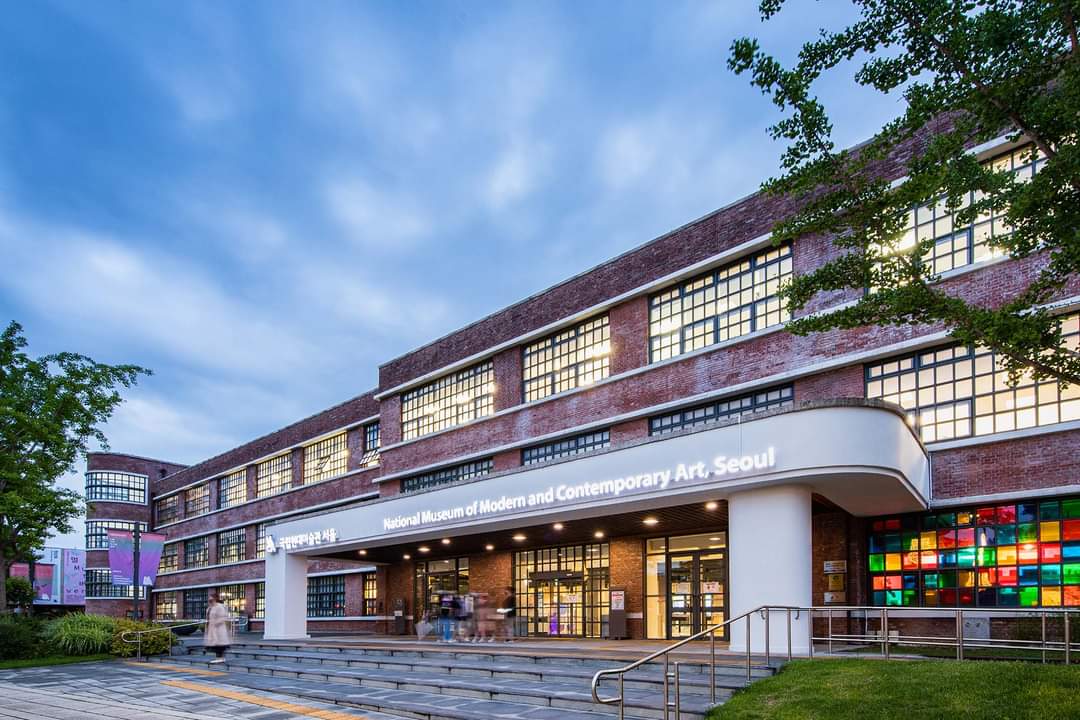
The Heart of Korean Contemporary Art
The Heart of Korean Contemporary Art
MMCA Seoul — A Nexus of Art and History in Jongno
Located at 30 Samcheong-ro, Jongno District, Seoul, MMCA Seoul stands as a prominent institution for contemporary art. Situated near the historic Gyeongbokgung Palace and the traditional Bukchon Hanok Village, the museum occupies a site rich in history, formerly home to the Joseon Dynasty's Jongchinbu (Office of the Royal Clan) and later a military headquarters during the Japanese colonial period. This strategic location places it at the heart of Seoul's cultural belt, connecting it with Samcheong-dong's galleries, Insadong's traditional streets, and the recently opened Cheong Wa Dae area.
Opened in 2013, MMCA Seoul is the fourth branch of the National Museum of Modern and Contemporary Art, distinguishing itself by focusing on the cutting edge of contemporary art. While its sister institutions — Gwacheon, Deoksugung, and Cheongju — cover modern art, early modern art, and storage respectively, Seoul is dedicated to showcasing the present and future of Korean contemporary art, fostering dynamic and experimental artistic expressions.
Architectural Harmony: Bridging Eras
The museum's design, led by architect Min Hyun-sik of mp_art architects, masterfully integrates historical elements with modern aesthetics. Min Hyun-sik's approach respected the site's profound history, preserving remnants of the original Jongchinbu and military buildings while seamlessly connecting them with contemporary concrete structures. This creates a unique dialogue between past and present, making the architecture itself a significant part of the museum's narrative.
MMCA Seoul is characterized by its open, fluid design, centered around multiple 'madang' (courtyards). These four main courtyards serve as visual resting places and outdoor exhibition spaces, inviting natural light and external views into the interior. The interplay of indoor and outdoor spaces, combined with a labyrinthine circulation path through its three underground and three above-ground floors, offers visitors a dynamic and immersive experience. The architecture encourages exploration, allowing visitors to discover art within a space that constantly interacts with its historical and natural surroundings.
Dynamic Exhibitions and Collections
MMCA Seoul is committed to building a collection that reflects the diverse trends of contemporary art, encompassing painting, sculpture, photography, video, installation, and new media. The museum actively collects works by both established and emerging Korean artists, alongside international works, to illuminate the evolution of Korean art and its engagement with global artistic movements. Its exhibitions are often thematic and timely, prompting visitors to engage in critical discourse about contemporary societal issues.
The museum goes beyond traditional displays, actively fostering artistic innovation and public engagement. It hosts a wide array of programs including media art, performance art, collaborative projects, lectures, and workshops. These initiatives aim to make contemporary art accessible to a broader audience, encouraging interaction and dialogue between art, artists, and the public. MMCA Seoul plays a crucial role in expanding the horizons of Korean contemporary art and enhancing its global presence.
Visitor Information and Surrounding Attractions
MMCA Seoul is open from Tuesday to Sunday, 10:00 AM to 6:00 PM. On Wednesdays and Saturdays, the museum extends its hours until 9:00 PM for evening viewings. It is closed on Mondays, January 1st, Seollal (Lunar New Year's Day), and Chuseok (Korean Thanksgiving Day). Admission to permanent exhibitions is free, while special exhibitions may have a fee, typically ranging from free to 4,000 KRW. Visitors are advised to check the official website for the latest information and any required reservations for specific programs.
The museum is easily accessible by public transport, located a 10-minute walk from Anguk Station (Line 3) or Gwanghwamun Station (Line 5). While paid parking is available, public transport is recommended due to limited space. The surrounding Samcheong-dong and Sogyeok-dong areas offer a wealth of attractions, including traditional Korean restaurants, charming cafes, and unique artisan shops. Visitors can enjoy a leisurely stroll through Bukchon Hanok Village or explore the galleries of Samcheong-dong before or after their museum visit, making for a rich cultural day out.
Visitor Info
| Opened | Translating |
| Architect | Translating |
| Location | Translating |
| Operated by | Translating |
| Admission | Translating |
Featured Works

백남준 (Nam June Paik)
다다익선 (The More, The Better)
1003대의 TV 모니터로 이루어진 18.5m 높이의 비디오 타워. 1988년 서울올림픽을 기념하여 제작.

김환기 (Kim Whanki)
무제 (Untitled)
점화(dot painting) 시리즈의 대표작. 수천 개의 점으로 이루어진 추상 회화.