Renaissance Treasures of the Holy See
Renaissance Treasures of the Holy See
Vatican Museums — A Global Art Hub in Vatican City
The Vatican Museums are situated in Vatican City, a sovereign state, at WF42+7WV, Viale Centro del Bosco, 00120 Città del Vaticano. This vast complex, adjacent to St. Peter's Basilica, is a global center for art and history, easily accessible from Rome via the Ottaviano Metro A station, a 10-minute walk away. The museums embody centuries of papal patronage and artistic development, making them a crucial repository of Western art history.
Founded in 1506: Pope Julius II's Vision
The foundation of the Vatican Museums dates back to 1506, when Pope Julius II acquired the newly discovered ancient Greek sculpture, the 'Laocoön and His Sons,' displaying it in the Belvedere Courtyard. This act marked the beginning of the systematic collection and preservation of ancient artifacts by the Holy See. Pope Julius II, a pivotal patron of the Renaissance, commissioned masterpieces like Michelangelo's Sistine Chapel ceiling and Raphael's frescoes, laying the groundwork for the museum's extensive collection.
Architectural Grandeur and Evolution
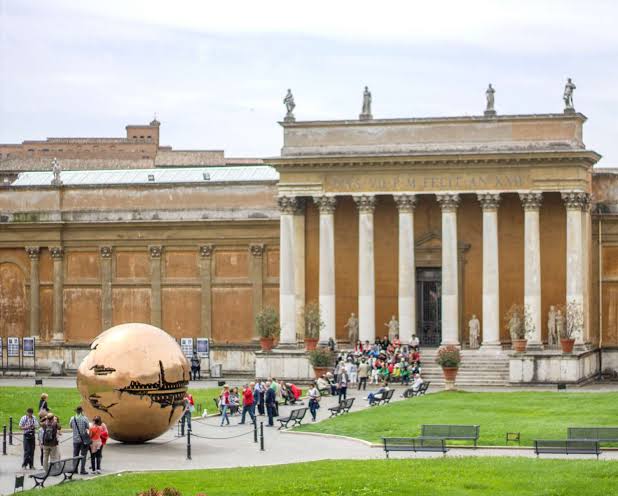
The Vatican Museums are not a single building but an intricate network of palaces, courtyards, and galleries. Donato Bramante designed the Belvedere Courtyard under Julius II, creating a magnificent space for ancient sculptures. Michelangelo transformed the Sistine Chapel with his frescoes, making the architectural space itself a profound work of art. Over centuries, various popes expanded and renovated the complex, resulting in its current monumental scale and diverse architectural styles.
Diverse Collections: From Antiquity to Renaissance
The collection, accumulated since the 16th century, spans tens of thousands of artifacts. It includes mysterious ancient Egyptian relics, Etruscan civilization remnants, and glorious Roman Empire sculptures and mosaics. These ancient treasures offer crucial insights into the roots of Western civilization. The core of the collection, however, lies in its Renaissance paintings and sculptures, featuring masterpieces by Raphael, Leonardo da Vinci, Caravaggio, and Bellini, showcasing the evolution of art from antiquity to the early modern period.
Pinacoteca: Renaissance Masterpieces
The Pinacoteca Vaticana, a dedicated gallery for paintings, houses approximately 460 works from the 12th to the 19th centuries. Key works include Raphael's 'Transfiguration,' his final masterpiece, which dramatically contrasts divine transformation with human suffering. Leonardo da Vinci's unfinished 'St. Jerome in the Wilderness' demonstrates his anatomical genius and chiaroscuro technique. Caravaggio's 'The Entombment of Christ' marks the dawn of the Baroque era with its intense realism and dramatic lighting.
Raphael Rooms: Papal Glory in Fresco
The Raphael Rooms, commissioned by Pope Julius II, showcase Raphael's early 16th-century genius. These frescoes vividly reflect the intellectual, political, and religious atmosphere of the papal court. The 'School of Athens' in the Stanza della Segnatura depicts ancient Greek philosophers and scholars, symbolizing Renaissance humanism and reverence for classical knowledge. Opposite, 'The Disputation of the Holy Sacrament' illustrates theological truth, demonstrating the coexistence of secular wisdom and spiritual faith within the papacy.
Sistine Chapel: Michelangelo's Divine Epic
The Sistine Chapel is the pinnacle of the Vatican Museums visit. Michelangelo's ceiling fresco, 'The Creation of Adam,' completed over four years for Pope Julius II, depicts biblical narratives. The iconic moment of God's finger reaching out to Adam captures the divine spark of life. His later work, 'The Last Judgment,' on the altar wall, reflects his profound contemplation on human destiny. Beyond its artistic value, the chapel serves as the sacred venue for the papal conclave.
Belvedere Courtyard: Ancient Sculptures and Renaissance Inspiration
The Belvedere Courtyard, initiated by Pope Julius II, was designed to display ancient Roman sculptures that profoundly influenced Renaissance artists. The 'Laocoön and His Sons,' discovered in 1506 and dating to the 1st century BCE, dramatically portrays the Trojan priest and his sons battling sea serpents. This work, along with the 'Apollo Belvedere,' provided Renaissance masters like Michelangelo with new standards for depicting the human form and emotion, bridging classical antiquity with the new artistic era.
Visitor Information
The Vatican Museums are open Monday to Thursday and Saturday from 8:00 AM to 6:00 PM, and Friday from 9:00 AM to 5:00 PM. The last entry is one hour before closing. The museums are closed on Sundays. Adult admission is €17, €21 for online bookings, and €8 for students. Advance online booking via the official website is highly recommended due to long queues for on-site ticket purchases. The museums are located at WF42+7WV, Viale Centro del Bosco, 00120 Città del Vaticano, Vatican City, a 10-minute walk from the Ottaviano Metro A station.
Visitor Info
| Founded | 1506 |
| Architect | Donato Bramante, Michelangelo |
| Location | Viale Vaticano, 00165 Roma, Italy |
| Hours | Mon-Sat 8:00-19:00 |
| Admission | €17 |
Featured Works

Michelangelo
The Creation of Adam
미켈란젤로가 시스티나 성당 천장에 그린 프레스코화의 핵심 장면으로, 하느님이 아담에게 생명을 불어넣는 순간을 묘사했습니다. 거의 닿을 듯한 두 손가락 사이의 긴장감은 서양 미술사에서 가장 많이 재현되는 이미지가 되었습니다. 인체 해부학에 대한 깊은 이해와 역동적 구도가 르네상스 미술의 정수를 보여줍니다.

Raphael
The School of Athens
라파엘로가 바티칸 궁의 세냐투라의 방에 그린 프레스코화로, 고대 그리스의 철학자들이 한데 모인 이상적 장면을 묘사했습니다. 플라톤과 아리스토텔레스를 중심으로 소크라테스, 피타고라스 등 50여 명의 지식인이 등장합니다. 르네상스 원근법의 완벽한 구현과 인문주의적 이상을 보여주는 미술사의 기념비적 작품입니다.