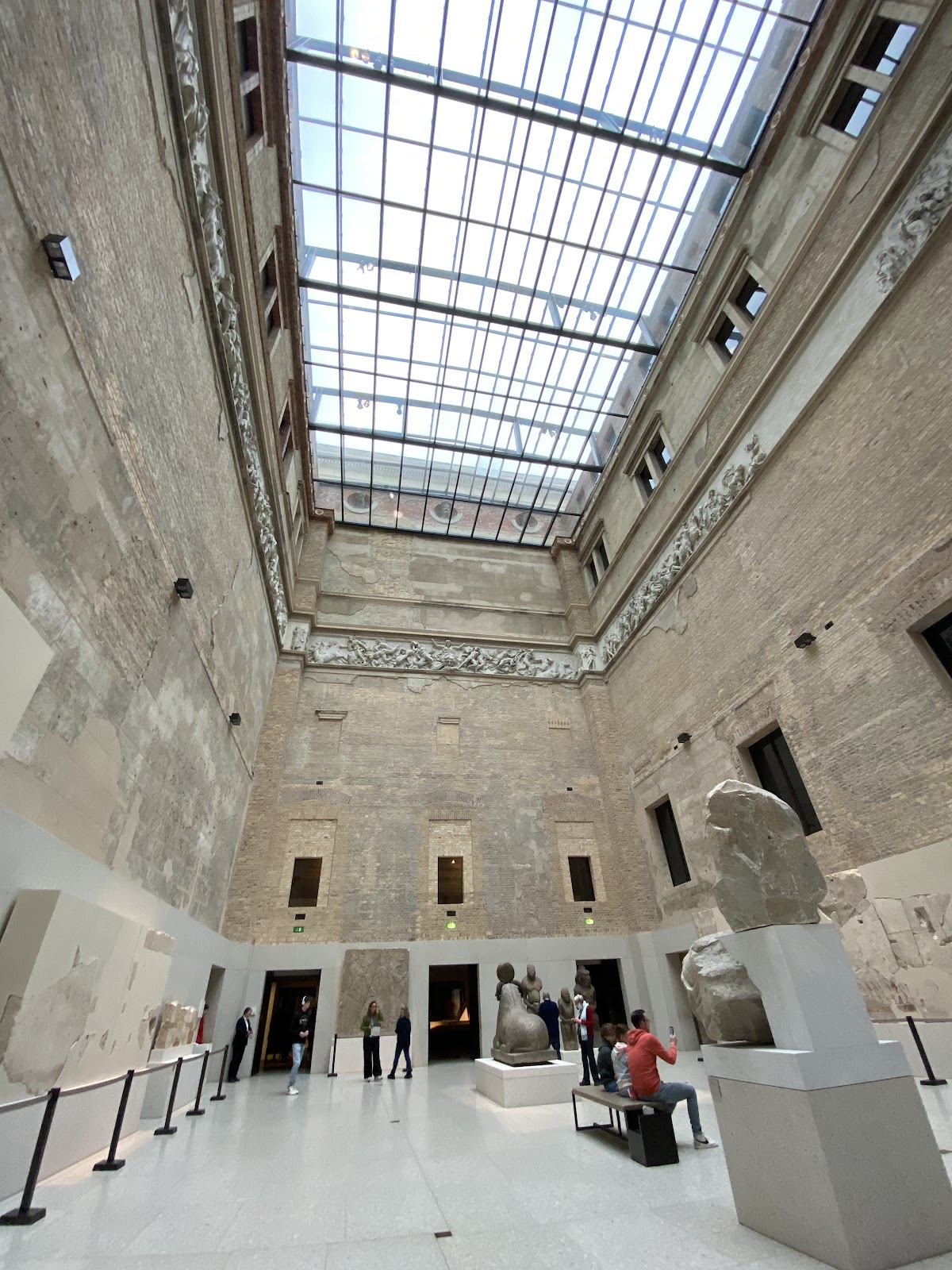
Where Ancient Babylon Gates Open in Berlin
Where Ancient Babylon Gates Open in Berlin
Pergamon Museum — A Gateway to Ancient Civilizations on Berlin's Museum Island
The Pergamon Museum, located at Bodestraße 1-3 in Berlin's Mitte district, stands as a monumental institution on the UNESCO World Heritage-listed Museum Island. Opened in 1930, the museum was initially designed by Alfred Messel, with Ludwig Hoffmann completing the project after Messel's death. It houses three main collections: the Collection of Classical Antiquities, the Museum of the Ancient Near East, and the Museum of Islamic Art.
The museum is renowned for its large-scale architectural reconstructions, offering visitors an immersive journey into ancient worlds. Its strategic location on the Spree River, near the Berlin Cathedral and Lustgarten park, makes it easily accessible from Friedrichstraße station, approximately a 10-minute walk away.
The Ishtar Gate — Babylon's Azure Grandeur
One of the Pergamon Museum's most striking exhibits is the Ishtar Gate of ancient Babylon. Reconstructed to its original size within the museum, this colossal gate, dating from the 6th century BCE during the reign of Nebuchadnezzar II, stands approximately 14 meters high and 30 meters wide. Its deep blue glazed bricks, adorned with reliefs of lions, mušḫuššu dragons, and bulls, symbolize the power and prosperity of the Neo-Babylonian Empire. These animal figures represent the deities Ishtar, Marduk, and Adad, respectively.
The gate is preceded by a section of the Processional Way, once a sacred route lined with lion reliefs, leading into the heart of Babylon. Walking through this reconstructed pathway, visitors can experience a sense of the awe and grandeur that ancient Babylonians would have felt during religious processions.
The Market Gate of Miletus — Roman Imperial Splendor
Another magnificent architectural reconstruction is the Market Gate of Miletus. This two-story marble gate, dating from the 2nd century CE, originally stood in the ancient Roman city of Miletus in Asia Minor. Reassembled within the museum, it showcases the intricate craftsmanship and architectural sophistication of the Roman Empire. Its delicate carvings and Corinthian columns reflect the aesthetic sensibilities of the era, inviting visitors to imagine the bustling marketplace it once overlooked.
The Pergamon Altar — A Hellenistic Masterpiece (Currently Under Renovation)
The museum's namesake, the Pergamon Altar, is a celebrated masterpiece of Hellenistic art from the 2nd century BCE. Originating from the ancient city of Pergamon, this monumental altar is famous for its massive frieze depicting the Gigantomachy, the battle between the Olympian gods and the Giants. As of June 2026, the Pergamon Altar is undergoing extensive renovation and is not accessible to the public. However, models and explanatory materials provide insight into its historical significance and artistic brilliance, anticipating its future reopening.
Collections of Ancient Near East and Islamic Art
The Museum of the Ancient Near East presents artifacts from Sumerian, Assyrian, and Babylonian civilizations, including cuneiform tablets, cylinder seals, and monumental reliefs. This collection offers a deep understanding of the earliest human civilizations and their contributions to law, literature, and science.
The Museum of Islamic Art features a diverse range of artworks and architectural elements from the 8th to the 19th centuries, spanning from Spain to India. Highlights include ceramics, textiles, metalwork, and calligraphy. A notable exhibit is the 'Aleppo Room,' a 17th-century wooden paneling from a Syrian merchant's house, showcasing the intricate decorative arts and daily life of the Islamic world.
Visitor Information
The Pergamon Museum is a highly popular destination. To ensure a smooth visit, consider the following:
- Admission: General admission is €14. Combination tickets for other Museum Island institutions or the Berlin Pass may offer better value. Check the official website for current pricing.
- Opening Hours: The museum is open Tuesday to Sunday from 10:00 to 18:00, with extended hours until 20:00 on Thursdays. It is closed on Mondays. Always confirm the latest hours on the official website before your visit.
- Location & Transport: Situated on Museum Island, it's easily reachable by public transport. Take the U6 U-Bahn or S1, S2, S3, S5, S7, S9, S25, S26 S-Bahn lines to Friedrichstraße station, then a 10-minute walk. Alternatively, use Tram M1/12 to Am Kupfergraben or Bus 100/200 to Lustgarten.
- Estimated Visit Time: Allow 2 to 3 hours to explore the main collections. Note that the Pergamon Altar is currently closed for renovation.
- Booking: Online time-slot tickets are highly recommended, especially during peak seasons, to avoid long queues.
- Dining: The Mitte district surrounding Museum Island offers numerous restaurants and cafes. There are also cafes within the museum for light refreshments.
Visitor Info
| Founded | 1930 |
| Architect | Alfred Messel, Ludwig Hoffmann |
| Location | Bodestraße 1-3, 10178 Berlin |
| Hours | Tue-Sun 10:00-18:00 (Thu 20:00) |
| Admission | €14 |
Featured Works

Babylonian (Neo-Babylonian Empire)
Ishtar Gate
바빌론의 이슈타르 문은 느부갓네살 2세가 건설한 바빌론 성벽의 여덟 번째 문입니다. 파란 유약 벽돌 위에 금색 황소(아다드)와 시루쉬(무쉬후쉬) 용이 부조로 장식되어 있습니다. 20세기 초 독일 고고학자들이 발굴·복원하여 페르가몬 박물관에 재조립했으며, 고대 메소포타미아 문명의 위대함을 보여주는 기념비적 유물입니다.

Roman (2nd century AD)
Market Gate of Miletus
고대 그리스 도시 밀레토스의 시장 입구를 장식했던 로마 시대 대리석 건축물입니다. 높이 17m, 너비 29m의 거대한 이 문은 코린토스 양식의 기둥과 정교한 장식으로 로마 제국의 건축 기술을 보여줍니다. 페르가몬 박물관 내에 원래 크기로 재조립되어 있어, 고대 건축의 웅장함을 직접 체감할 수 있습니다.