London Encyclopedia of Human Civilization
London Encyclopedia of Human Civilization
The British Museum — A Global Compendium in London
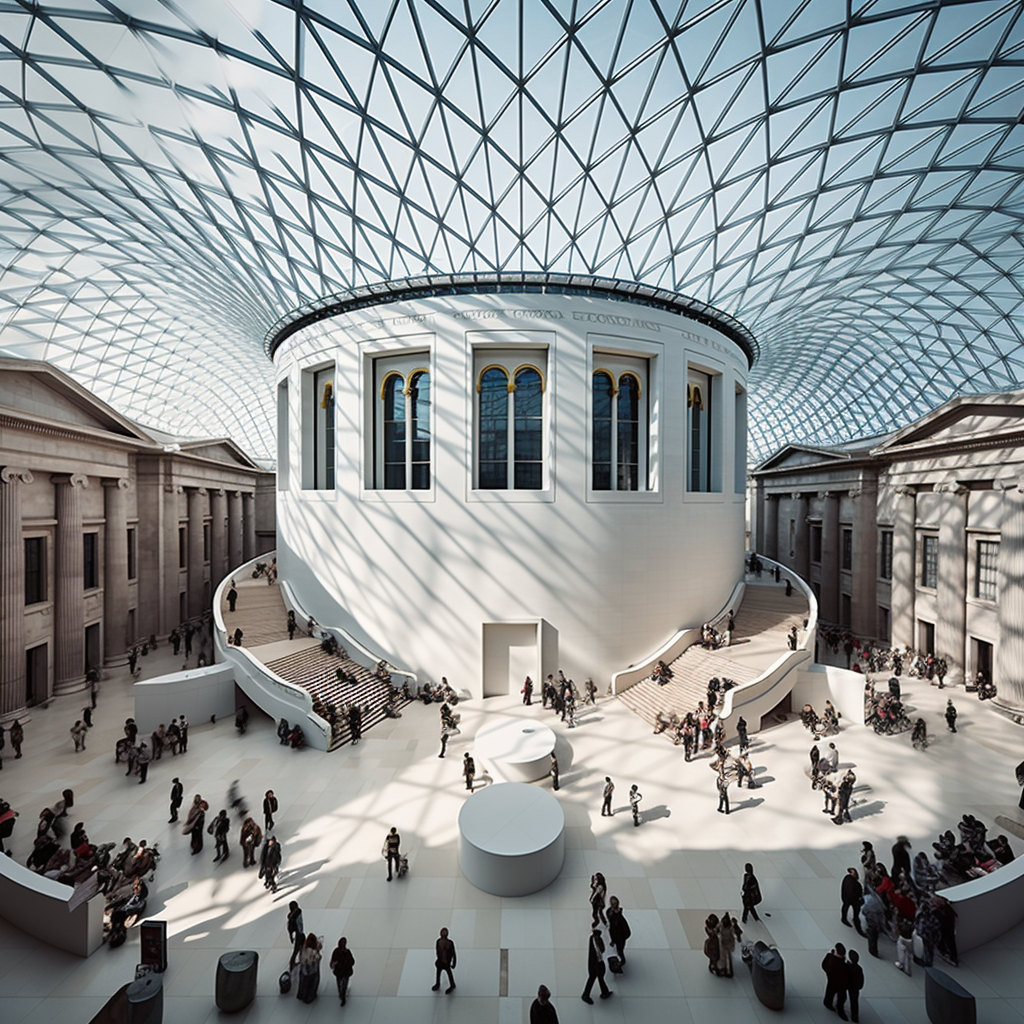
Located in Bloomsbury, central London, the British Museum stands as a monumental institution housing over 8 million objects that chronicle human history and culture. Established in 1753, it was founded on the collection of Sir Hans Sloane and opened its doors to the public in 1759. The museum's grand Greek Revival architecture, designed by Robert Smirke, defines its iconic facade, while the modern Great Court, covered by Norman Foster's striking glass roof in 2000, serves as its central hub.
Key Collections and Masterpieces
The museum's vast collection spans millennia and continents, offering a comprehensive journey through human civilization. Among its most celebrated artifacts is the Rosetta Stone, a key to deciphering ancient Egyptian hieroglyphs, which revolutionized the study of a lost civilization. Visitors can marvel at the Parthenon Sculptures (Elgin Marbles), exquisite examples of ancient Greek artistry from the 5th century BC, displayed in the Duveen Gallery.
The Egyptian galleries are particularly extensive, featuring numerous mummies, sarcophagi, and funerary artifacts that reveal ancient Egyptian beliefs about life and the afterlife. The Assyrian collection showcases monumental winged human-headed lions and bulls (Lamassu) that once guarded royal palaces, alongside intricate relief carvings depicting royal hunts and military campaigns.
Diverse European and World Heritage
Beyond the classical civilizations, the British Museum also houses significant European treasures. The Sutton Hoo treasures, including a magnificent Anglo-Saxon helmet from the 7th century, offer insights into early medieval Britain. The Lewis Chessmen, a collection of 12th-century ivory chess pieces from Norway, provide a charming glimpse into medieval daily life and craftsmanship.
These diverse collections make the British Museum a true encyclopedia of human achievement, allowing visitors to explore a wide array of cultures and historical periods under one roof. The museum's commitment to free public access for its permanent collection underscores its role as a global center for learning and cultural exchange.
Visitor Information and Tips
Admission to the British Museum's permanent collection is free, though special exhibitions may require a fee. The museum operates daily from 10:00 to 17:00, with extended hours on Fridays until 20:30. It is easily accessible via the London Underground, with Tottenham Court Road, Holborn, and Russell Square stations all within a 5-10 minute walk.
Given its immense size, planning a visit is recommended. A focused tour of key highlights can take 2-3 hours, while a more comprehensive exploration may require 3-5 hours or more. Visiting on Friday evenings can offer a less crowded experience. The surrounding Bloomsbury area provides numerous dining options, from traditional British pubs to contemporary cafes, perfect for pre- or post-visit refreshments.
Visitor Info
| Admission | Free (Special exhibitions extra) |
| Hours | Translating |
| Location | Great Russell St, London WC1B 3DG |
| Getting There | Translating |
| Estimated Visit | Translating |
| Tips | Translating |
Featured Works

Ancient Egypt
Rosetta Stone
고대 이집트 상형문자 해독의 열쇠가 된 돌비석입니다. 기원전 196년 프톨레마이오스 5세의 칙령이 이집트 상형문자, 민중문자, 고대 그리스어 세 가지로 새겨져 있습니다. 1799년 나폴레옹 원정 중 발견되었으며, 장프랑수아 샹폴리옹이 이를 통해 상형문자를 해독하는 데 성공했습니다. 대영박물관에서 가장 많은 관람객이 찾는 소장품입니다.

Phidias (attributed)
Parthenon Sculptures
엘긴 마블로도 알려진 파르테논 신전 조각군입니다. 19세기 초 엘긴 백작이 아테네에서 가져온 이 대리석 조각들은 고전기 그리스 미술의 최고봉을 보여줍니다. 신전의 메토프, 프리즈, 페디먼트에서 떼어낸 조각들로 구성되며, 그리스 정부의 반환 요청이 계속되고 있어 문화재 반환 논쟁의 상징이기도 합니다.