Where the Building Itself Is Art in Paris
Where the Building Itself Is Art in Paris
Centre Pompidou — A Modern Icon in Paris
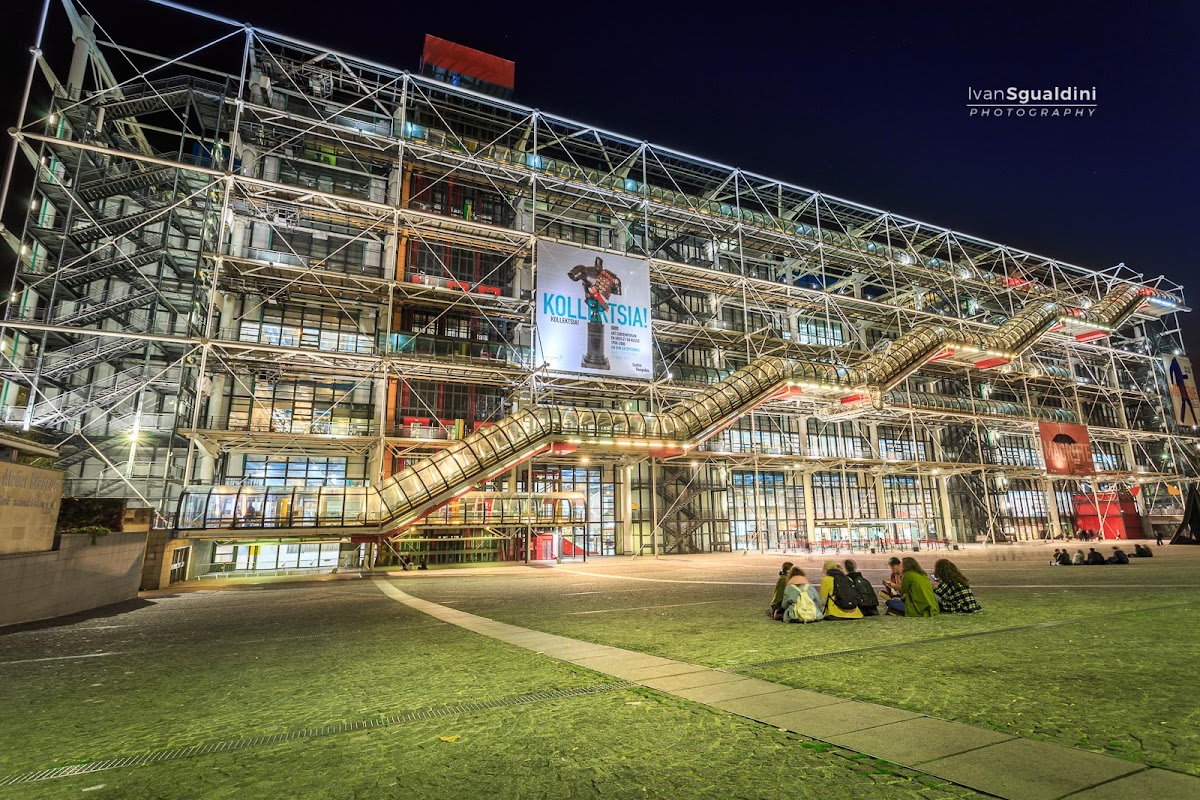
The Centre Pompidou, at 55 Rue Rambuteau in Paris's 4th arrondissement, stands as a striking modern architectural marvel amidst the historic Marais district. Opened in 1977, its "inside-out" design redefined the urban landscape, aiming to democratize art and culture. It houses Europe's largest modern art collection and functions as a multidisciplinary cultural hub.
Architectural Innovation by Piano and Rogers
Conceived from French President Georges Pompidou's vision in the early 1970s, the "Beaubourg Project" sought a comprehensive cultural center. Architects Renzo Piano and Richard Rogers won the international competition with a radical proposal: externalizing all structural and mechanical components. Plumbing (green), electrical wiring (blue), air conditioning ducts (yellow), and circulation elements like escalators (red) are all visible. This design freed up vast, flexible interior spaces for exhibitions, making the building a dynamic, machine-like artwork.
The External Escalator and Panoramic Views
A distinctive feature is the transparent external escalator, offering a unique ascent through the Parisian skyline. As one climbs, the cityscape unfolds, revealing historic rooftops, the Eiffel Tower, Montmartre, and Notre Dame Cathedral. This journey becomes an integral part of the visitor experience, connecting the urban environment with the art within, and providing panoramic views, especially from the 5th floor.
Europe's Largest Modern Art Collection
The Centre Pompidou houses the Musée National d'Art Moderne, one of Europe's largest collections of 20th and 21st-century art. Its extensive collection, over 75,000 works, includes masterpieces by Henri Matisse, Pablo Picasso, Wassily Kandinsky, Marcel Duchamp, Andy Warhol, and Yves Klein. The collection challenges traditional notions of beauty, exploring art's definition and expression across various movements.
A Multifunctional Cultural Hub
Beyond its museum role, the Centre Pompidou integrates a public library (BPI), an industrial design center, and a music and acoustic research institute (IRCAM). This synergy fosters a vibrant environment where art, knowledge, and daily life intersect through diverse programs, including performances, film screenings, lectures, and workshops.
Integration with the Marais District
The Centre Pompidou's value is enhanced by its location within the lively Marais district. This area, with its medieval architecture, narrow streets, boutiques, galleries, and cafes, offers a rich cultural experience. The Stravinsky Fountain, with its whimsical sculptures by Jean Tinguely and Niki de Saint Phalle, is an outdoor art installation adjacent to the center, blending art with urban life. Visitors are encouraged to explore the surrounding offerings.
Current Status: Renovation and Future Reopening
The main building of the Centre Pompidou is currently undergoing a major renovation. It will be fully closed from late September 2025, with a planned reopening in 2030. During this period, parts of the Pompidou collection and programs may be hosted at external or partner venues. Visitors are advised to check the official website (https://www.centrepompidou.fr/) for the most up-to-date information.
Visitor Information
As the main building is undergoing long-term renovation, it is currently closed and will reopen in 2030. Therefore, visiting the main building is not possible. Operating hours, admission fees, and viewing times will be subject to change upon reopening. The Centre is located at 55 Rue Rambuteau, 75004 Paris, France, accessible via Métro Rambuteau or Hôtel de Ville stations (approx. 5-minute walk). For information on off-site collections or programs during the renovation, please consult the official website.
Visitor Info
| Admission | €15, monthly 1st Sun Free |
| Hours | Translating |
| Location | Place Georges-Pompidou, 75004 Paris |
| Getting There | Translating |
| Estimated Visit | 2-3hr |
| Tips | Translating |
Featured Works

Marcel Duchamp
Fountain
마르셀 뒤샹이 기성품 소변기에 "R.Mutt"라고 서명하여 출품한 레디메이드 작품입니다. 20세기 미술사에서 가장 파격적인 작품 중 하나로, "무엇이 예술인가"라는 근본적 질문을 던졌습니다. 원본은 분실되었으나 뒤샹이 인정한 복제본이 퐁피두 센터를 비롯한 여러 미술관에 소장되어 있습니다. 개념 미술의 출발점으로 평가됩니다.

Wassily Kandinsky
Composition VIII
추상 미술의 선구자 칸딘스키의 작품으로, 기하학적 형태와 선의 역동적 조합이 음악적 리듬을 시각화합니다. 바우하우스 시기에 제작된 이 작품은 원, 삼각형, 직선이 화면 위에서 교향곡처럼 울려 퍼집니다. 칸딘스키는 색채와 형태가 음악처럼 감정을 직접 전달할 수 있다고 믿었으며, 이 신념의 결정체가 바로 이 작품입니다.