Meet the Master of Starry Night in Amsterdam
Meet the Master of Starry Night in Amsterdam
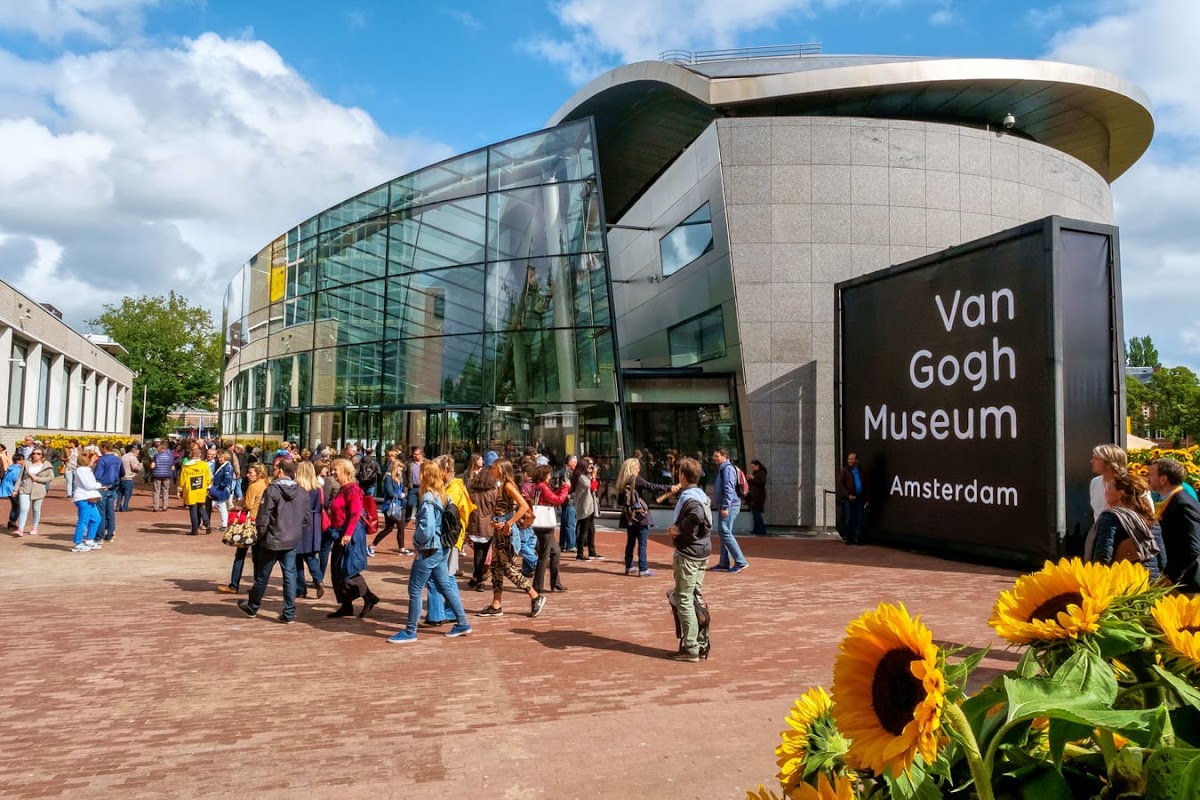
Van Gogh Museum: A Cornerstone of Amsterdam's Museumplein
The Van Gogh Museum, located at Museumplein 6 in Amsterdam, Netherlands, stands as a pivotal cultural institution. Situated in the heart of the city's Museum Quarter, it is easily accessible by tram from Amsterdam Centraal Station. This vibrant square also hosts the Rijksmuseum and the Royal Concertgebouw, forming a rich cultural hub where art, history, and daily life converge. The museum's location allows visitors to experience a broader cultural landscape beyond its walls.
Architectural Journey: Rietveld's Vision and Kurokawa's Expansion
Opened in 1973, the museum's main building was designed by the renowned Dutch architect Gerrit Rietveld, a key figure in the De Stijl movement. His design emphasizes functionality and simplicity, utilizing natural light to illuminate Van Gogh's vibrant palette without distortion. This chronological layout guides visitors through the artist's life and artistic evolution, from his early, somber works to his later, more expressive creations.
In 1999, a new exhibition wing, designed by Japanese architect Kisho Kurokawa, was added. Kurokawa, a proponent of Metabolism architecture, created a modern, curvilinear structure that harmonizes with Rietveld's original building while offering a distinct contemporary aesthetic. This expansion provides additional space for special exhibitions and complements the main building's narrative flow, symbolizing Van Gogh's own artistic progression.
The World's Largest Van Gogh Collection
The Van Gogh Museum houses the world's largest collection of works by Vincent van Gogh, comprising over 200 paintings and 500 letters. This extensive collection offers an unparalleled opportunity to delve into his artistic universe. The letters, in particular, provide profound insights into his inner world, struggles, and his poignant relationship with his brother, Theo.
The exhibition is meticulously organized to present Van Gogh's journey chronologically. Visitors witness his artistic transformation from his early, dark period in Nuenen, through the influence of Impressionism in Paris, to the establishment of his unique, vibrant style in Arles. Key works such as 'The Potato Eaters,' 'Sunflowers,' and 'Almond Blossom' are prominently displayed, illustrating his evolving techniques and emotional depth.
Tracing Van Gogh's Artistic Evolution
The museum's narrative begins with Van Gogh's early works from Nuenen, characterized by dark, earthy tones and a focus on the lives of peasants and laborers. 'The Potato Eaters' exemplifies this period, conveying his deep empathy and social consciousness. Moving through the galleries, visitors observe his palette brightening significantly during his time in Paris, where he absorbed the influences of Impressionism and Neo-Impressionism.
His move to Arles marks a pivotal phase, where he developed his distinctive style with intense colors and dynamic brushstrokes, as seen in the iconic 'Sunflowers' series. The later works from Saint-Rémy and Auvers-sur-Oise reflect his ongoing mental struggles yet reveal an undiminished artistic fervor. The museum effectively captures the totality of his short but intensely creative life, allowing visitors to connect with his passion and suffering.
Visitor Information
- Admission: €20 for adults. Free for visitors under 18. Online booking is mandatory; no tickets are sold on-site.
- Opening Hours: Daily from 09:00 to 18:00. Extended hours on Fridays, from 09:00 to 21:00. It is advisable to check the official website for any seasonal or special exhibition variations.
- Location: Museumplein 6, 1071 DJ Amsterdam, Netherlands.
- Transport: Take tram lines 2, 5, or 12 from Amsterdam Centraal Station to the ‘Van Baerlestraat’ stop, which is directly in front of the museum. Bus lines 347 or 357 are also options. Bicycle parking is available at Museumplein.
- Recommended Visit Duration: Approximately 1.5 to 2 hours.
Visitor Info
| Admission | Translating |
| Hours | Translating |
| Location | Museumplein 6, 1071 DJ Amsterdam |
| Getting There | Translating |
| Estimated Visit | 1.5-2hr |
| Notice | Translating |
Featured Works
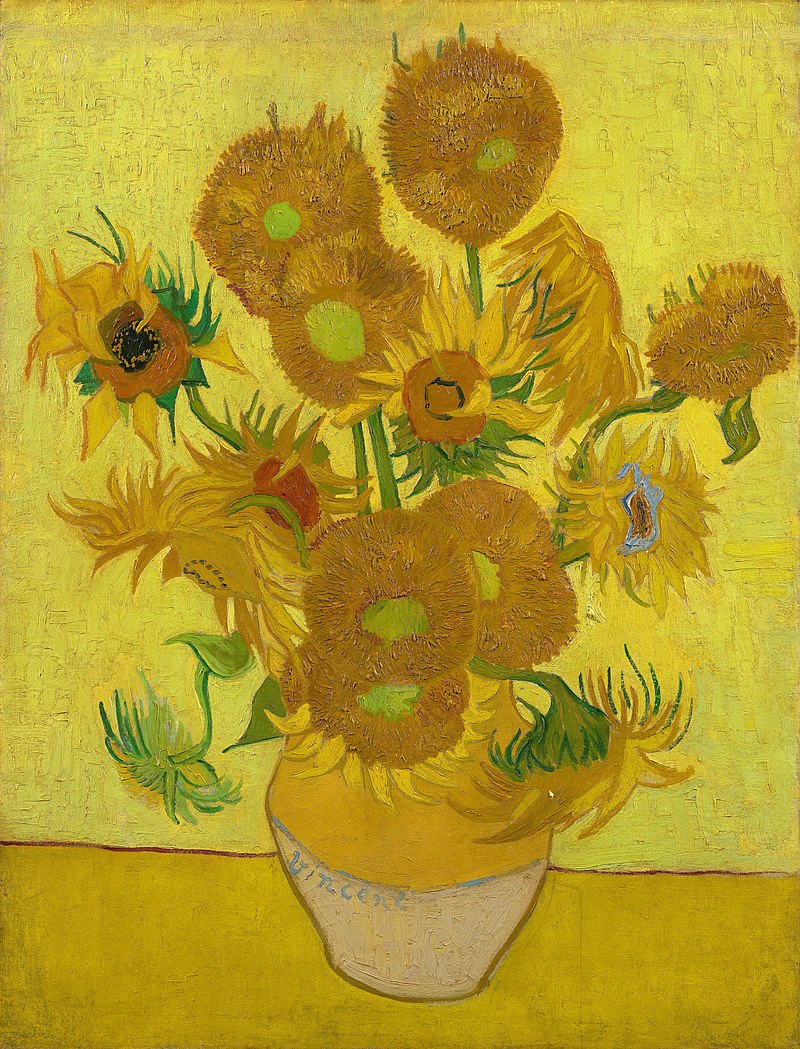
Vincent van Gogh
Sunflowers (Amsterdam)
반 고흐가 아를에서 그린 해바라기 연작의 반복 버전으로, 반 고흐 미술관의 상징입니다. 노란색 꽃병에 꽂힌 15송이의 해바라기가 생명의 순환을 보여줍니다. 반 고흐에게 해바라기는 감사와 우정의 상징이었으며, 고갱과의 공동 생활을 위해 그린 환영의 꽃다발이었습니다.

Vincent van Gogh
Almond Blossom
반 고흐가 조카의 탄생을 축하하며 그린 작품입니다. 파란 하늘을 배경으로 피어나는 아몬드 꽃은 새 생명의 탄생과 봄의 도래를 상징합니다. 일본 판화(우키요에)의 영향이 뚜렷한 평면적 구성과 섬세한 꽃잎 묘사가 특징이며, 반 고흐의 가장 낙관적이고 아름다운 작품 중 하나입니다.

Vincent van Gogh
The Potato Eaters
반 고흐의 초기 대표작으로, 어두운 등불 아래 감자를 먹는 농민 가족을 그렸습니다. 거칠고 투박한 인물 묘사는 노동의 존엄성을 표현하려는 의도적 선택이었습니다. 이 작품을 통해 반 고흐는 자신만의 화풍을 확립했으며, 농민과 노동자에 대한 깊은 공감을 보여줍니다. 반 고흐 미술관 소장입니다.