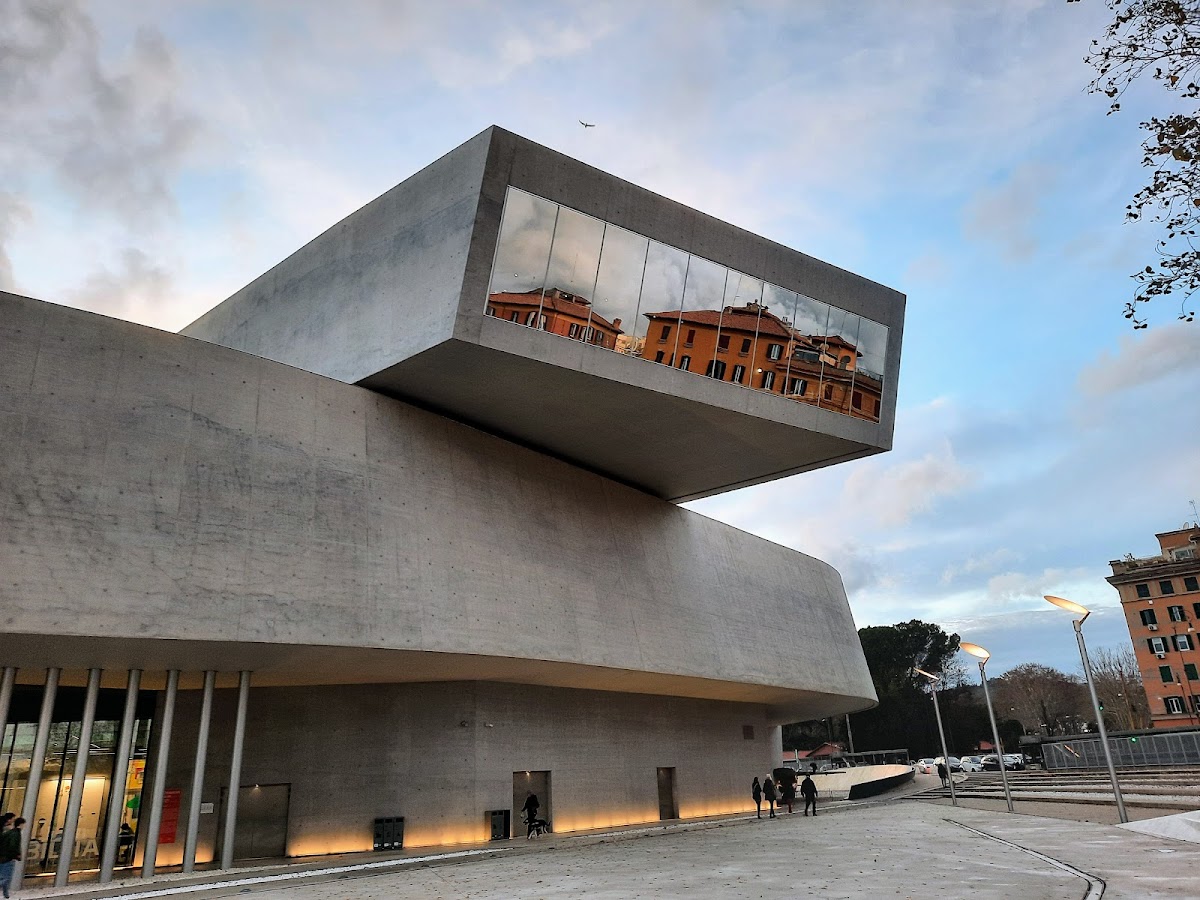
Zaha Hadid's Museum of the Future in Rome
Zaha Hadid's Museum of the Future in Rome
MAXXI's Location in Rome's Flaminio District
MAXXI, the National Museum of 21st Century Arts, is situated at Via Guido Reni 4A, 00196 Rome, in the Flaminio district. This area lies approximately 4km north of central Rome, adjacent to the Tiber River's eastern bank. The surroundings feature a modern, organized ambiance, distinct from ancient Rome, characterized by structures built for the 1960 Rome Olympics and expansive green spaces.
The museum is easily accessible via Tram Line 2, stopping directly at Apollodoro station. Nearby, Renzo Piano's Parco della Musica concert hall complex is a mere 10-minute walk away. MAXXI serves as a landmark, introducing a new dimension of contemporary architecture within Rome's traditional landscape.
Establishment and Role of a National Museum
MAXXI is managed by a foundation established by the Italian Ministry of Culture, functioning as a national museum for contemporary art and architecture of the 21st century. Its primary objective is the preservation, research, and exhibition of Italian contemporary art and architecture. Concurrently, it actively embraces international contemporary art trends and dialogues, offering new perspectives at the intersection of art and architecture.
Zaha Hadid's Visionary Architecture
The MAXXI building was designed by the acclaimed architect Zaha Hadid (1950-2016). It represents one of the first large-scale implementations of her organic and deconstructivist architectural language in Rome. Hadid conceived the museum not merely as a functional space but as a sculptural entity defined by fluid forms and dynamic circulation paths.
Through MAXXI, Hadid utilized modern materials like concrete, glass, and steel to create a space that appears to constantly shift and expand, departing from rigid forms. The architecture clearly embodies her core philosophies of 'flow' and 'layering'.
2010 Stirling Prize Recognition
In 2010, the MAXXI building was awarded the prestigious Stirling Prize by the Royal Institute of British Architects (RIBA). This award, one of the most authoritative in British architecture, recognizes the most significant building in the UK or EU each year. MAXXI was the first Italian building to receive this honor.
The Stirling Prize underscored MAXXI's architectural value and innovation on an international scale. It is celebrated for introducing new possibilities in contemporary architecture amidst Rome's ancient structures, injecting fresh vitality into the urban landscape.
Exterior Features: Flowing Concrete Ribbons
MAXXI's exterior captivates observers from a distance with its distinctive appearance. Massive grey concrete ribbons seem to float in the air, overlapping and intertwining to form a cohesive space. These ribbons create a complex yet organic shape.
Dominated by curves rather than straight lines, and fluid movement over static forms, the facade presents a stark contrast to Rome's ancient architecture. The harmonious blend of concrete, glass, and steel embodies a modern aesthetic, leaving visitors with a powerful, forward-looking first impression.
Interior Circulation: A Wavelike Flow
Upon entering MAXXI, one immediately perceives the building itself as a grand work of art. The interior spaces flow seamlessly, with ambiguous boundaries between floors, walls, and ceilings. Visitors are guided not by fixed paths, but by organically connected walkways and staircases that lead naturally from one area to the next.
Black staircases and ramps cut through the space, creating dynamic circulation. This intricate yet harmonious flow reveals new perspectives at unexpected turns, encouraging visitors to contemplate and immerse themselves within the architectural narrative itself, beyond mere observation of the exhibits.
Natural Light and Spatial Experience
Natural light, streaming in from the ceiling, is a crucial element of MAXXI's interior. Through vast glass roofs and skylights, this light constantly alters the atmosphere of the space, providing an excellent backdrop for appreciating the artworks. At times, the light softly envelops the space; at others, it casts sharp lines, accentuating the building's organic forms.
The interplay of concrete, glass, and steel, combined with changing light, enriches the spatial experience. The influx of natural light blurs the boundaries between interior and exterior, fostering an interaction between the architecture and its surroundings—a key aspect of Zaha Hadid's design philosophy.
Collection and Exhibition Focus: Contemporary Artistic Experimentation
MAXXI's exhibitions consistently showcase new and challenging artistic endeavors, unconstrained by conventional frameworks. They encompass a wide range of contemporary art forms, including traditional media like painting and sculpture, as well as installation art, video art, and performance. Large-scale installations, in particular, effectively utilize the fluid lines and open spaces inherent in Zaha Hadid's architecture.
The collection prioritizes the experimental spirit and critical perspectives of contemporary artists over works by masters representing specific eras. Exhibitions feature photographic works with social messages, installations questioning environmental issues, and interactive art exploring the fusion of technology and art, actively engaging with visitors.
MAXXI's Cultural Role: A Future-Oriented Platform
MAXXI transcends the function of a mere art exhibition space, serving as a future-oriented cultural platform. In Rome, a city rich in ancient ruins and Renaissance masterpieces, MAXXI offers a distinctively fresh and contemporary experience. The museum buzzes with youthful energy, where children play freely and young people gather to discuss artworks.
The open plaza at the museum's center hosts various cultural events, including outdoor installations and small performances. MAXXI helps break down the misconception that contemporary art is difficult, providing an opportunity for everyone to enjoy and discover new perspectives and inspiration.
Nearby Attractions: Parco della Musica
Complementing MAXXI in shaping the cultural landscape of the Flaminio district is the Parco della Musica. Designed by Italian architect Renzo Piano, this concert hall complex features three distinctive cocoon-shaped buildings. Located approximately a 10-minute walk from MAXXI, visiting both allows for a rich cultural experience blending architecture, art, and music.
The Parco della Musica hosts a diverse array of musical events throughout the year, from classical concerts to jazz performances. Combining a daytime visit to MAXXI with an evening concert at Parco della Musica offers an excellent way to experience Rome's modern cultural life.
Nearby Attractions: Ponte Milvio Flea Market
Near MAXXI, the Ponte Milvio Flea Market takes place every Sunday. This vibrant market, situated around the beautiful Ponte Milvio bridge over the Tiber River, offers a variety of vintage items, handicrafts, and antiques. It provides an excellent opportunity to glimpse the daily life and culture of local Romans.
If visiting MAXXI on a Sunday, a stop at the Ponte Milvio Flea Market allows for discovering unique souvenirs or sampling local street food. The Flaminio district, where MAXXI is located, is evolving into a new cultural hub of Rome, offering a modern and lively charm distinct from ancient Rome.
Visitor Information: Opening Hours and Admission
MAXXI's operating hours are from 11:00 AM to 7:00 PM, Wednesday through Sunday. On Saturdays, hours are extended from 10:00 AM to 9:00 PM. The museum is closed on Mondays and Tuesdays. Last entry is one hour before closing. It is advisable to check the official website for the latest operating hours before your visit.
Admission is €12, with free entry on the first Sunday of each month. Admission fees may vary for special exhibitions, so checking the official website for accurate information before visiting is recommended. Entry may also be possible with tourist passes like the Roma Pass.
Visitor Information: Transportation and Tips
MAXXI is directly accessible by taking Tram Line 2 and alighting at the MAXXI/Reni or Apollodoro stop. Bus lines 53, 168, 280, and 910 also serve the MAXXI/Reni stop. From the Flaminio station on Metro Line A, visitors can transfer to Tram Line 2 or walk for approximately 20 minutes.
A recommended viewing time is 1-2 hours. The building's exterior itself is an excellent photo spot, so it is recommended to appreciate and photograph the facade from various angles. Taking a break at the MAXXI Cafe Terrace inside the museum, enjoying the views of the Flaminio district, is also a pleasant option.
Visitor Info
| Admission | €12, monthly 1st Sun Free |
| Hours | Translating |
| Location | Via Guido Reni 4A, 00196 Roma |
| Getting There | Translating |
| Estimated Visit | 1-2hr |
| Tips | Translating |
Featured Works

Zaha Hadid
MAXXI Building
2010년, 해체주의 건축의 걸작 자체가 전시물

Anish Kapoor
Installation
인도계 영국 조각가의 대형 설치 작품

William Kentridge
Video Art
남아공 현대미술 거장의 애니메이션 드로잉