Where Guernica Lives in Madrid
Where Guernica Lives in Madrid
Museo Reina Sofía — Madrid's Modern Art Hub
Located at Calle de Santa Isabel 52, Madrid, the Museo Reina Sofía is a national museum of 20th-century art. It stands a mere one-minute walk from Atocha Metro Station, making it highly accessible. This museum forms a crucial part of Madrid's 'Paseo del Arte' (Art Walk), alongside the Prado Museum and the Thyssen-Bornemisza Museum, offering a comprehensive overview of Spanish art history.
From Hospital to Art Museum — A 1992 Transformation
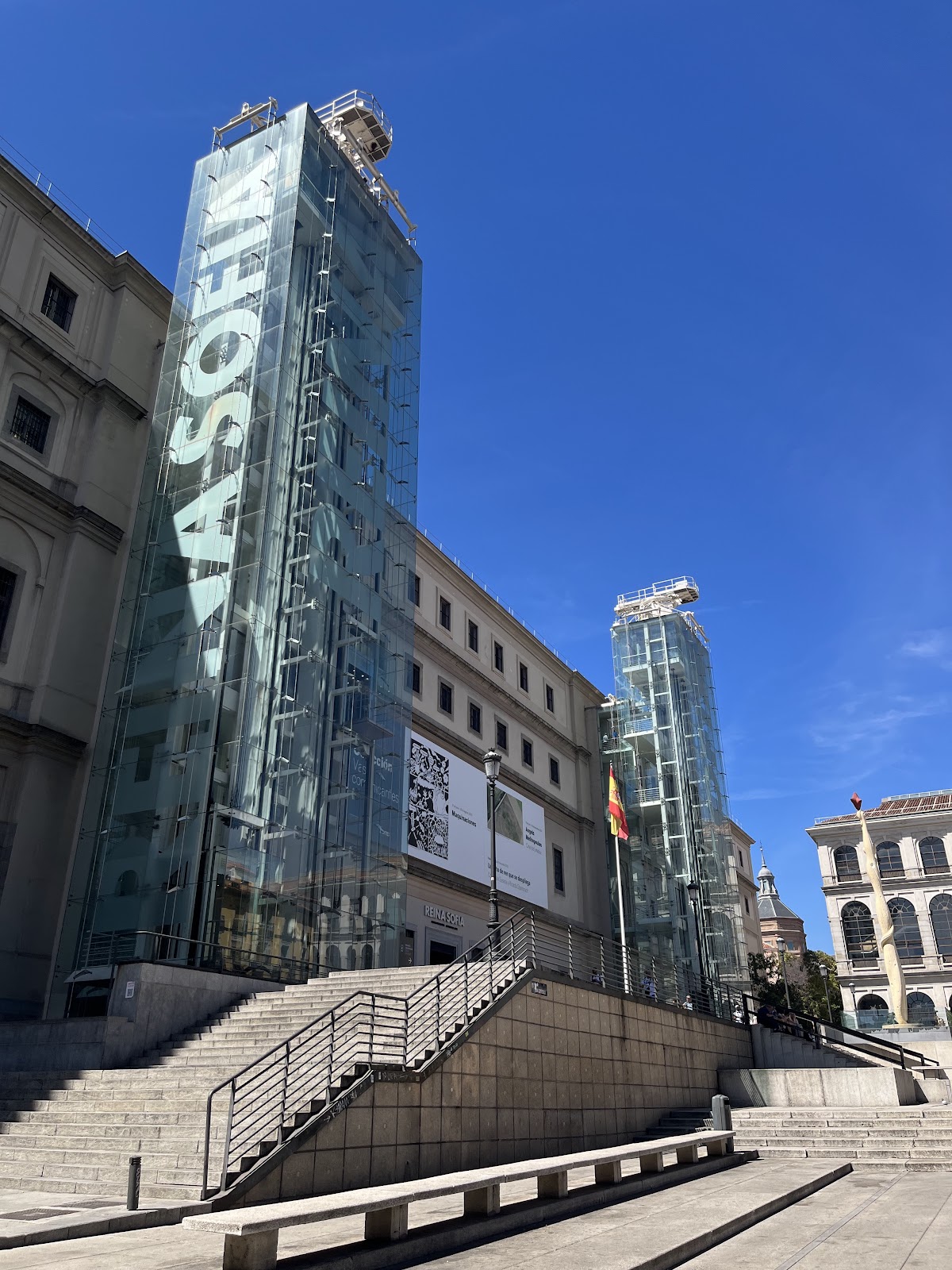
The Museo Reina Sofía opened in 1992, housed in the former San Carlos Hospital building, which dates back to the late 18th century. This historical structure underwent extensive renovation in the late 1980s to convert it into a modern art exhibition space. The architectural transformation preserved the building's classical facade while integrating contemporary elements, such as the prominent glass elevators, symbolizing the museum's embrace of modern artistic innovation.
The Collection — Masters of 20th-Century Spanish Art
The museum's collection focuses on Spanish art from the 20th century onwards, featuring works by renowned masters such as Pablo Picasso, Salvador Dalí, and Joan Miró. These pieces represent various modern art movements, including Cubism and Surrealism, highlighting Spain's significant contributions to global art history. The collection also explores the relationship between art and pivotal moments in Spanish history, such as the Spanish Civil War and the Franco dictatorship.
Guernica — Picasso's Iconic Anti-War Statement
Pablo Picasso's monumental 'Guernica' is the centerpiece of the Museo Reina Sofía. This powerful work, measuring 7.76m by 3.49m, depicts the horrors of the 1937 bombing of Guernica during the Spanish Civil War. Displayed in a dedicated gallery on the second floor, the painting's stark black, white, and grey palette, along with its fragmented figures, powerfully conveys the suffering and destruction of war. Surrounding exhibits include Picasso's preparatory sketches and photographs by Dora Maar, offering insight into the creation process.
Dalí and Miró — Surrealism and Abstraction
Beyond Guernica, the museum showcases significant works by Salvador Dalí, a leading figure in Surrealism. His dreamlike and often bizarre compositions challenge perceptions of reality. Joan Miró's abstract works, characterized by pure forms and vibrant colors, also feature prominently. Miró's unique artistic language combines Catalan cultural heritage with surrealist elements, reflecting the diversity and experimental spirit of 20th-century Spanish art.
Palacio de Cristal — An Annex in Retiro Park
The Palacio de Cristal (Crystal Palace) in Retiro Park serves as an annex for the Museo Reina Sofía, hosting special contemporary art exhibitions. Built in 1887 for a Philippine tropical plant exhibition, this glass and iron structure is a work of art in itself. Its transparent walls and ceiling allow natural light to flood the interior, creating a unique atmosphere where art interacts with the surrounding park landscape. Admission to the Crystal Palace is free.
Visitor Information and Tips
General admission to the Museo Reina Sofía is €12, with a combined ticket including special exhibitions priced at €15. Free entry is available on Mondays and Wednesdays to Saturdays from 7 PM to 9 PM, and Sundays from 1:30 PM to 2:30 PM. The museum is open Monday and Wednesday to Saturday from 10 AM to 9 PM, and Sunday from 10 AM to 2:30 PM; it is closed on Tuesdays. Online booking via the official website is recommended, especially for viewing Guernica, which may require timed entry.
A typical visit focusing on major works takes approximately 2 hours, or about 1 hour if concentrating solely on Guernica. The museum's proximity to Atocha Station makes it easily accessible by metro. Visitors can also consider the 'Paseo del Arte Combo Pass' for discounted entry to the three major art museums in Madrid.
Visitor Info
| Admission | Translating |
| Hours | Translating |
| Location | Calle de Santa Isabel 52, 28012 Madrid |
| Getting There | Translating |
| Estimated Visit | Translating |
| Tips | Translating |
Featured Works

Pablo Picasso
Guernica
피카소의 가장 정치적이고 강력한 반전(反戰) 작품입니다. 스페인 내전 중 독일 공군의 게르니카 폭격을 고발하며, 가로 7.8m의 거대한 화면에 전쟁의 참상을 흑백으로 표현했습니다. 울부짖는 말, 죽은 아이를 안은 어머니, 찢긴 병사의 이미지는 전쟁의 공포를 전 세계에 호소하며, 20세기 가장 강력한 반전 예술 작품으로 남아 있습니다.