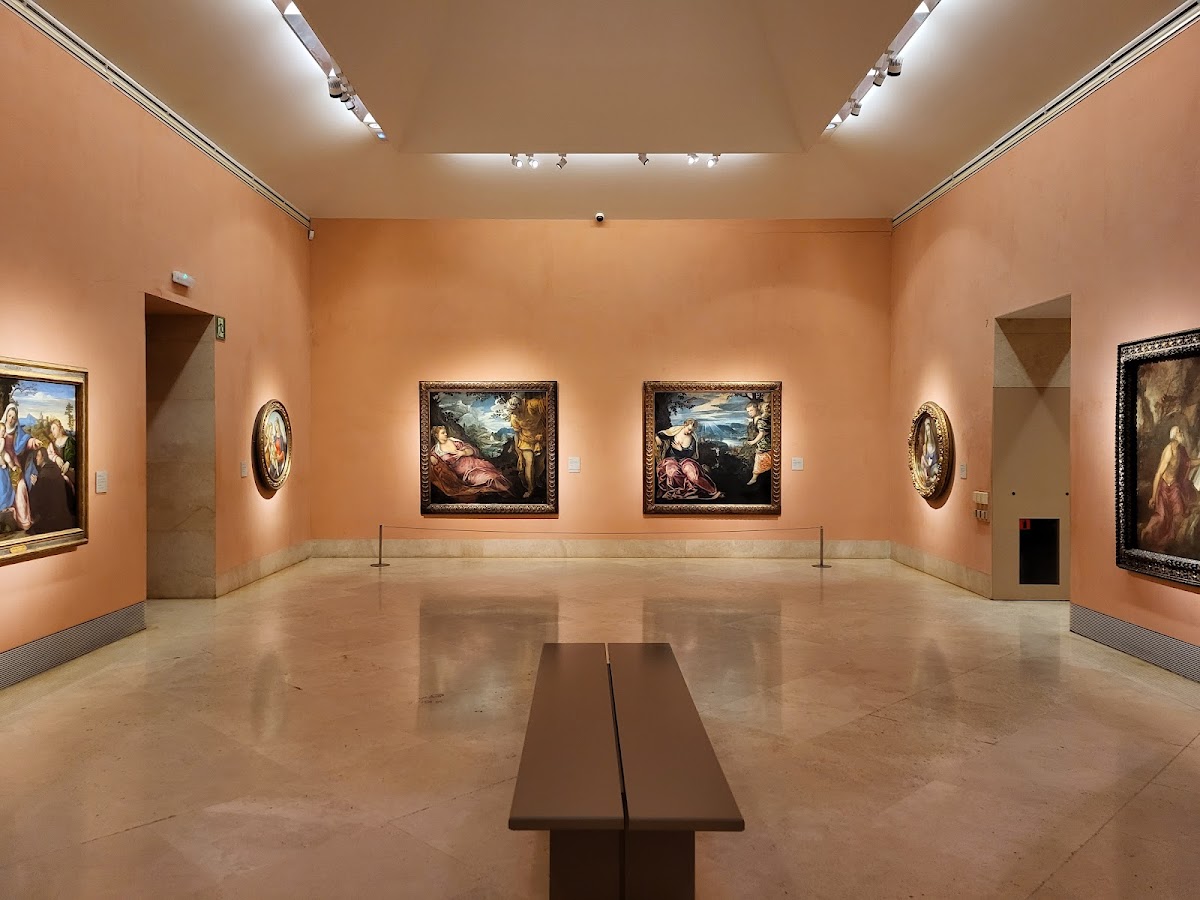
Thyssen-Bornemisza Museum — A Private Collection Miracle in Madrid
Madrid’s "Golden Triangle of Art" is a pilgrimage site for any art enthusiast, and while the Prado and Reina Sofía command immense respect, it's the Thyssen-Bornemisza Museum that often feels like the intimate, illuminating heart of the experience. Each visit here is like unfolding a meticulously curated textbook of Western art history, right before your eyes. I always make it a point to return, to immerse myself once more in the sheer breadth of masterpieces that span centuries and movements, all under one roof.
What truly sets the Thyssen apart is its genesis: the vision of a single family, the Thyssen-Bornemiszas, whose unparalleled connoisseurship shaped this extraordinary collection. From the solemn piety of 13th-century Italian primitives to the vibrant bursts of 20th-century Pop Art, it’s a rare privilege to witness such a panoramic sweep of artistic evolution. I find myself lingering before the serene altarpieces of the Middle Ages, marveling at the delicate precision of Renaissance portraits, and then delighting in the audacious brushstrokes of Impressionist and Post-Impressionist masters. The museum fills in the gaps beautifully, offering a contextual richness that enriches understanding of its grander neighbors. It’s not just a collection; it’s a meticulously woven narrative of human creativity.
The Grandeur of the Prado — Spain's Artistic Soul
Stepping into the Museo del Prado is to enter a realm where the very air hums with centuries of artistic genius, a testament to Spain's profound cultural heritage. Its stately neoclassical architecture, designed by Juan de Villanueva, immediately sets a tone of gravitas and historical importance. But it is within its hallowed halls that the true magic unfolds, revealing a staggering collection that chronicles the Spanish Golden Age with unparalleled depth.
I often find myself drawn back to the sheer dramatic power of Francisco Goya. His "The Third of May 1808," with its stark portrayal of a man in white facing a firing squad, is a visceral punch, a timeless commentary on the horrors of war. Then there’s Diego Velázquez, whose "Las Meninas" continues to bewilder and enchant, inviting viewers into a complex interplay of gazes and realities. The scale, the light, the sheer audacity of its composition – it’s a painting that refuses to be fully comprehended, always offering new insights. And of course, the ethereal beauty of El Greco's elongated figures and vibrant colors, particularly "The Nobleman with his Hand on his Chest," speak to a spiritual intensity that feels uniquely Spanish. The Prado isn't merely a repository of art; it's an immersion into the very soul of a nation, presented through the masterful hands of its greatest artists.
Reina Sofía — Modernism's Embrace in an Ancient City
The Museo Reina Sofía offers a stark yet compelling contrast to its classical counterparts, a vibrant testament to modern and contemporary art housed within a structure that beautifully bridges past and present. Originally the city's General Hospital, designed in the 18th century by Francisco Sabatini, its transformation into a world-class art institution is a fascinating tale of architectural metamorphosis. The imposing stone facade still hints at its historical origins, but the addition of three sleek glass and steel towers, designed by Jean Nouvel, creates an electrifying dialogue between old and new. These transparent structures, housing lifts that glide silently upwards, offer glimpses of the bustling Ronda de Atocha street below, connecting the art within to the pulse of Madrid outside.
Wandering through its expansive galleries, I appreciate how the museum thoughtfully reconfigures space, allowing avant-garde works to breathe within its historic walls. The building itself becomes part of the experience, particularly in the inner courtyards where light filters down, illuminating sculptures and creating contemplative spaces. And then there's "Guernica." Picasso's monumental anti-war statement, housed in a dedicated, almost reverential space, demands attention. Its sheer size and raw emotional power resonate deeply within the echoing corridors, a poignant anchor in a collection that challenges perceptions and pushes boundaries. The Reina Sofía isn't just a museum; it's a living, breathing architectural statement, a testament to Madrid's continuous evolution, artfully re-imagining its past to embrace its future.
Practical Tips for Madrid's Art Triangle
To truly savor Madrid's unparalleled art offerings, a little planning goes a long way. Consider purchasing a Paseo del Arte Card, which grants access to all three museums – Thyssen-Bornemisza, Prado, and Reina Sofía – often at a reduced price and with the added benefit of skipping ticket queues. While each museum warrants significant time, try not to rush. Dedicate at least half a day to each, if not more, allowing for moments of rest and reflection in their cafes or courtyards. Weekday mornings are generally less crowded, offering a more serene viewing experience. Don't forget comfortable shoes; you'll be doing plenty of walking. Also, check their official websites for current exhibition schedules and any specific entry requirements. Many museums offer free entry during specific evening hours, though expect larger crowds. And finally, allow yourself to get lost – not just in the art, but in the charming streets of the surrounding neighborhoods; tapas bars and historic plazas await just outside their grand entrances.
Featured Works
Edward Hopper
Hotel Room
호퍼의 대표작 중 하나로, 호텔 방에 홀로 앉아 있는 여성을 그렸습니다. 짧은 치마 차림으로 침대에 앉아 편지나 책을 읽고 있는 여인의 모습은 현대인의 고독과 내면의 사색을 상징합니다. 극적인 인공 조명과 간결한 구도가 영화적 긴장감을 만들어내며, 티센보르네미사 미술관의 핵심 소장품입니다.
