Non-Western Wonders in Paris
Non-Western Wonders in Paris
Musée du quai Branly — A Unique Architectural Presence by the Seine
On June 16, 2026, an expedition was made to the Musée du quai Branly – Jacques Chirac, located at 37 Quai Jacques Chirac in Paris's 7th arrondissement. Situated a short walk from the Eiffel Tower, the museum presents a distinctive facade with a wild garden along the Seine. Designed by Jean Nouvel, the building stands in stark contrast to the classical Parisian architecture surrounding it, embodying a modern approach to museum design.
Opened in 2006 — Re-evaluating Non-Western Art
The Musée du quai Branly opened in 2006, marking a significant shift in France's approach to non-Western cultural heritage. It consolidated artifacts from Africa, Asia, Oceania, and the Americas, previously housed in ethnographic or colonial museums, and re-presented them as works of art. This initiative, championed by then-President Jacques Chirac, aimed to acknowledge and celebrate the artistic and spiritual depth of these cultures on par with Western art.
Jean Nouvel's Vision — Blending Nature and Architecture
Architect Jean Nouvel designed the museum with a philosophy of integrating the building with its context and utilizing light. A prominent feature is the 'Mur Végétal' (Green Wall), a vertical garden created by botanist Patrick Blanc, covering 15,000 square meters with 150 plant species. This living facade makes the building appear to emerge from nature, setting a unique tone for the museum's mission.
Exterior and Interior Flow — An Immersive Experience
The museum complex includes a wild garden by Gilles Clément, where the main building appears to float on stilts. Inside, a grand glass structure and a long ramp guide visitors into the exhibition halls. Dim lighting and seemingly suspended artifacts create an immersive, almost ritualistic journey into different cultures, distinct from conventional museum displays. This design fosters a contemplative atmosphere, allowing visitors to focus deeply on the exhibits.
Extensive Collection — A Repository of Non-Western Art
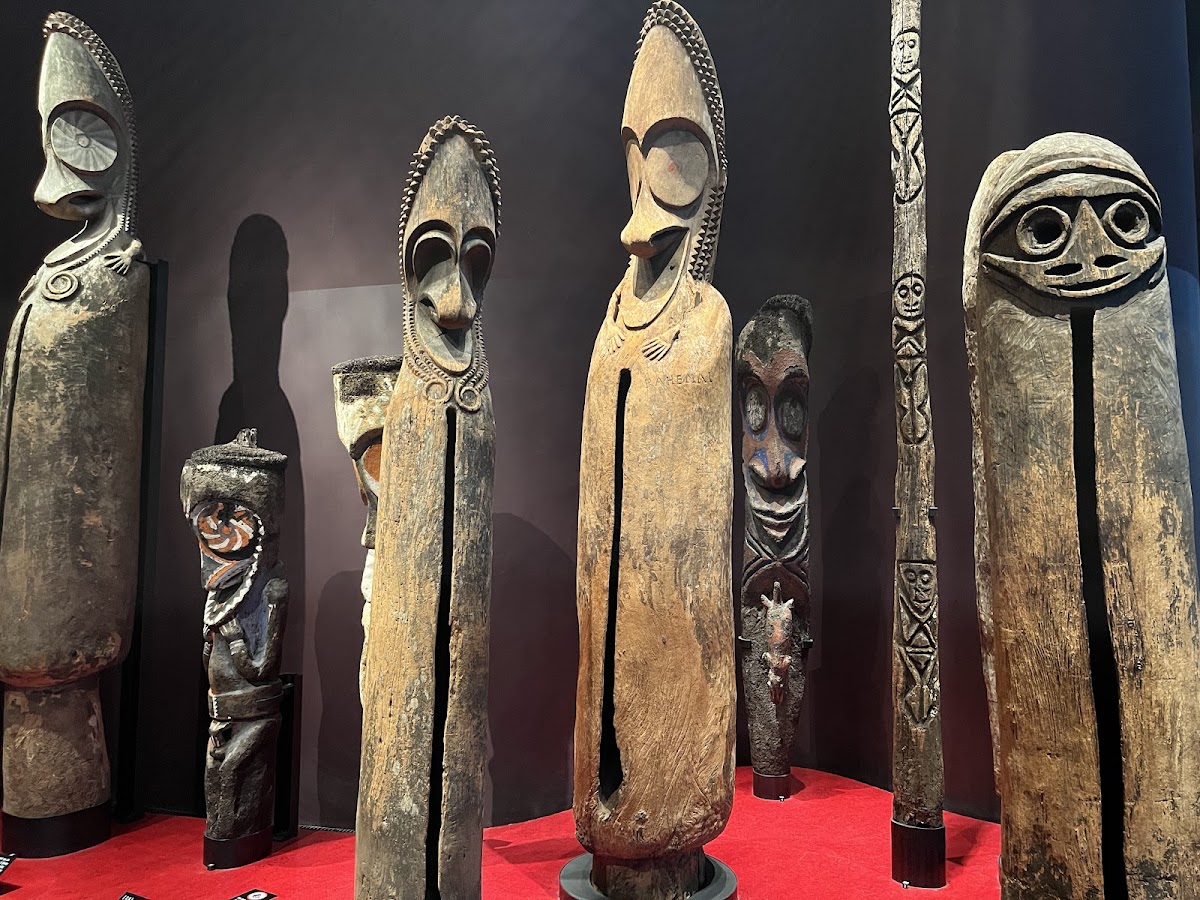
The Musée du quai Branly houses over 370,000 objects from non-Western civilizations, with approximately 3,500 on permanent display. The collection spans Africa, Asia, Oceania, and the Americas, showcasing the diverse artistic expressions and spiritual worlds of these regions. Notable pieces include the 'Ngadi Nkasa' mask from Central Africa and the 'Asmat' sculptures from Papua New Guinea, which highlight unique aesthetic principles and cultural significance.
Historical Context — Addressing Colonial Legacies
The museum's collection has historical ties to the colonial era. The institution transparently provides information on the provenance and acquisition history of its artifacts, encouraging visitors to consider the complex historical and social implications alongside their aesthetic appreciation. This approach positions the museum not just as an exhibition space, but as a forum for ongoing cultural dialogue.
Visitor Information — Planning Your Visit
The museum is open Tuesday to Sunday from 10:30 AM to 7:00 PM, with extended hours until 10:00 PM on Thursdays. It is closed on Mondays. Admission is €14 for adults, with free entry for visitors under 18 and Paris Museum Pass holders. Located at 37 Quai Jacques Chirac, it is easily accessible via RER C (Pont de l'Alma) or Metro Line 9 (Alma-Marceau). A typical visit lasts 2-3 hours.
Visitor Info
| Opened | Translating |
| Architect | Translating |
| Location | 37 Quai Branly, 75007 Paris, France |
| Operated by | Translating |
| Admission | Translating |
| Collection | Translating |
Featured Works

미상 (놀 문화)
놀 두상
기원전 500년경 나이지리아 놀 문화의 테라코타 두상. 사하라 이남 아프리카 최초의 대규모 조각 전통.

미상 (촉페 민족)
파보 므보마 가면
중앙아프리카 촉페 민족의 여성 선조 가면. 이상화된 여성미를 표현한 의식용 가면.

미상 (마오리)
마오리 전투 카누 선수상
뉴질랜드 마오리족의 전투용 카누 장식. 티키 조각과 복잡한 문양이 특징.