Milan's Renaissance Treasury
Milan's Renaissance Treasury
The Pinacoteca di Brera, located at Via Brera 28, 20121 Milan, Italy, stands as a prominent art museum in the heart of Milan's historic Brera district. This area is known for its artistic and bohemian atmosphere, characterized by narrow cobblestone streets, small galleries, ateliers, and boutiques. The museum is approximately a 15-minute walk north of the Duomo di Milano, offering a serene cultural escape within the bustling city.
Palazzo di Brera — A 17th-Century Jesuit Monastery
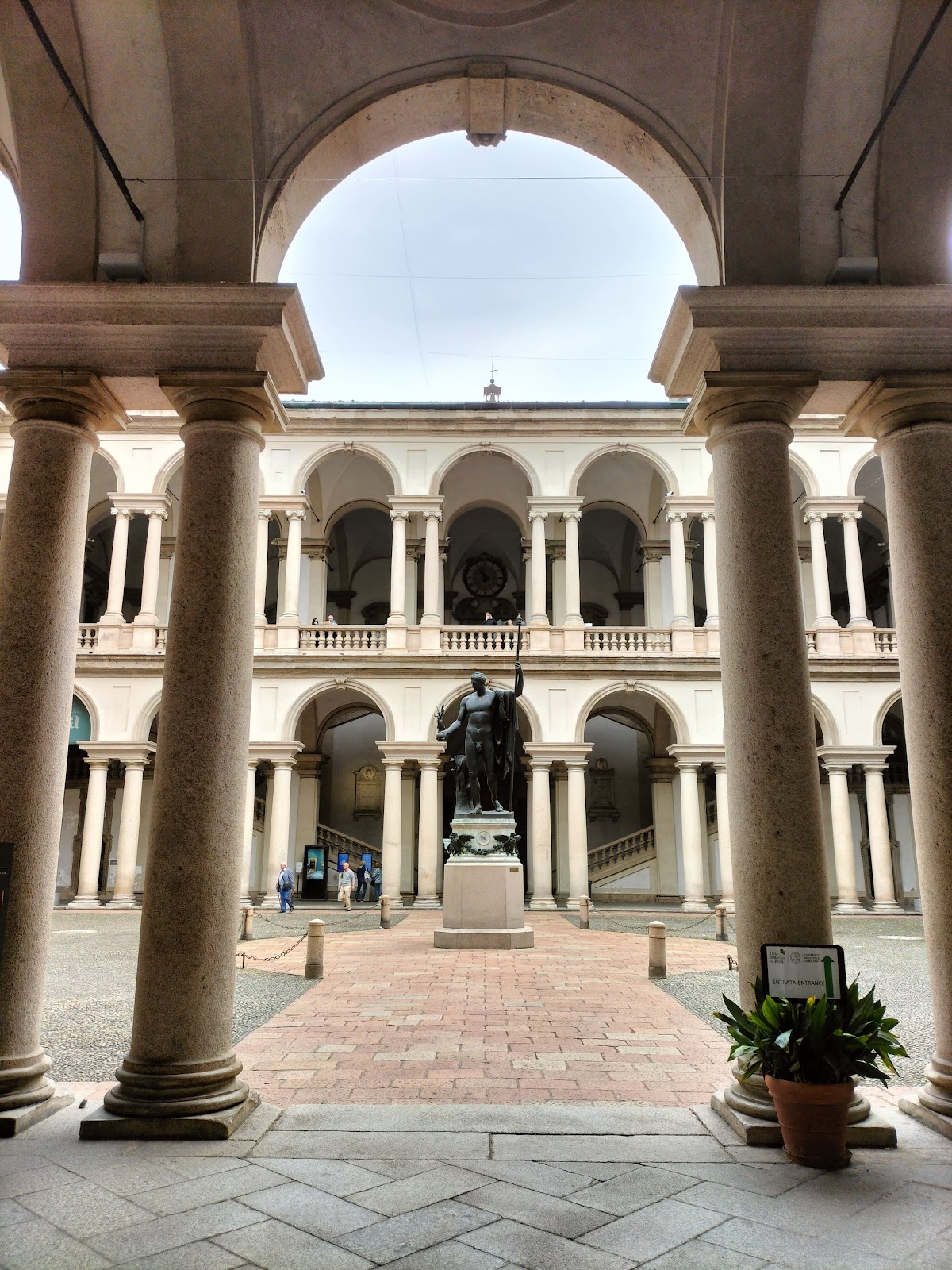
The museum is housed within the grand Palazzo di Brera, a 17th-century building originally constructed as a Jesuit monastery. This historic edifice later expanded to include the Brera Academy of Fine Arts, an observatory, and a botanical garden. The architecture itself, a blend of late Renaissance and Baroque styles, contributes significantly to the museum's historical depth and aesthetic appeal. The building's robust stone facade and intricate detailing reflect centuries of history.
Napoleon's Legacy — Canova's Statue and the Museum's Founding
At the center of the Palazzo di Brera's courtyard stands Antonio Canova's bronze statue of Napoleon Bonaparte, depicted as Mars the Peacemaker. This statue symbolizes Napoleon's ambition to establish Milan as the capital of a new Italian kingdom and to create a public art museum comparable to the Louvre in Paris. In 1809, following Napoleon's directives, the former Jesuit monastery was converted into a public art museum and opened to the public, marking the official establishment of the Pinacoteca di Brera.
Collection Origins — Art from Suppressed Religious Institutions
The Pinacoteca di Brera's collection primarily originated from artworks confiscated by Napoleon during his late 18th-century Italian campaigns. Unlike many European national museums built upon royal or aristocratic private collections, Brera's holdings largely comprise pieces taken from dissolved churches and monasteries across northern Italy. This unique provenance explains the collection's strong emphasis on religious paintings and altarpieces, particularly from the Lombard and Venetian schools of the Renaissance.
Key Masterpieces — Mantegna, Raphael, Piero della Francesca, Hayez
The museum boasts a collection of approximately 1,200 works, featuring masterpieces from the Italian Renaissance and Baroque periods. Andrea Mantegna's Lamentation of Christ is renowned for its revolutionary use of extreme foreshortening, creating a powerful emotional impact. Raphael's The Marriage of the Virgin exemplifies Renaissance ideals of harmony and perfect perspective. Piero della Francesca's Brera Madonna (Montefeltro Altarpiece) showcases his mastery of light, geometry, and symbolism, including the enigmatic ostrich egg.
Francesco Hayez's The Kiss, a symbol of Italian Romanticism, depicts a passionate embrace often interpreted as an allegory for the Italian Risorgimento (unification movement). The collection also includes significant works by Caravaggio, known for his dramatic chiaroscuro and realism, and Giovanni Bellini, a master of Venetian Renaissance painting celebrated for his use of color and light. These works collectively offer a comprehensive overview of Italian art history.
Visitor Information — Hours, Admission, and Transportation
The Pinacoteca di Brera operates Tuesday through Sunday from 8:30 AM to 7:15 PM, with the last admission 45 minutes before closing. It is closed on Mondays, January 1, May 1, and December 25. General admission is €15, with free entry for visitors under 18 years old. It is advisable to check the official website for any changes to operating hours or special exhibition pricing.
The museum is conveniently located in central Milan. It is a 5-minute walk from Lanza (M2 green line) metro station and a 10-minute walk from Montenapoleone (M3 yellow line) metro station. Tram lines 1, 2, 12, 14 stop at 'Lanza' or 'Ponte Vetero', and bus lines 61 and 94 are also accessible. Online advance booking is recommended, especially during weekends and peak seasons, to minimize wait times.
Brera District — Art, Culture, and Cuisine
The Brera district surrounding the museum is an integral part of the visitor experience. Its charming streets are filled with art galleries, independent boutiques, and a variety of cafes and restaurants. After exploring the museum's collection, visitors can enjoy the vibrant atmosphere of the district, often frequented by Milanese artists and intellectuals. Options for local cuisine include Trattoria Fontana for traditional Milanese dishes like Ossobuco, Focacceria Genovese for casual focaccia, and Caffè Cremosina for authentic Italian espresso and pastries. Exploring the Brera district offers a holistic cultural experience, blending art, history, and local life.
Visitor Info
| Opened | Translating |
| Location | Via Brera 28, 20121 Milano, Italy |
| Operated by | Tue-Sun 08:30-19:15 |
| Admission | Translating |
| Features | Translating |
Featured Works

안드레아 만테냐
죽은 그리스도에 대한 애도
1480년경 작. 극단적 단축법으로 그린 죽은 그리스도의 시신. 미술사 상 가장 대담한 구도의 걸작.

라파엘로
성모의 결혼
1504년작. 라파엘로가 21세에 그린 초기 걸작. 완벽한 원근법과 우아한 인물 묘사가 특징.

카라바조
엠마오의 만찬
1606년작. 부활한 예수가 제자들 앞에 나타나는 순간을 극적 명암으로 표현했다.