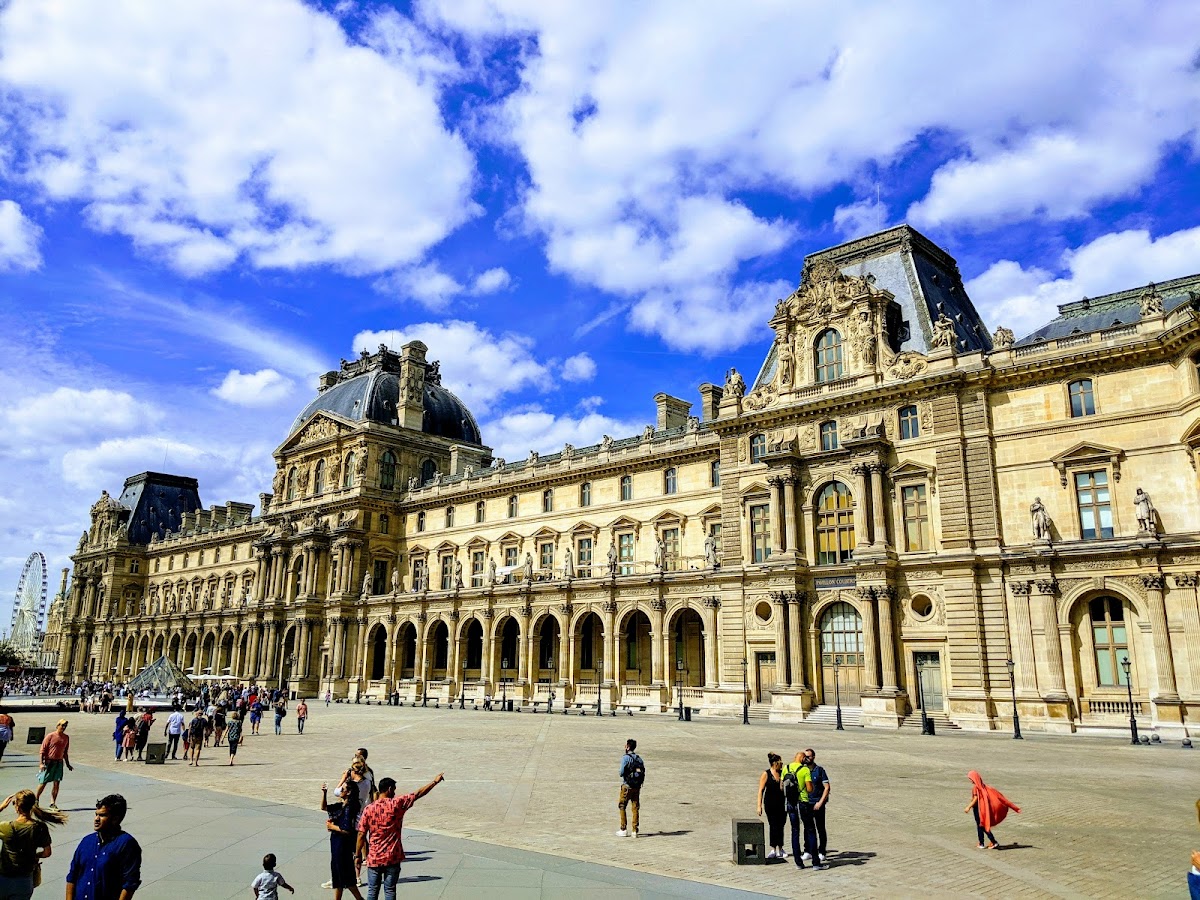
The World's Greatest Art Palace
The World's Greatest Art Palace
Louvre Museum — A Former Royal Palace in the Heart of Paris
The Louvre Museum, located at 5 bis Rue du Louvre, 75001 Paris, France, stands on the right bank of the Seine River. It is centrally positioned in Paris, flanked by the Palais Royal to the east and the vast Tuileries Garden to the west. This former French royal palace, now one of the world's largest art museums, is directly accessible via the Palais Royal – Musée du Louvre metro station (Lines 1 and 7).
From 12th Century Fortress to Royal Residence
The history of the Louvre dates back to the late 12th century when Philip II constructed a fortress on this site. Over centuries, it was transformed into a grand royal palace by successive French monarchs, including Charles V, Francis I, and Henri IV. Francis I notably initiated its reconstruction in Renaissance style and brought Leonardo da Vinci's 'Mona Lisa' to the royal collection. Louis XIV further expanded the palace before moving the royal court to Versailles, after which the Louvre began to serve as a space for artists.
The Birth of a Public Museum in 1793
Following the French Revolution, the Louvre was officially opened to the public as the 'Muséum central des arts' on August 10, 1793. This marked a pivotal moment, democratizing art that was once exclusive to royalty. Napoleon Bonaparte later expanded the museum's collections significantly, renaming it the 'Musée Napoléon', solidifying its status as a world-class institution.
I.M. Pei's Glass Pyramid — A Modern Icon
A prominent symbol of the Louvre is the glass pyramid, designed by Chinese-American architect I.M. Pei and completed in 1989. This modern structure, standing in the Cour Napoléon, serves as the main entrance and a central hub, allowing natural light into the underground reception areas. It represents a successful blend of classical architecture and contemporary design, enhancing both the functionality and aesthetic appeal of the museum.
Vast Scale and Diverse Collections
Spanning approximately 72,735 square meters, the Louvre Museum houses an immense collection of about 380,000 artworks and artifacts, with around 35,000 on permanent display. The collections cover a vast range of human civilization, from ancient civilizations to the mid-19th century. They are organized into three main wings: Sully, Denon, and Richelieu, each offering distinct thematic journeys.
Key collection areas include ancient Near Eastern, Egyptian, Greek, Etruscan, and Roman antiquities, Islamic art, sculptures, decorative arts, and paintings from various European schools. The museum's sheer size necessitates careful planning for visitors to navigate its numerous galleries and discover its treasures efficiently.
Iconic Masterpieces: Mona Lisa, Venus de Milo, Winged Victory
Among its countless masterpieces, three stand out as global icons. Leonardo da Vinci's 'Mona Lisa', housed in the Denon wing, captivates millions with its enigmatic smile and historical significance. The 'Venus de Milo', an ancient Greek sculpture from the 2nd century BCE, displayed in the Sully wing, embodies classical beauty despite its missing arms. Finally, the 'Winged Victory of Samothrace', a Hellenistic marble statue from the 2nd century BCE, dramatically positioned at the top of the Daru Staircase in the Denon wing, conveys a powerful sense of triumph and movement.
These works, alongside countless others, draw visitors into a profound dialogue with human creativity across millennia. The museum's layout encourages exploration, allowing visitors to delve into specific periods or follow curated paths to experience its most famous exhibits.
Visitor Information
The Louvre Museum is open Wednesday through Monday from 9:00 AM to 6:00 PM, with extended hours until 9:45 PM on Wednesdays and Fridays. It is closed on Tuesdays. Admission for adults is €22, with free entry for those under 18 and EU residents aged 18-25. Advance online booking is highly recommended to ensure entry and minimize waiting times. The museum's central location in Paris makes it easily accessible by public transport, particularly the Palais Royal – Musée du Louvre metro station.
Visitor Info
| Opened | Translating |
| Architect | Translating |
| Location | Rue de Rivoli, 75001 Paris, France |
| Operated by | Translating |
| Admission | Translating |
| Collection | Translating |
Featured Works
레오나르도 다 빈치
모나리자
1503-1519년작. 스푸마토 기법의 대표작이자 세계에서 가장 유명한 그림.
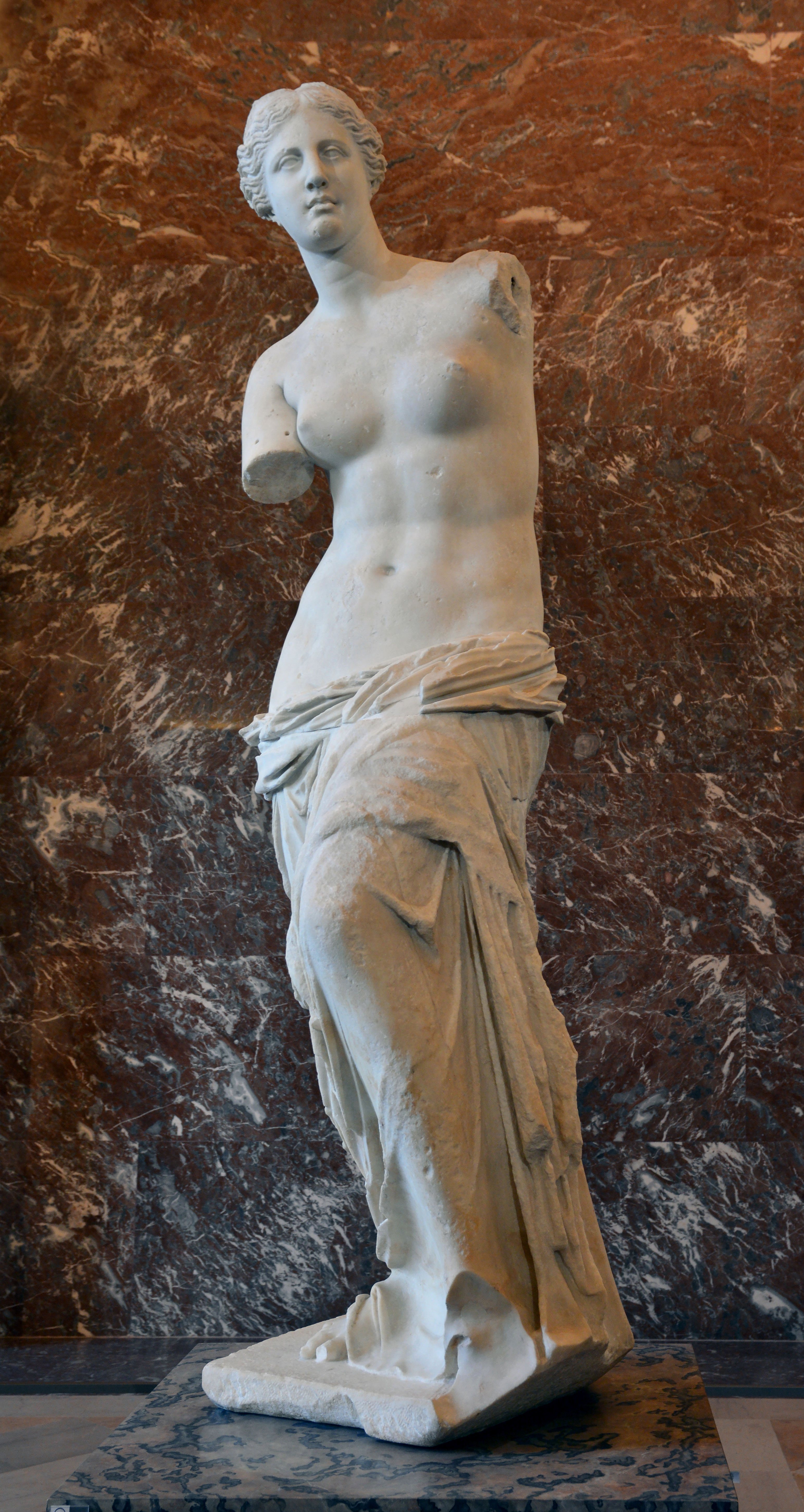
안티오키아의 알렉산드로스
밀로의 비너스
기원전 100년경. 멜로스 섬 발견 대리석 조각. 고대 그리스 미의 절정.

미상 (헬레니즘)
사모트라케의 니케
기원전 190년경. 헬레니즘 조각의 걸작. 바람에 나부끼는 옷자락의 역동적 표현.