스미다 호쿠사이 미술관 — 도쿄, 파도 속 위대한 물결의 화가를 만나다
Slightly removed from the bustling heart of Tokyo, maintaining its unique rhythm untouched by the rush of time, lies Sumida Ward on the eastern bank of the Sumida River. Here, charming old shopping streets and narrow, winding alleys interweave like a labyrinth, exuding a distinctly common folk atmosphere. Amidst this tranquil scenery, a futuristic building of glass and aluminum suddenly appears, offering a curious sensation of transcending time and space. Its calm, silvery facade mirrors the surrounding landscape, shifting in countless expressions of light and shadow, much like a flowing river. This is the Sumida Hokusai Museum (すみだ北斎美術館), designed by the world-renowned architect Kazuyo Sejima (SANAA). This modern edifice is not merely a vessel for a master's art; the building itself is a grand work of art, blurring the boundaries between inside and outside, and the soft light that permeates its interior guides visitors into a space of quiet contemplation. Much like Hokusai's waves, standing firmly yet flexibly, this building commemorates Katsushika Hokusai (葛飾北斎), the Ukiyo-e master who carved one of the greatest names in Japanese art history.
Born in 1760 in the vibrant Sumida area of Edo (present-day Tokyo), Hokusai never left his beloved hometown until he passed away at the age of 93. At the time, Edo was a dynamic city where the strictness of the samurai class coexisted with the free-spirited culture of the common people. Hokusai, often called a "mad painter," never put down his brush, driven solely by his artistic passion, leaving behind an astonishing body of over 30,000 works throughout his life. His subjects knew no bounds, ranging from Kabuki actors and beautiful women to landscapes and grotesque yokai (supernatural beings). He constantly experimented with new artistic expressions, changing his residence and name dozens of times during his lifetime. The anecdote of him lamenting at the venerable age of 90, "If only Heaven would grant me five more years, I could become a true artist," hints at the profound depth of his ceaseless passion and humility for art. His life was, in essence, the history of Sumida, and the landscapes of Sumida and the daily lives of its people were the most crucial sources of his artistic inspiration. He captured the "everyday lives of people" and the "grandeur of nature," delivering messages that transcend time.
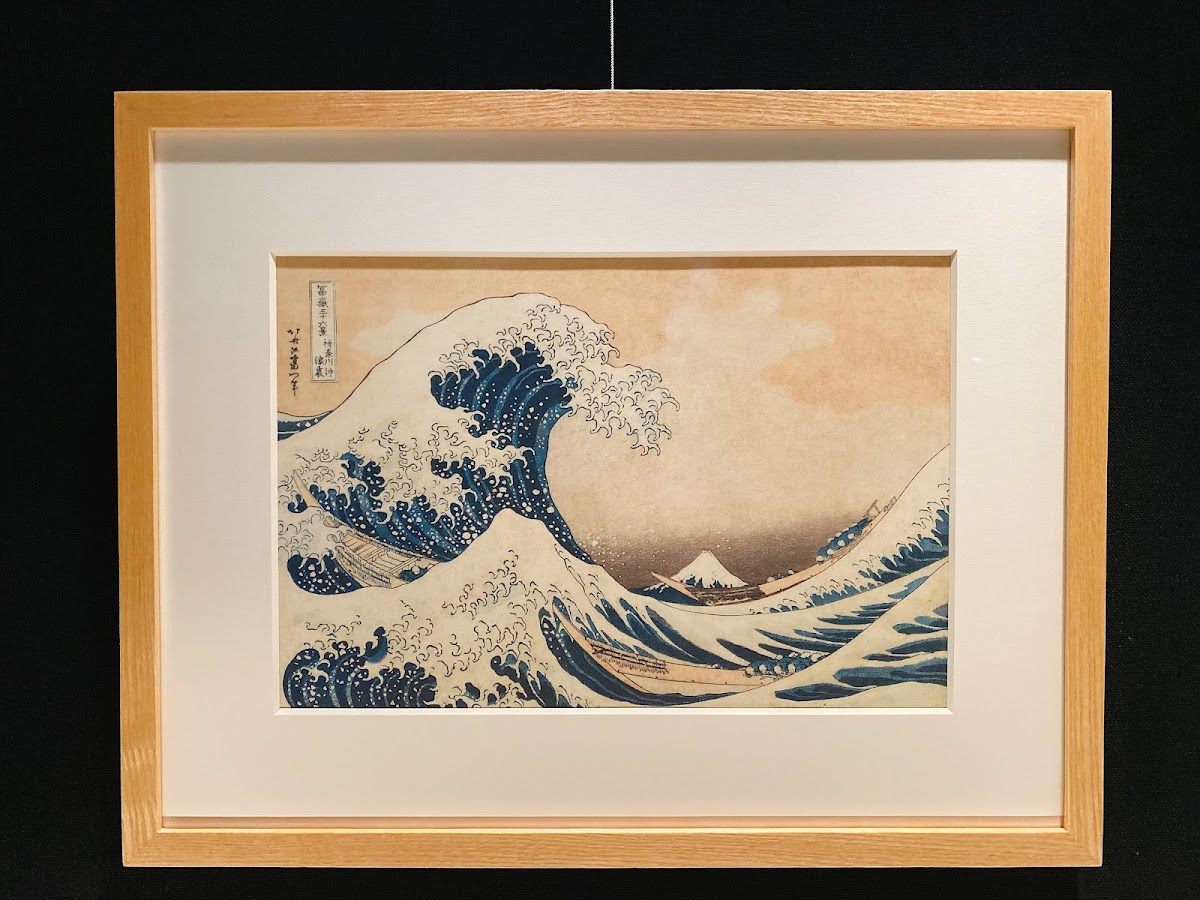
Among Hokusai's representative works, the undisputed masterpiece is The Great Wave off Kanagawa (神奈川沖浪裏). This woodblock print is today the most widely reproduced and beloved Japanese art image worldwide, serving as an icon symbolizing Japanese art. In the painting, with the mystical, snow-capped Mount Fuji in the distant background, a colossal wave, roaring like a living blue dragon, dramatically threatens to swallow small boats, inspiring both awe and solemnity in the viewer. The dynamic motion of the wave and the delicate, champagne-like spray at its crest demonstrate the pinnacle of craftsmanship, transcending the limits of printing technology. In particular, the deep blue hue of the sea, created using expensive 'Berlin Blue' (Prussian Blue) imported from the West at the time, was a fresh shock never before seen and is regarded as a revolutionary attempt that marked a new chapter in global art history. This work subverted traditional Western artistic notions of perspective and composition, profoundly inspiring European Impressionist painters such as Monet, Degas, and Van Gogh. They discovered a new visual language in Hokusai's bold compositions, lively lines, and original use of color, which significantly influenced the paradigm shift in Western art. This led to a cultural phenomenon in France known as 'Japonisme,' making Japanese art a tremendous source of inspiration for artists across Europe. From Vivaldi's 'The Four Seasons' to Debussy's 'La Mer,' his influence permeated not only visual arts but also Western music, becoming a symbol of timeless artistic exchange.
An Immersive Journey into Hokusai's Artistic World: The Museum Experience
The permanent exhibition hall on the 4th floor of the museum is an immersive space that guides visitors through Hokusai's life and artistic journey. Under soft lighting, the quietly arranged exhibition rooms evoke a serene and reverent atmosphere, as if one has entered Hokusai's own studio. Here, one can survey the evolution of the master's artistic world at a glance, from his early genre paintings to the soulful brush paintings of his later years. In the portraits of Kabuki actors and beautiful women painted by a young Hokusai, one can glimpse the vibrant and elegant popular culture of the Edo period. The exhibition then meticulously traces his transition to landscape painting, leading to masterpieces like <Famous Views of the Eastern Capital> and <Thirty-Six Views of Mount Fuji>. In particular, full-scale digital reproductions displayed alongside rare original prints offer visitors a vivid comparative experience. Even the finest brushstrokes and subtle color variations, difficult to discern with the naked eye, can be carefully observed. The section detailing the process by which woodblock prints are born as works of art is a highlight of the museum visit. One can witness the arduous labor and precise skills of artisans: the skilled painter drawing the image, the delicate carving of the woodblock with numerous chisels, and the multiple layering of plates to apply different colors. Seeing worn-out carving tools, various pigments, and countless test prints, visitors deeply feel the sweat, time, and patience of the artists and artisans hidden behind each masterpiece. The tranquil atmosphere and appropriate lighting throughout the museum help visitors focus on each artwork, almost creating the illusion of standing in the heart of the Edo period. Here, viewers will not merely observe paintings but will feel the vitality and passion that bloomed from Hokusai's brushstrokes.
Following Hokusai's Footsteps Amidst the Charm of Sumida
Another way to deeply understand Hokusai's artistic world is to stroll directly through the Sumida district, his lifelong home, outside the museum. The moment you step out of the museum, the cool feeling of the modern architecture quickly fades, replaced by the mingled scents of freshly baked senbei, the lively chatter from nearby shops, and the engine sounds of pleasure boats gracefully plying the Sumida River. It’s as if you've traveled back in time to 19th-century Edo, when Hokusai walked these very streets. Hokusai captured every nook and cranny of Sumida through his own eyes, immortalizing these moments in his works. The sight of Mount Fuji beyond Ryogoku Bridge, the daily lives of fishermen on the Sumida River, the bustling crowds during festivals – experiencing these scenes from his works overlap with reality makes the museum visit even richer. Walking along the serene Sumida Riverfront, observing the boats gently floating on the water, you can imagine landscapes that might have inspired "The Great Wave off Kanagawa." The breeze sweeping along the river seems to whisper tales of the Edo period, and sometimes, the towering Tokyo Skytree in the distance creates a unique contrast, blurring the lines between Edo and modern times, reminding us that Hokusai's vision continues to resonate today. Like Hokusai, who found artistic inspiration in ordinary daily life, we invite you to discover the hidden beauty in every small scene of Sumida.
Travel Tips for Exploring Sumida: A Feast for the Senses and Culture
Here are a few tips to best enjoy the Sumida Hokusai Museum and its surrounding area. Firstly, the best time to visit is on a weekday morning when it is relatively quiet. Weekends and holidays can be crowded, so choose a weekday if you prefer a more leisurely viewing experience. Especially in spring, the cherry blossoms along the Sumida River bloom beautifully, offering picturesque scenery, while autumn brings pleasant weather perfect for walking. Near the museum, hidden small restaurants serve traditional Edo cuisine that has been enjoyed since Hokusai's era. Indulge in local specialties like Tempura Donburi (텐동), warm fish cake stew Oden (오뎅), and the common folk's griddle dish Monjayaki (몬자야키), imagining the flavors of Hokusai's time. Of course, you can also find a variety of Sushi (寿司) restaurants using fresh ingredients or cozy Izakayas (居酒屋). The Edo-Tokyo Museum (江戸東京博物館), located within walking distance of the art museum, is an excellent place to see the history and culture of Tokyo from the Edo period to the present, so a combined visit is highly recommended. Furthermore, as Ryogoku is the home of Japan's national sport, sumo, passing by the Sumo Museum (相撲博物館) or even actual Sumo Stables (相撲部屋) where sumo wrestlers train can be a unique experience to glimpse a distinctive facet of Japanese culture. For public transport, it is convenient to get off at Ryogoku Station (両国駅) on the JR Sobu Line (総武線) or the Toei Oedo Line (都営大江戸線) and walk a short distance. A visit to the Sumida Hokusai Museum is more than just seeing a painter's works; it is an unforgettable journey to feel the breath of the Edo period and experience how art and history harmoniously coexist amidst the dynamism of modern Tokyo. May Hokusai's great wave surge within your heart through this special experience.
Visitor Info
| Location | Sun본 도쿄 스미다구 (墨田区亀沢2-7-2) |
| Opened | 2016년 |
| Architect | SANAA (세지마 가즈요 & 니시자와 류에) |
| Admission | Adult 400엔 / 중고생 300엔 / 초등Student 100엔 / 기획전 별도 |
| Hours | 9:30~17:30 (Mon요Closed Sun) |
| Getting There | 도에이 오에도선 료고쿠Stn A4Exit walk 5min / JR 소부선 료고쿠Stn 서쪽 Exit walk 9min |
| 공식 사이트 | https://hokusai-museum.jp |
