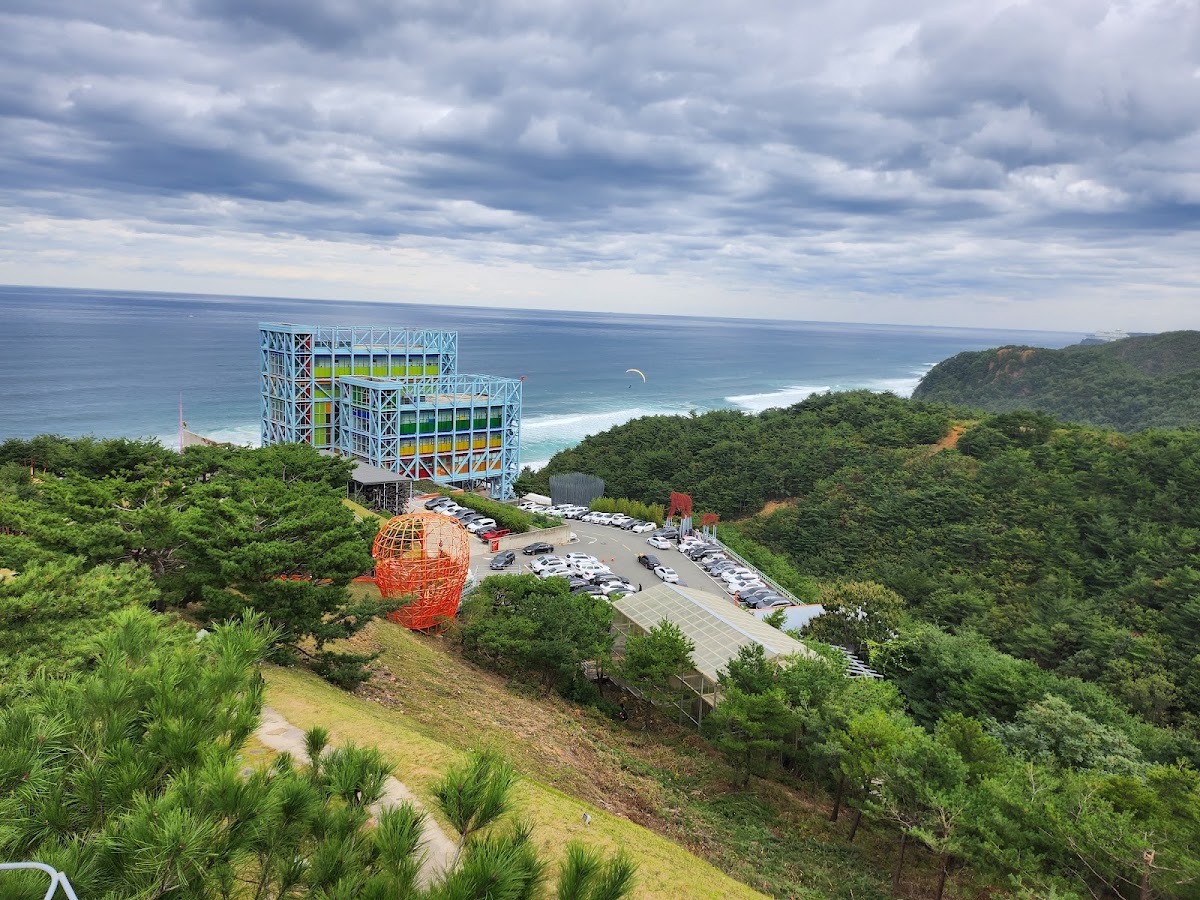
하슬라아트월드 — 강릉 바다 위의 미술관, 자연과 예술이 하나가 되는 곳
Haslla Art World: Where the East Sea Embraces Imagination
The winding coastal road of Gangneung, a ribbon of asphalt unfurling between verdant hills and the vast, azure expanse of the East Sea, leads to a place where the boundaries between human creativity and the natural world beautifully blur. This is Haslla Art World, a name echoing 'Haslla,' the ancient designation for this very region. More than just a museum, it is a sprawling artistic sanctuary perched majestically on cliffs, a testament to how art can not only coexist with nature but become an inseparable part of its breathtaking grandeur. From the moment I first laid eyes on its intriguing structures, seemingly carved from the very rock face, I knew this would be an encounter unlike any other, a dialogue between the timeless whispers of the ocean and the bold expressions of contemporary art.
What truly distinguishes Haslla Art World is its profound architectural philosophy – one that embraces and elevates its dramatic natural setting. The buildings themselves are not merely containers for art; they are intricate extensions of the landscape, framing the boundless horizon and inviting the outside in. As I navigated the various galleries, I was constantly drawn to unexpected apertures: a window precisely positioned to capture a lone pine silhouetted against the cerulean sea, a terrace seemingly suspended over the crashing waves below, or a corridor whose trajectory guided my gaze towards a distant fishing boat. Each structural element felt deliberately crafted to enhance the sensory experience, transforming mundane transitions into moments of discovery, fostering a deep connection between the viewer and the surrounding majesty. The very flow of the spaces, both indoor and out, felt organic, guiding me effortlessly from one captivating vista to the next.
The indoor galleries, though diverse in their artistic offerings – ranging from delicate contemporary paintings to kinetic sculptures that hummed with a quiet energy – consistently maintained this intimate connection with the exterior. One moment I was lost in thought before an abstract piece, its textures and colours absorbing my attention, the next, a sudden turn would reveal a panoramic vista of the Donghae, its waves rhythmically crashing against the cliffs, a living, breathing backdrop to the static art. It wasn't uncommon to find sculptures deliberately placed to interact with the natural light pouring in, casting dynamic shadows that shifted with the sun's journey across the sky, making the art itself a part of the day's changing mood. The thoughtful curation extended to every detail, ensuring that even the internal spaces resonated with the energy of the wild coast.
But the true magic, for me, unfolded in the expansive outdoor sculpture park, where the conventional definition of a 'museum' dissolves entirely. Here, art is not merely displayed; it is interwoven into a series of interconnected gardens and pathways that meander along the cliff edge and through dense pockets of forest. The Pine Tree Garden, with its ancient, gnarled trees, offered a serene counterpoint to the more playful Time Garden, dotted with whimsical installations that seemed to dance in the sea breeze. Each art piece – some monumental and thought-provoking, others small and easily missed unless sought out – felt as if it had sprung organically from the earth itself, rather than being placed upon it. I remember a striking metal sculpture, its polished surface reflecting the sky and sea, its form mirroring the gnarled branches of a nearby tree, standing sentinel over the vast ocean. Further along, a vibrant mosaic path wound its way through a bamboo grove, leading to a hidden overlook where the sheer scale of the coastline became truly humbling, the sound of the waves a constant, soothing companion. Even the charming Pinocchio & Marionette Museum, a delightful diversion with its playful wooden figures and intricate mechanisms, was housed in a building whose design echoed the gentle slopes of the surrounding hills, ensuring it felt like a natural extension of the wider artistic landscape. Haslla Art World isn't just a collection of art; it's a meticulously choreographed journey through space, light, and perspective, where every step reveals a new interaction between the architect's vision, the artist's hand, and the raw, untamed beauty of Gangneung's coast. It’s an experience that stays with you, a vivid memory of a place where art truly finds its home in nature.
Practical Tips for Your Visit
To truly immerse yourself in the wonders of Haslla Art World, a little preparation goes a long way. I recommend allocating a minimum of three hours for your visit, and ideally more if you wish to linger in the gardens or enjoy a meal with a view. Comfortable walking shoes are an absolute must, as the outdoor sculpture park involves extensive walking, some inclines, and stairs. For the best light and fewer crowds, consider arriving shortly after opening, or in the late afternoon to catch the magnificent sunset over the East Sea from one of the many vantage points. While there are cafes and a restaurant on-site offering stunning sea views, packing a water bottle is always a good idea, especially on warmer days. Haslla Art World is most easily accessed by car or taxi from Gangneung city center, as public transport options are limited, reinforcing its serene, somewhat secluded charm. Don't forget your camera; every corner offers a postcard-perfect moment.
Visitor Info
| Location | 강원특별자치도 강릉시 강동면 율곡로 1441 |
| Opened | 2003년 |
| Admission | Adult ₩15,000 / Youth ₩12,000 / Child ₩10,000 |
| Hours | 9:00~18:00 (연중무휴, 입장 마감 17:00) |
| Getting There | 강릉Stn from by car 20min / 정동진Stn from by car 5min / 대중교통 112번 Bus |
| 추천 | Sun몰 hr 방문 강력 추천 (동해 낙조와 조각 야경이 환상적) |
| 공식 사이트 | https://www.haslla.kr |
