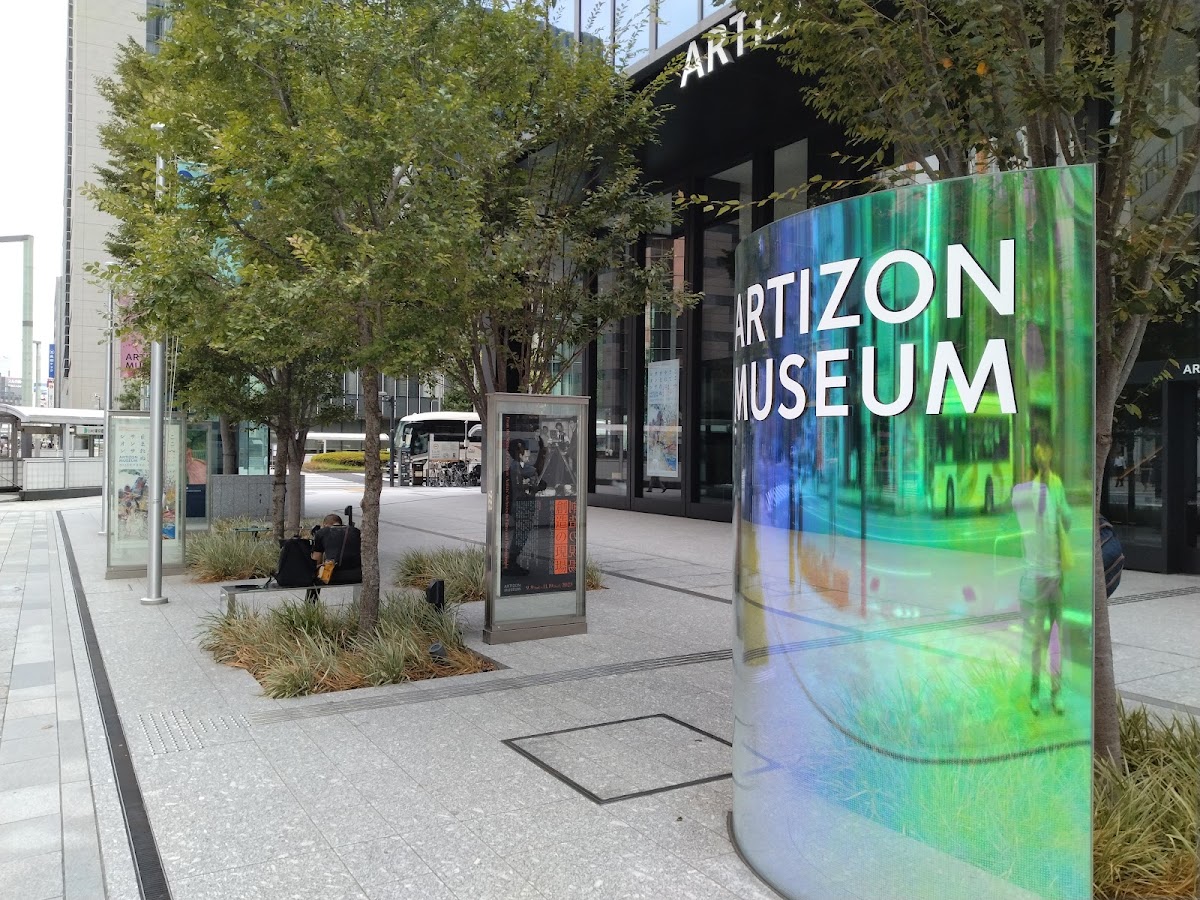
아티존 미술관 — 도쿄 교바시, 인상파와 일본 근대미술의 교차점
Tokyo's Kyobashi, A Gateway Where Art and Time Intersect
Kyobashi (京橋), the heart of Tokyo, is a place with a unique charm where the past, present, and future breathe. Amidst this modern cityscape, adorned with towering skyscrapers, the Artizon Museum, splendidly reopened in 2020, stands as an iconic space that itself opens new horizons in art. While the majestic 38-story building of glass and steel fully embraces the city's dynamism, the museum located on its lower floors offers a profound and serene resonance, quite distinct from the outside world's bustle. The moment you step through its sleek exterior, the everyday noise fades, and your footsteps lead you into a sacred space where only communion with art is permitted.
Built upon the vast collection meticulously gathered over half a century by Ishibashi Shojiro (石橋正二郎), the founder of the global tire company Bridgestone, the Artizon Museum was reborn in a more modern and expanded form, inheriting the legacy of the former Bridgestone Museum which opened in 1952. His fervent passion for art and exceptional discernment stemmed from a noble aspiration to create an ideal space where Eastern and Western art could harmonize. During a tumultuous period when Western culture poured into Japan alongside its economic development, he saw through to the universal value of art, collecting timeless masterpieces and laying a cultural foundation. The moment you set foot here, you share the dream and vision of a great patron, immersing yourself in a feast of beauty that transcends time.
A Treasure Trove of Western Modern Art: From Impressionism to Cubism
The Artizon Museum's collection shines through a balanced harmony of Eastern and Western modern art, but it is the works that penetrate the core of Western modern art history that offer profound emotion and enlightenment to the viewer. Upon entering the section dedicated to Impressionist painters, one is overwhelmed by a magical world woven from light and color. One can almost feel the revolutionary attempts of artists of that era to escape their studios and capture landscapes and fleeting moments under natural light outdoors.
Paul Cézanne's series of paintings, Mount Sainte-Victoire, goes beyond mere landscape painting, vividly demonstrating the artist's persistent effort to explore the intrinsic structure of nature. The solidity and weighty presence imbued in each brushstroke lend a lifelike vibrancy to the landscape before one's eyes, prompting viewers to contemplate the unchanging laws of nature. In his works, beyond the sensory color experiments of Impressionism, one can glimpse a prelude to Post-Impressionism's endeavor to deconstruct and reconstruct the form and space of objects. In his paintings, the mountain is not merely a background but appears as a solid architectural structure composed of planes and colors.
Auguste Renoir's works are filled with warm and soft colors. The figures born from his brush are vibrant and lovely, conveying the joy of life and human warmth, gently embracing the viewer's heart. In particular, Claude Monet's Water Lilies series captures the mysterious appearance of the pond, constantly changing with the variations of light, creating an illusion as if the sound of rippling water and the subtle fragrance of lotuses fill the space. The fragments of light captured with delicate brushstrokes provide visual ecstasy, leading visitors into a meditative space and maximizing immersion. Through his Water Lilies series, Monet incessantly explored how a single subject transforms so diversely under light, offering viewers a lyrical experience that transcends time and space.
The works of Pablo Picasso and Georges Braque, who sought a new formal language beyond the sensory explorations of Impressionism, are also not to be missed. Picasso's early Cubist works opened new horizons in painting through innovative attempts to simultaneously view, dismantle, and reassemble objects from multiple angles. Georges Braque's Analytic Cubism works demonstrate deep insight, exploring the essential structure of objects by restraining color and simplifying form. His paintings, where fragmented forms are meticulously pieced together amidst heavy black and brown tones, offer the pleasure of solving an intellectual puzzle and propose a new way of looking at objects. Through the works of these two masters, visitors can vividly experience how 20th-century Western art dismantled traditional visual methods and laid the foundation for modern art. It is truly a space where one can enjoy the intellectual pleasure of walking through Western art history without a textbook.
Harmony of East and West: The Unique Beauty of Japanese Modern Western-Style Painting
However, what truly distinguishes the Artizon Museum from being merely a 'repository of Western masterpieces' is its rich collection of Japanese modern Western-style paintings. Following the Meiji Restoration, as Western culture flowed in, Japanese artists actively adopted Western painting techniques, fused them with Japanese aesthetics, and built their unique artistic world. At that time, Japan underwent a transitional period, moving away from traditional Ukiyo-e and Yamato-e painting styles to learn and apply Western oil painting and watercolor techniques, seeking a new artistic identity. Artizon offers a rare opportunity to compare and appreciate these masterpieces born from this historical flow alongside their Western counterparts.
In the works of Asai Chu (浅井忠), one can discover a blend of Western oil painting techniques with Japan's distinctive calm and tranquil landscape depictions. His brushwork, while following the vigorous oil painting techniques of the West, does not lose the beauty of blank space and restrained colors found in traditional Japanese painting. In particular, his works, subtly combining Western realistic depiction with the flatness of Japanese woodblock prints, deeply demonstrate the harmony of East and West. Aoki Shigeru (青木繁) created a dreamlike and symbolic atmosphere in his works inspired by myths and legends, expressing Japanese sensibility through Western painting techniques. The expressions of the figures in his paintings convey an inner depth, different from the dynamism of Western Impressionism, leaving a profound impression on the viewer. His works, reinterpreting ancient Japanese epics and serene natural landscapes with Western painting techniques, evoke a mysterious and philosophical atmosphere.
Fujishima Takeji (藤島武二) successfully incorporated the bright colors and light expressions of Impressionism into Japanese landscapes and figures. His works present an exotic yet familiar beauty, harmonizing Western splendor with the delicate details of traditional Japanese attire. Particularly, his portraiture, combining the depth of Western painting with the elegant lines characteristic of Japanese painting, established a unique style of figure depiction. Through these works, visitors can visually compare and deeply appreciate the originality of Japanese artists in how they assimilated and transformed the influences of Impressionism and Post-Impressionism. The anguish and effort of artists who sought to embrace Western techniques without losing Japan's inherent cultural identity and aesthetics are deeply embedded in each painting. This demonstrates the power of creative reinterpretation beyond mere imitation, and it holds great significance as a living testament to cultural exchange between East and West. This space offers an intriguing journey to explore how Japanese art adopted Western trends and re-created them in its own language.
The Harmony of Architecture and Art: Inspiration from an Open Space
Designed by Shimizu Corporation, the Artizon Museum itself showcases the pinnacle of modern architectural art. The museum's interior is designed with high ceilings and an open structure, providing a comfortable environment for visitors to fully concentrate on the artworks. In particular, the natural light permeating throughout the building enhances the subtle colors and textures of the works, creating a mysterious experience as if the changing movements of light breathe new life into the art. The refined wood, cool metal, and soft fabrics harmoniously blend as interior finishes, creating a sophisticated yet comfortable atmosphere that encourages visitors to engage more intimately with art. The flow of the exhibition space is also designed to be natural, allowing for visual pleasure and spatial余裕 during transitions between sections. Quiet classical music further deepens the appreciation, and spacious exhibition areas maintain enough distance between artworks and visitors to fully appreciate each piece's aura.
The Artizon Museum transcends its function as a mere exhibition space, aiming to be a comprehensive cultural complex that offers profound artistic experiences. In the studio (educational practice space) within the museum, visitors can directly participate in various workshops and educational programs, providing opportunities to more actively understand and enjoy art. For example, one can directly experience the color experiments of Impressionist painters or participate in programs to learn Japanese modern Western painting techniques, bringing artistic inspiration to life. Additionally, the well-equipped art library offers a wealth of resources on art history and theory, enabling in-depth academic exploration beyond simple viewing. In the lounge, with its large windows overlooking the vibrant Kyobashi scenery, visitors can take a break to reflect on their impressions or gain inspiration by reading art-related books. Its location, just a 5-minute walk from Tokyo Station, ensures excellent accessibility, and its proximity to major Tokyo attractions like Ginza and Nihonbashi makes it highly convenient to include in your travel itinerary.
Practical Advice for Visiting the Artizon Museum and a Moving Conclusion
To enjoy the Artizon Museum most leisurely and deeply, it is advisable to consider a few practical tips. Generally, weekday mornings tend to have fewer visitors than weekends or afternoons, allowing for a more tranquil appreciation of the artworks. Visiting right after opening hours, in particular, will enable you to focus on each piece in a more relaxed atmosphere. During special exhibitions, crowds can be expected, so it is highly recommended to book tickets online in advance or purchase time-slot specific entry tickets. Checking the museum's website for the latest exhibition information and opening hours will help you plan your visit more efficiently.
After your museum visit, don't miss the gastronomic experiences in the Kyobashi and Ginza areas. Ginza, a culinary hub in Tokyo, boasts a diverse range of restaurants, from Michelin-starred establishments to casual bistros and traditional Japanese eateries, offering a delight for the palate. In particular, nearby Nihonbashi (日本橋) is home to long-established shops and elegant department stores, making it a perfect spot for shopping and experiencing the traditional atmosphere of Tokyo. Around the Artizon Museum, there are also many small galleries and bookstores, ideal for a stroll to continue your artistic inspiration. The underground passage connecting Kyobashi Station to Tokyo Station is also a great advantage, allowing convenient travel regardless of the weather.
The Artizon Museum is more than just an art exhibition space; it is a crossroads where Eastern and Western art meet to create new meaning, and a source of inspiration that offers deep insight and emotion to modern life. Here, imbued with the foresight and dedication to art of Mr. Ishibashi Shojiro, we communicate with past masters, discover present beauty, and imagine future artistic visions. The profound resonance created by the interplay of light and color, form and space, prompts us to pause amidst the bustling Tokyo metropolis and reflect on the true beauty of life. This gem of a museum, shining in the heart of Tokyo, will provide every visitor with an unforgettable artistic experience and a deep echo that enriches life. We sincerely hope you embark on your own artistic journey here and create beautiful moments that will be cherished for a long time. We await you at the Artizon Museum, filled with the fragrance of art.
Visitor Info
| Location | Sun본 도쿄 주오구 교바시 (中央区京橋1-7-2 ミュージアムタワー京橋) |
| Opened | 2020년 (구 브리지스톤 미술관 1952년 개관) |
| Admission | Adult 1,200엔 / 대Student 700엔 / 고교생 이하 Free (By appointment) |
| Hours | 10:00~18:00, Fri 20:00까지 (Mon요Closed Sun) |
| Getting There | JR·도쿄메트로 도쿄Stn 야에스 남쪽 Exit walk 5min / 도쿄메트로 긴자선 교바시Stn 6번 Exit 직결 |
| 예약 | 사전 온라인 reservation 권장 (공식 사이트) |
| 공식 사이트 | https://www.artizon.museum |
