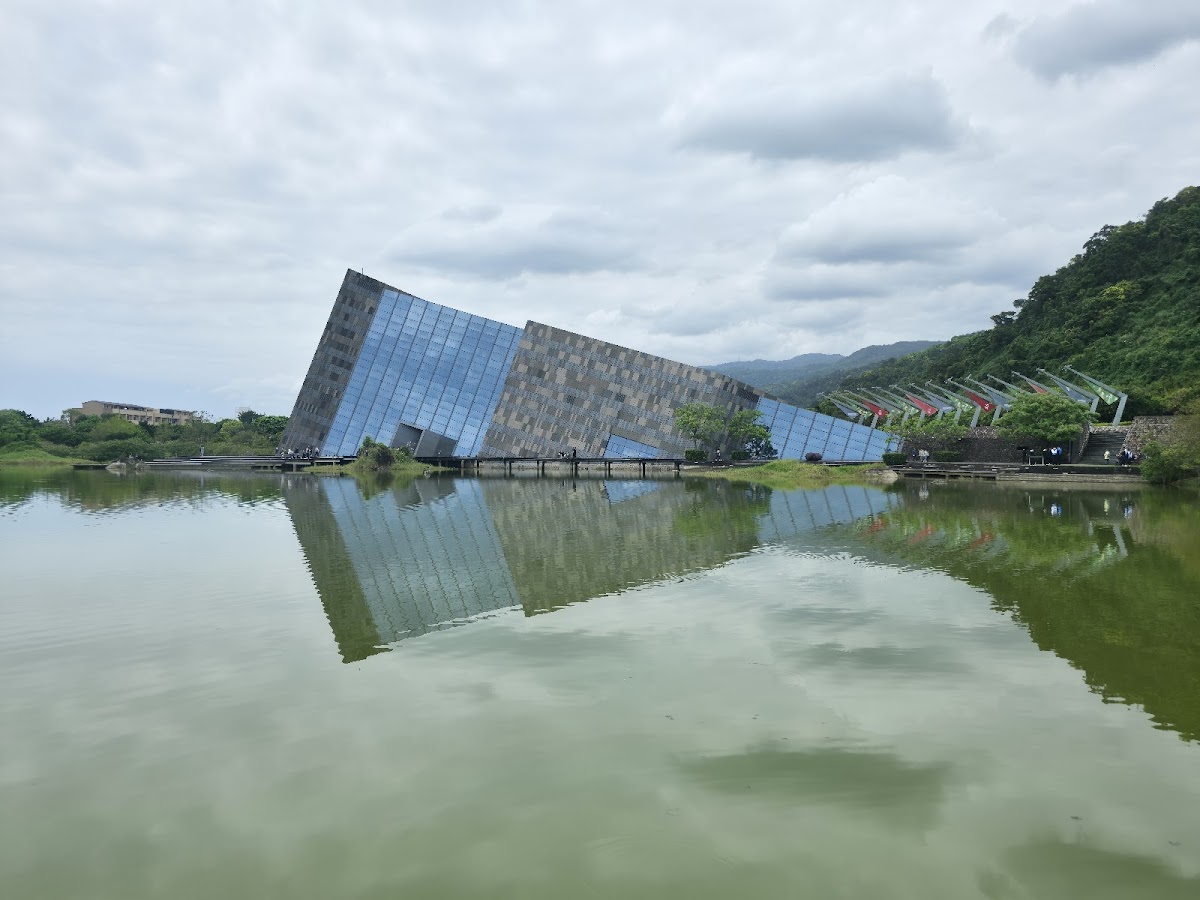
란양 박물관 — 이란, 대만 동북부 유일의 물 위에 뜬 박물관
A Wonder on Water: Lanyang Museum – Discovering the Heart of Yilan
In the tranquil embrace of Wushi Harbor in the beautiful Yilan County, northeastern Taiwan, a breathtaking spectacle unfolds. Like a massive rock formation majestically emerging from the seabed due to ancient tectonic shifts, a sharp, triangular, dark grey architectural marvel rises steeply from the water, immediately captivating the eye. This is none other than the Lanyang Museum. Awarded the Taiwan Architecture Golden Award in 2010 for its artistic merit, this museum transcends being a mere exhibition space; it is a living work of art, inspired by Yilan's unique geological feature—the monoclinal slate formations. The entire building functions as a colossal sculpture, harmoniously blending with its surroundings to offer an astounding aesthetic experience.
In the early dawn, as mist gently embraces the lake, the museum transforms into a mystical island, seemingly suspended between reality and illusion. As the fog gradually lifts and the morning sun bathes the building's more than 4,000 stone panels, the grey exterior shimmers, constantly shifting its hue from subtle silver to dazzling white. This dramatic play of light is a testament to the geometric design meticulously arranged by architect Kris Yao, inspired by the rugged waves and fault lines of Yilan's coast. The building's mirror image, reflected upon the lake's surface, blurs the line between reality and reflection, creating a fantastical scene where water and architecture become one. Especially at sunset, when the sky blazes crimson, and the structure along with its reflection is bathed in a glorious orange glow, visitors are often overcome with profound emotion, feeling as though they have transcended time and space. From its very foundation, Lanyang Museum stands as a symbolic entity, initiating an ongoing dialogue about Yilan's nature, history, and culture.
Architecture Born from and Mirroring Nature: The Aesthetic of Lanyang Museum
The architectural aesthetic of Lanyang Museum begins with translating Yilan's natural topography into an architectural language. Architect Kris Yao drew inspiration from the distinctive appearance of the monoclinal slate formations, which rise obliquely along Yilan's coast, designing the building to appear as a colossal rock naturally emerging from the earth. This design philosophy contributes to the museum's perfect integration with the surrounding landscape, creating one organic scenery. The more than 4,000 stone panels that compose the exterior wall are not merely decorative elements; they serve as a crucial medium for encapsulating the rugged natural beauty of Yilan's coast. Arranged at various angles, the panels cast dramatic light and shadow across the building's surface depending on the sun's direction and intensity, imparting a lively, three-dimensional quality. This evokes the image of a giant natural stone sculpted by wind and rain over countless ages, offering visitors both visual delight and opportunities for deep contemplation.
The choice of building materials also reflects Yilan's regional characteristics. The dark grey stone used for the exterior walls captures the color of rocks commonly found in the Yilan area, enhancing its affinity with the surroundings. Furthermore, modern materials such as glass and steel are harmoniously incorporated, lending the building both robustness and a sense of transparency and openness. In particular, the natural light entering the interior is subtly controlled along the museum's pathways, gently illuminating the exhibition spaces and breathing life into each artifact. The views of Wushi Harbor Lake through the large windows serve as an important visual device connecting the museum's interior and exterior, helping visitors immerse themselves in Yilan's nature as they experience the exhibitions. Lanyang Museum is not just a building; it is a grand artistic masterpiece where architecture, nature, history, and art intertwine to fully embody Yilan's identity.
A Journey into the Heart of Yilan: Exploring the Immersive Exhibitions
The interior of the Lanyang Museum is designed as an immersive journey guiding visitors into the very heart of Yilan. Comprising four floors, the permanent exhibition systematically illuminates Yilan County's diverse natural environment, profound history, and unique culture through four distinct themes: 'Mountain,' 'Plain,' 'Ocean,' and 'Yilan's Rain.' Here, beyond mere knowledge transfer, visitors are offered vivid sensory experiences that feel as though they are directly sensing and experiencing the very breath of Yilan.
1. Mountain: The Land Holding Ancient Echoes
Beginning on the top floor, the 'Mountain' section is a space dedicated to exploring the majestic grandeur of the Xueshan mountain range encircling Yilan and the rich ecosystem thriving beneath it. Here, visitors can directly sense the mystical atmosphere of Yilan's mountainous regions through the sounds of wind rustling in the quiet, dense forests, the clear gurgle of water flowing through valleys, and dioramas recreating the habitats of rare flora and fauna. Especially, through a virtual reality (VR) experience zone, visitors can explore Yilan's rugged mountain terrain, enjoying the thrilling experience of encountering alpine plants and wild animals up close. The panoramic view of Yilan's plains from this elevated vantage point presents a beautiful panorama crafted by nature, fully conveying the grandeur and vitality of Yilan's great outdoors.
2. Plain: A Cradle of Life, Roots of Culture
Following this, the 'Plain' section unfolds, narrating the agricultural culture born from Yilan's fertile land and the stories of the people who rooted themselves here. Particularly, the traditional culture and artifacts of the Kavalan people, Taiwan's indigenous inhabitants, are among the most impressive exhibits. Through various displays showcasing the Kavalan people's way of life, traditional attire, handicrafts, and glimpses into their communal existence, visitors can understand their wisdom and harmonious life with nature. Alongside the depiction of Yilan's agrarian society, which developed around rice cultivation, visitors can vividly encounter Yilan's tumultuous history from the Qing Dynasty through the Japanese colonial period to modern times. Old farming tools, daily implements, and models recreating the lifestyles of that era create the illusion of stepping back in time to past Yilan.
3. Ocean: The Breath of Blue Vitality
Located on the lower floors of the museum, the 'Ocean' section focuses on Yilan's blue coastline and the marine culture that flourished there. It encapsulates the history of fishing centered around Wushi Harbor, information about diverse fish species and marine ecosystems, and the joys and sorrows of Yilan people's lives intertwined with the sea. Here, visitors can witness vibrant recreations of Yilan's bustling fish markets overflowing with fresh seafood, along with glimpses into the arduous lives of fishermen and the joy of their bountiful harvests. Accompanied by sound effects that gently evoke the sound of waves, and models of various marine creatures inhabiting Yilan's coastal waters, visitors can directly feel the mystery and vitality of the ocean. Notably, the exhibition on the enigmatic Guishan Island (龜山島), located off Yilan's coast, fosters a deeper understanding of Yilan's marine landscape.
4. Yilan's Rain: A Cultural Thread Weaving Through Life
One of the most unique and impressive spaces within the Lanyang Museum is the 'Yilan's Rain' section. In Yilan, where the average annual rainfall is three times the Taiwanese average, rain is not merely a natural phenomenon but an integral part of life and a source of culture. This section deeply explores how rain has influenced Yilan people's daily lives, food, clothing, art, and even their emotions. It offers an immersive experience through various sounds and visual effects that simulate actual rainfall, showcasing Yilan's unique architectural styles adapted to rain, foods enjoyed on rainy days, and diverse cultural content such as poems and songs inspired by rain. Here, visitors will experience Yilan's distinctive rain culture firsthand, where rain is seen not as a disaster but as a blessing and a vital force for life, feeling a moist sensibility and profound resonance.
Practical Tips for Lanyang Museum Travelers: How to Fully Enjoy Yilan
Here are some practical travel tips to enrich your experience at Lanyang Museum and fully enjoy the charm of Yilan County.
Best Time to Visit
Lanyang Museum is great to visit year-round, but each season offers a different appeal. Visiting in the early morning or at dusk allows you to admire the changing light on the museum's exterior walls and the fantastical reflections on the lake's surface. As Yilan is known for frequent rain, a visit on a rainy day to experience the 'Yilan's Rain' exhibition can be an even more special experience. Spring and autumn offer relatively pleasant weather, perfect for strolling through the surrounding nature park or enjoying outdoor activities. Summers can be hot, so spending time inside the cool museum is recommended.
Transportation and Accessibility
Lanyang Museum is conveniently accessible from Taipei, a major city in northern Taiwan, by train or bus. If departing from Taipei, take a TRA train via Ruifang or Jiufen and alight at Toucheng Station. The museum is approximately a 15-20 minute walk from Toucheng Station, or you can take a taxi or local bus. Direct buses also operate from Taipei Main Station to Yilan, which is a good option if you prefer a comfortable ride. The journey by either train or bus takes about 1 hour to 1 hour 30 minutes.
Nearby Attractions and Culinary Exploration
After your museum visit, explore the diverse attractions nearby. Right next to the museum is the Wushi Harbor National Scenic Area, a renowned migratory bird sanctuary where you can observe birds amidst a serene landscape. Wushi Harbor is also a vibrant fishing village, brimming with restaurants where you can savor freshly caught seafood. Don't miss the local delicacies of Yilan, such as the famous scallion pancakes (葱油餅), duck dishes, and warm Taiwanese braised pork dishes (羅東夜市's braised pork). Wai'ao Beach (外澳沙灘), a short drive from the museum, is excellent for surfing or beach walks. On clear days, gazing at the mystical Guishan Island (龜山島) from Wai'ao Beach will create an unforgettable memory.
Embodying Yilan's Identity: A Cultural Heritage to Be Forever Remembered
Lanyang Museum is more than just an exhibition space; it is a grand storybook where Yilan's nature, history, and culture harmoniously converge with architecture. All who visit this place will experience the beauty of Yilan and the wisdom of life contained within it, feeling deep inspiration and emotion through all their senses. The architectural beauty that creates the illusion of floating on water, the immersive exhibitions that feel like exploring the heart of Yilan, and the culture of rain deeply embedded in the lives of Yilan's people are enough to make Lanyang Museum an essential stop on any journey through northeastern Taiwan. Time spent at the Lanyang Museum will be a precious cultural experience that will forever engrave this special place, Yilan, in your memory.
Visitor Info
| Location | 대만 이란현 터우청진 (宜蘭縣頭城鎮青雲路三段750號) |
| Opened | 2010년 |
| Admission | Adult NT$100 / Student NT$60 / 6세 이하 Free |
| Hours | Tue-Sun 9:00~17:00 (Mon요Closed Sun) |
| Getting There | 타이베이Stn from 기차(푸유안호)로 약 1hr → 터우청Stn, Taxi 10min |
| 추천 | 황혼·안개 낀 아침 방문 시 Wed면 반영 풍경 절경 / 주변 우스항 자연공원 철새 탐조 |
| 공식 사이트 | https://www.lym.gov.tw |
