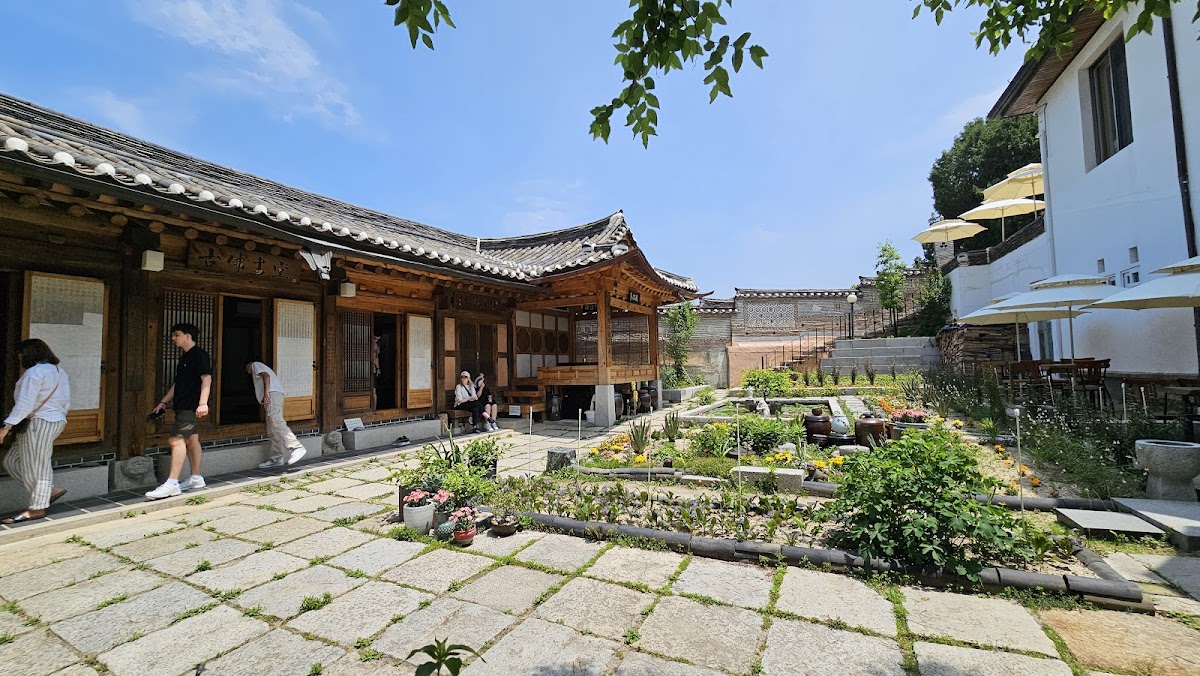
북촌아시아미술관 — 서울 한옥마을 속 아시아 전통미술의 아름다움
Bukchon Asian Art Museum: The Essence of Asian Beauty in a Serene Hanok
At the heart of Seoul, Bukchon Hanok Village preserves a tranquil atmosphere, seemingly untouched by the passage of time. Nestled between Gyeongbokgung and Changdeokgung Palaces, this historic village embraces alleys where the breath of tradition thrives beneath over a hundred years old tiled roofs. The warmth emanating from the earthen walls and wooden pillars, the softness of sunlight filtering through the eaves, and the rustling sound of leaves swaying in the breeze come together to create a peaceful sanctuary, completely detached from the city's hustle and bustle. As you stroll through these quiet paths, you'll encounter museums, workshops, and cafes opening their doors amidst the quaint, aged hanoks. Among them, the Bukchon Asian Art Museum, housing traditional Asian art within the embrace of a historic hanok, offers visitors a uniquely special and profound experience of appreciation that cannot be found anywhere else.
Beyond Time, Beyond Borders: A Feast of Asian Art
The collection at Bukchon Asian Art Museum is more than just an assembly of objects; it's a window into the very essence of Asian culture and spirit spanning thousands of years. From the humorous minhwa (folk paintings) and elegant ceramics of the Joseon Dynasty, to the dignified blue-and-white porcelain and vibrant wucai (five-color) porcelain reflecting the grandeur of the Ming and Qing Chinese imperial courts, and the exquisite lacquerware and delicate ceramics of Japan's Edo period – its scope transcends national borders, encompassing the entire continent. Furthermore, devout Buddhist crafts from Southeast Asian countries like Thailand, Myanmar, and Indonesia, imbued with deep spiritual reverence, are also present. The culmination of centuries of craft artistry from across Asia gathers under one roof, harmoniously welcoming visitors. This place offers a sense of wonder, as if one is traveling back in time to personally experience Asia's golden age.
History at Your Fingertips: The Depth of the Ceramic Collection
In particular, the Asian ceramics collection here is breathtaking. The luminous "bisaek" (secret color) and graceful lines of Korea's exquisite Goryeo celadon, alongside the rustic yet free-spirited charm of Buncheong ware, gently soothe the observer's heart. Next to them, the majestic blue-and-white porcelain and intensely colored wucai porcelain from China's Ming and Qing dynasties command attention, showcasing imperial authority and artistic prowess. Japan's Edo-period Imari-yaki exudes an exotic beauty with its vibrant and intricate patterns. In a space where such diverse ceramics, born from different cultures, are displayed side-by-side, one can intuitively grasp how the same medium of 'pottery' evolved into such varied aesthetic directions and philosophies across different cultural spheres. Each artifact, delicately breathing with its unique story and the spirit of its artisan, transforms this exhibition into a profound learning ground where one explores and understands history as if without a seasoned docent. Moving between elegant curves and sturdy forms, subtle glazes and rough textures, visitors will experience a special sensory journey, as if tracing time with their fingertips.
Hanok Itself Becomes Art: The Aesthetics of Space
Another, perhaps the greatest, charm of the Bukchon Asian Art Museum lies in the space itself. Under the low eaves of a hanok imbued with the breath of a century-old home, Asian ceramics and crafts find their place amidst soft lighting, creating a unique atmosphere that no modern gallery could replicate. The living grain of the wooden pillars and window frames, and the gentle natural light filtering through the hanji-papered windows, reveal the colors and forms of the artifacts with greater depth, adding a quiet dignity. When you pause for a moment in the small inner courtyard, the view of the blue sky contrasting with the ancient tiled roofs offers a genuine time for rest and contemplation, a welcome escape from the bustling daily life of Seoul. This experience of interacting with ancient relics amidst the serene ambiance of a hanok is more than mere viewing; it's an emotional journey, as if traveling back in time. The way the artifacts are comfortably settled, as if in their original homes, brings a deep sense of stability and peace to the viewer, prompting spontaneous admiration for the harmonious aesthetics created by the hanok and its art.
The Perfect End to a Bukchon Stroll: Visitor Tips
Bukchon Asian Art Museum is located at the pinnacle of a cultural belt connecting Gyeongbokgung, Changdeokgung, Samcheong-dong, and Insa-dong. If you choose this as your final destination after exploring the palaces and strolling through Bukchon's beautiful alleys, you'll find it a perfect experience to both rest your body and nourish your soul. For the best time to visit, we recommend coming on a weekday morning when it is relatively uncrowded. Especially in spring, when fresh leaves bud, or in autumn, when foliage paints the landscape, the beauty of the hanok reaches its peak, allowing for an even more atmospheric viewing experience. After leaving the museum, you'll find numerous traditional restaurants offering refined Korean table d'hôte (hanjeongsik) and hanok cafes where you can enjoy fragrant traditional teas. After your visit, we suggest taking some time for deep contemplation with a warm cup of tea, or exploring the charming workshops of Bukchon to immerse yourself in the allure of traditional Korean crafts. Additionally, there are beautiful viewpoints in the higher parts of Bukchon Hanok Village offering panoramic views of Seoul, Namsan Tower, and the palaces, so we encourage you to bring a camera to capture wonderful memories. Bukchon Asian Art Museum is not merely a space displaying artifacts; it is a special cultural and artistic venue that encapsulates Asia's rich history and culture within the beautiful vessel of a hanok, offering profound inspiration and resonance to those of us living in the present. We sincerely hope you experience an awakening of your five senses and an unforgettable emotional journey that will deeply reside within your heart here.
Visitor Info
| Location | 서울시 종로구 북촌로 (가회동) |
| Admission | Adult ₩7,000 / Student ₩5,000 |
| Hours | Tue-Sun 10:00~18:00 (Mon요Closed Sun) |
| Getting There | Subway 3 Line 안국Stn 2번 Exit walk 10min |
| 추천 코스 | 경복궁 → 북촌 한옥마을 골Thu 산책 → 북촌아시아미술관 → 인사동 |
| 추천 계절 | 봄(4Mon 벚꽃) / 가을(10~11Mon 단풍) |
| 공식 사이트 | https://bukchonasiamuseum.com |
