이란 국립 보석 박물관 — 테헤란, 세계 최고의 보석 컬렉션이 지하 금고에
National Jewels Museum of Iran: The Glory of Persia Slumbering in an Underground Vault
Deep beneath the bustling heart of Tehran, the capital of Iran, lies a hidden trove of some of humanity's most magnificent treasures. Beyond the thick steel doors of the Central Bank of Iran (Bank Melli Iran)'s underground vault, more than just a collection of jewels is enshrined; it is the complete history of a great civilization and empire. This is the National Jewels Museum. Here, over 35,000 jewels and gold artifacts collected and crafted by successive Persian dynasties – Safavid, Afsharid, Qajar, and Pahlavi – over hundreds of years, are brought together, offering visitors an overwhelming sense of wonder and historical emotion in a truly majestic space.
The journey to this place feels like passing through a tunnel of time. Leaving behind the modern cityscape of Tehran, as you descend into the depths of the underground vault, navigating stringent security, an inexplicable excitement and solemnity intertwine. The moment the colossal vault door, shrouded in cold air and silence, opens, your eyes are momentarily dazzled by the brilliant light emanating from the jewels in the darkness, and your heart pounds. This light is not mere radiance; it is the echo of history, condensing the rise and fall of countless dynasties, the glory and frustrations of empires, and the sweat and soul of countless artists.
The Sea of Light, Daria-i-Noor: A Diamond Etched with History and Legend
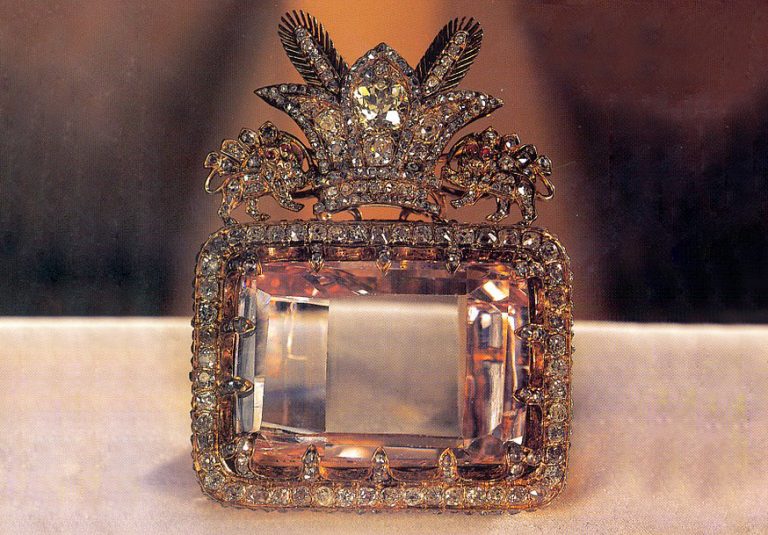
Among the museum's countless treasures, what undeniably captures the eye is the Daria-i-Noor, or 'Sea of Light,' a wondrous 182-carat pink diamond. Considered one of the largest and oldest cut diamonds in the world, this gem is not just a beautiful stone, but an epic saga of blood, conquest, and power struggles. This diamond, which symbolized the prosperity of the 17th-century Mughal Empire in India, was acquired in 1739 when Nader Shah, the conquering monarch of Iran, invaded the Mughal Empire and plundered Delhi, bringing it to Persia. Nader Shah proudly displayed the empire's authority through this spoil of war, and the Daria-i-Noor subsequently became a key treasure symbolizing the Persian dynasty and supporting its national power.
Encountering the Daria-i-Noor firsthand reveals a mysterious beauty that no photograph or description can fully convey. Its subtle yet profound pink hue subtly shifts with changes in angle and lighting, radiating a lifelike vitality. Gazing at this diamond for an extended period, one might fall into the illusion of a vast tapestry unfolding: the long journey of a raw mineral from the hot Indian sun to its present form through the hands of countless artisans, and the desires of kings and tragic tales surrounding its owners. Currently, the Daria-i-Noor constitutes part of Iran's monetary reserve, recognized for its value not merely as an artifact but as a national asset.
Symbols of Sovereignty: The Moon Crown, the Jeweled Globe, and the Golden Throne
Beyond the Daria-i-Noor, the museum boasts masterpieces that attest to the exceptional artistry and wealth of the Persian dynasties. In particular, the Taj-e-Mah (Moon Crown) radiates dazzling splendor, meticulously set with 3,380 diamonds, 5 emeralds, 2 rubies, and 105 pearls. Crafted during the Qajar dynasty, this crown is an artistic marvel that encapsulates the era's finest gem-setting techniques and design aesthetics, a masterpiece that elevates the zenith of royal power into a tangible form of jewels. Upon closer inspection, the perfect harmony of each gem and the delicate craftsmanship evoke admiration, prompting one to imagine the majesty and authority of a king wearing it.
Another highlight of the museum is the breathtaking Jeweled Globe. Commissioned in 1869 by Nasser al-Din Shah Qajar of the Qajar dynasty, this globe is made of pure gold and studded with approximately 51,366 various precious stones. Continents are represented by rubies and emeralds, oceans by diamonds, and major countries like Iran, Britain, and France are marked with different gems. This globe is not merely an ornament; it is a significant historical document visually depicting the geographical understanding and worldview of the Persian Empire at the time, as well as a monumental work symbolizing overwhelming wealth and national power. The glittering jewels surrounding the globe create a mystical impression, as if viewing a planet in space, filling the beholder with awe.
Furthermore, the Naderi Throne, adorned with over 26,000 jewels, its grandeur and opulence undeniably showcase the unreachable majesty of royalty. Jeweled scabbards, ceremonial cups encrusted with emeralds and rubies, and women's crowns intricately set with pearls and diamonds — this underground space evokes the illusion that the entire Persian Empire has descended to eternally shine in the darkness. Every artifact here is more than just metal and stone; it is living proof of hundreds of years of Persian culture and history, and the culmination of humanity's passion for beauty and expression of power.
A Journey to the Heart of Persia: Practical Advice for Visitors
If you ever have the opportunity to travel to Iran, the National Jewels Museum is an absolute must-visit. Amidst the vibrant energy of the modern city of Tehran, this underground vault will offer a unique experience that transcends time and space. However, unlike a typical museum, there are a few points to note when planning your visit.
Visiting Hours and Information
- Since this museum is located within the vault of the Central Bank of Iran, its operating hours are very limited. It is typically open only from Saturday to Tuesday, from 2:00 PM to 4:30 PM. When planning your visit, you must check the latest operating information through the official website of the National Jewels Museum of Iran or local travel resources.
- Due to its nature as a vault, it is often closed on national holidays or religious observances, so please confirm before visiting.
- The best time to visit is right after opening at 2:00 PM. As time can be tight to see everything within the limited hours, it is advisable to arrive early for a more relaxed viewing experience.
Admission and Security Procedures
- Advance booking is not strictly mandatory, but waiting times can sometimes be long due to large groups. Especially for foreign visitors, identity verification procedures may take some time, so you must bring your passport.
- Strict security checks are conducted at the museum entrance. All personal belongings, including bags, cameras, and mobile phones, must be deposited in lockers at the entrance. Photography is strictly prohibited inside the museum. This measure is for the safety of the jewels and the protection of intellectual property, so please adhere to the rules. While you might initially feel disappointed, it will instead be an opportunity to fully absorb the light and color of the jewels directly with your own eyes.
Exploring the Surroundings: Taste and Culture
- The museum is conveniently located in the city center of Tehran, offering good accessibility. After your visit, consider stopping by the Tehran Grand Bazaar, which is within walking distance. This colossal market, with hundreds of years of history, is the best place to directly experience Iran's vibrant commercial culture. The scent of spices, the splendor of textiles and carpets, and the bustling sounds of locals combine to offer a sensory-stimulating experience.
- For lunch or dinner, seek out excellent traditional Iranian restaurants near the museum. Exploring Iran's culinary culture by tasting local dishes such as kebab, Dizi, and Ghormeh Sabzi will also create unforgettable memories.
- Additionally, Golestan Palace, located not far from the museum, is another essential visit where you can glimpse the splendor and architectural style of the Qajar dynasty. It is recommended to combine your museum visit with a trip to the palace.
Conclusion: The Ever-Shining Legacy of Persia
The National Jewels Museum of Iran is not merely an exhibition of gems. It is a living historical museum that transcends time, bearing witness to the glory and artistic passion of the Persian Empire, and humanity's continuous pursuit of beauty. The spectacle of the jewels, which cannot be expressed by any photograph or word, truly reveals its value only when encountered firsthand. This enchanting experience, which only your eyes and heart can capture, will make your journey in Tehran an unforgettable memory. We strongly recommend you feel the heart and soul of Persia through the brilliantly shining jewels in the darkness.
Visitor Info
| Location | 이란 테헤란 (Ferdowsi Blvd, Tehran — 이란 중앙은행 내) |
| Admission | 약 IRR 200,000 (현장 구매) |
| Hours | Mon~Wed·Sat 14:00~16:30 (관람 인원 제한 / 방문 전 확인 필Wed) |
| Getting There | 테헤란 Subway 2 Line Mellat Stn 근방 |
| 주의사항 | 사진 촬영 Fri지 / 매우 엄격한 보안 통과 필요 / 인원 제한으로 대기 있음 |
| Highlights | 다리아이누르 핑크 다이아몬드 182캐럿 / 타지 마흘 왕관 / 보석 지구본 |
| 공식 사이트 | https://www.cbi.ir/jewels |
