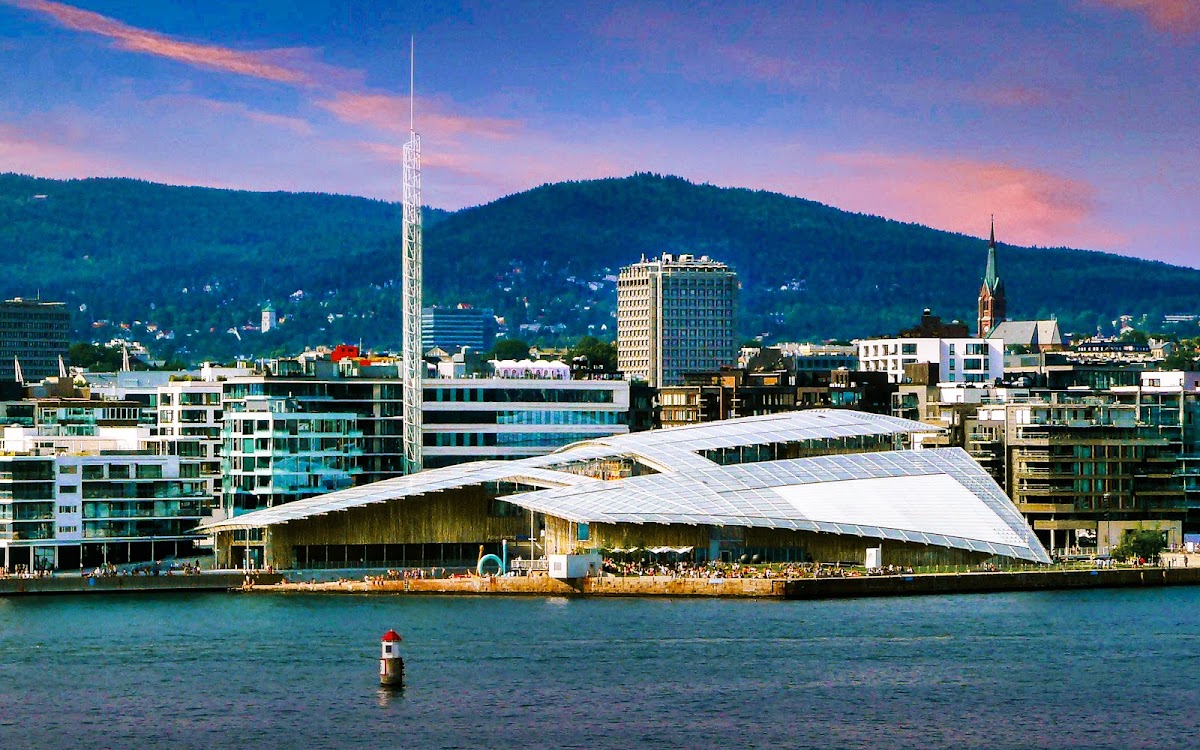
아스트룹 피언리 미술관 — 오슬로, 렌조 피아노가 피오르드 위에 지은 현대미술의 보석
Oslo, the capital of Norway, is a city where modern Nordic beauty, profound history, and breathtaking natural landscapes harmoniously converge. In particular, the Tjuvholmen peninsula, sprawling along the Oslofjord coastline, was once a bustling port and industrial area. Now, it has been reborn as a symbol of urban redevelopment pointing towards a bright future, and a vibrant center for culture and art. On this captivating peninsula, at its very tip, stands a building that appears to float gracefully on the water like a sailboat: the Astrup Fearnley Museet, a treasure trove of international contemporary art. This museum is not merely an exhibition space; it is a grand work of art in itself, embodying Oslo's identity.
Reopened in its current location in 2012, the Astrup Fearnley Museet was born from the delicate touch of the Italian architectural maestro Renzo Piano. His philosophy, pursuing an aesthetic of 'light and transparency' through his designs for world-renowned structures like the Centre Pompidou in Paris and the Whitney Museum in New York, is perfectly fused with Oslo's water, sky, and natural light, permeating every corner of this place. From the moment one approaches the museum, the subtle scent of the sea, the sunlight reflecting off the water, and the warm textures of glass and wood encasing the building's exterior present visitors with an unforgettable first impression.
The Essence of Modern Art Blooming on Water: Renzo Piano's Architectural Vision
In designing the Astrup Fearnley Museet, Renzo Piano perfectly embodied the metaphor of a 'sailboat on the sea' in his architectural language. Indeed, the museum consists of three independent buildings made of glass and wood, organically connected beneath a vast, curved glass roof, much like waves. This glass roof allows sunlight to flood the interior spaces with natural light, bringing the ever-changing scenery of the fjord—with its varying weather and times of day—indoors. The waters of the Oslofjord gently flow between the buildings, blurring the boundaries between architecture and nature, making them feel as one. Standing on a balcony, listening to the lapping of the waves and gazing at the horizon beyond the glass, one becomes deeply immersed in the tranquility and captivating power offered by the architecture.
Piano prioritizes harmony with nature and pursues sustainable architecture. This conviction is evident in every detail of the museum. Environmentally friendly wood, recyclable glass, and efficient energy systems are employed to minimize environmental impact. Specifically, this massive curved glass roof is not merely for aesthetic beauty; it also serves the functional purpose of protecting the artworks from Norway's capricious weather and maintaining a constant internal temperature. Ascending to the museum's rooftop, a panorama of the Oslofjord unfolds before your eyes. The majestic scenery created by boats traversing the blue waters, the distant city skyline, and the mountains layered beyond is breathtakingly beautiful. This spot is considered one of Oslo's finest viewpoints, promising visitors an unforgettable memory.
A Feast of Timeless Contemporary Art: Depth and Meaning of the Collection
The Astrup Fearnley Museet's collection is a precious treasure trove, offering a comprehensive overview of major trends in international contemporary art from the 1960s to the present day. Here, bold and unconventional works—the likes of which one might expect to encounter only in major galleries in New York or London—exude a unique charm against the backdrop of the Oslofjord. In particular, one of the museum's signature pieces, Jeff Koons' monumental balloon sculpture 'Michael Jackson and Bubbles,' commands visitors' attention with its sheer presence alone. This work, emblematic of Pop Art, depicts the pop culture icon Michael Jackson and his pet chimpanzee in gleaming golden ceramic, straddling the line between kitsch and art, and posing complex questions about consumer culture, fame, and innocence. It encourages a critical examination of various aspects of modern society beyond mere visual pleasure.
Furthermore, visitors can encounter the powerful works of Damien Hirst, which explore the essence of death and life. His representative pieces, animals preserved in formaldehyde, compel viewers to deeply contemplate the finitude of life and the meaning of existence. The traces of life encased in cold glass boxes evoke beauty and eeriness, awe and discomfort simultaneously, resonating deeply with the audience. Cindy Sherman's photographic series showcases an unending exploration of identity, role-playing, and the female gaze. She transforms herself into various personas, using photography to deconstruct social codes and stereotypes. Experiencing such intensely message-laden works against the serene backdrop of the Oslofjord, intertwined with the museum's own architectural beauty, delivers an even profounder impact. The collection is not simply an assemblage of works, but rather reflects the museum's intent to share with visitors the questions posed by contemporary art and the process of contemplating them.
Oslo's Unique Cultural Life Where Art and Nature Harmonize
A visit to the Astrup Fearnley Museet is not confined to indoor exhibitions alone. The Tjuvholmen Sculpture Park, situated right next to the museum, is a hidden gem of Oslo. Here, you can freely enjoy outdoor sculptures by world-renowned contemporary artists, all free of charge. Louise Bourgeois's 'Maman,' which expresses powerful maternal love and suffering through the form of a spider, overwhelms visitors with its grandeur and simultaneous delicacy. Moreover, Antony Gormley's human figure sculptures, which pose existential questions about human existence, blend with the surrounding natural landscape to offer moments of deep contemplation. Sitting on benches scattered throughout the sculpture park, feeling the fjord's breeze while appreciating the artworks, is a special luxury only possible in Oslo.
Especially during summer, Oslo further amplifies the museum's allure. A small artificial beach is created in front of the museum, where locals and tourists enjoy swimming in the cool waters of the fjord. Indulging in a swim under the warm sun, then heading straight into the adjacent museum to admire contemporary art, represents the pinnacle of Oslo's unique blend of luxurious and relaxed cultural life. The experience of revitalizing in the cold fjord waters and then re-immersing oneself in the world of architecture and art offers true relaxation and inspiration away from the hustle and bustle of daily life. This is where the Nordic lifestyles of 'Friluftsliv' (outdoor living for physical and mental well-being) and 'Hygge' (a comfortable and cozy atmosphere) meet art.
A visit to the museum is delightful in any season, but if you enjoy outdoor activities, summer (June-August) is the best time. Late spring (May) or early autumn (September) are relatively less crowded and have mild weather, ideal for quietly immersing oneself in the artworks. The museum is located about a 15-20 minute walk from Oslo city center and can be easily accessed by public transport (tram or bus). The Tjuvholmen peninsula around the museum boasts everything from Michelin-starred fine dining to casual cafes, and places to savor fresh seafood. After your exhibition visit, we recommend enjoying a wonderful meal overlooking the fjord, or simply savoring Oslo's leisurely pace with a warm cup of coffee.
The Astrup Fearnley Museet is more than just a museum; it is a comprehensive cultural and artistic space that satisfies all five senses, where Renzo Piano's architectural aesthetics, a world-class contemporary art collection, and the nature of the Oslofjord are harmoniously intertwined. Here, you can gain unforgettable memories and profound inspiration amidst the emotion of art and the tranquility of nature. If you visit Oslo, be sure to experience this jewel of contemporary art floating on the sea.
Visitor Info
| Location | 노르웨이 오슬로 (Strandpromenaden 2, 0252 Oslo) |
| Opened | 2012년 (현 위치) |
| Architect | 렌조 피아노 (Renzo Piano Building Workshop) |
| Admission | Adult NOK 150 / Student NOK 100 / 18세 이하 Free / Thu요Sun Free |
| Hours | Tue-Sun 11:00~17:00, Thu 11:00~19:00 (Mon요Closed Sun) |
| Getting There | 오슬로 트램 12번 Aker BryggeStn or walk 15min (시청 from) |
| 공식 사이트 | https://www.afmuseet.no |
