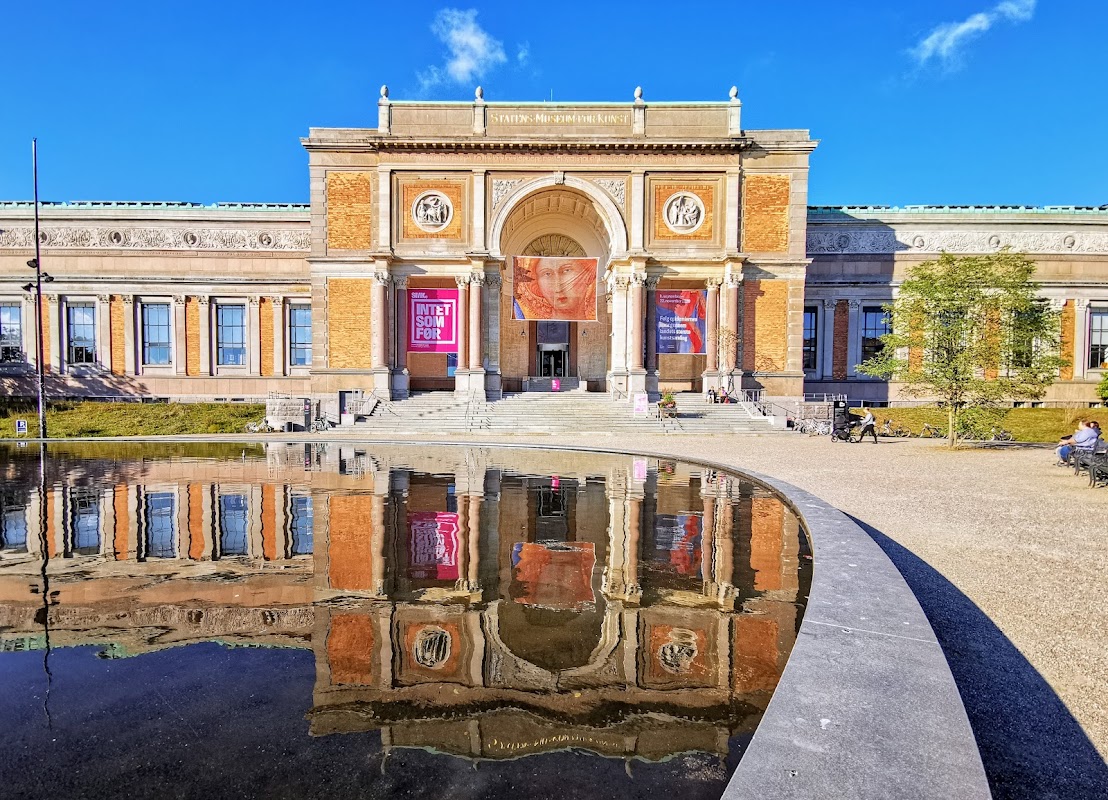
SMK 덴마크 국립미술관 — 코펜하겐, 함머스호이의 조용한 빛
SMK The National Gallery of Denmark — Copenhagen, The Serene Radiance of Hammershøi
Greetings, fellow seekers of culture and beauty! Today, I invite you to join me on a journey to a jewel box of a city in Northern Europe, Copenhagen, Denmark, and to a truly special place I discovered there: SMK, The National Gallery of Denmark. This museum, a quiet testament to Danish art through the ages, offers a profound, almost hushed, emotional experience. It was here that I encountered the distinctive, tranquil light emanating from the works of Vilhelm Hammershøi, Denmark’s celebrated painter, making my time within these walls utterly unforgettable. Shall we unlock the doors of SMK together?
A Dialogue of Stone and Canvas: Unveiling Denmark’s Artistic Soul
My first encounter with SMK felt akin to opening a meticulously crafted historical tome. The museum itself is a fascinating architectural narrative, a seamless dialogue between past and present. The venerable 19th-century main building, with its classical facade and grand, almost palatial air, initially draws you in. Its high ceilings and stately corridors speak of an era of formal presentation, housing the Old Masters and the Golden Age of Danish art. Then, as if turning a page, a sleek, modern extension, added in 1998, emerges. These two distinct architectural personalities are not merely adjacent but are gracefully interwoven by a glass walkway, creating a fluid transition that is both visually striking and experientially profound. Walking through this transparent artery, I felt a tangible shift in time, from the solemn grandeur of historical art to the expansive, often challenging, perspectives of the contemporary.
This architectural journey beautifully primes you for the artistic journey within. The museum’s collections are vast, spanning seven centuries of European and Danish art. I wandered through galleries adorned with Dutch Golden Age masters, their dramatic chiaroscuro contrasting sharply with the ethereal light of Danish landscapes. Yet, it was the Danish Golden Age section that truly captured my imagination, offering a window into a pivotal period of national identity and artistic flourishing. Here, artists like Christen Købke and C.W. Eckersberg brought to life the everyday scenes of Copenhagen with a warmth and sincerity that was deeply endearing. Their meticulous details and vibrant light depicted a world both familiar and idealized, a gentle prelude to the quiet intensity I was about to discover.
Then I stepped into the hushed rooms dedicated to Vilhelm Hammershøi, and time seemed to slow, almost to a standstill. This was the quiet heart of the museum for me, a space where the very air felt infused with introspection. Hammershøi’s canvases are an exercise in exquisite restraint: muted palettes of grey, ochre, and pale gold, sparse interiors, and often, figures with their backs turned, facing away from the viewer, inviting us to peer into their silent worlds. His genius lies in his ability to imbue these seemingly mundane scenes – an empty room, a sliver of light falling across a floorboard, a woman reading by a window – with an almost spiritual profundity. The light in his paintings is not merely illumination; it is a presence, an almost tangible entity that defines space and evokes a deep sense of calm, solitude, and perhaps, a gentle melancholy. I found myself lingering before "Dust Motes Dancing in Sunbeams," mesmerized by the way he rendered the invisible, making the very air visible and alive. In another, a woman stood gazing out a window, her back to me, and I felt a curious connection, a shared moment of quiet contemplation across the centuries. His work speaks to the soul, not with grand gestures, but with the eloquent whisper of everyday existence, capturing a uniquely Nordic sensibility that resonates long after you’ve left the gallery.
SMK is not merely a repository of art; it is a sanctuary where architecture guides you through history, and where light, particularly the serene radiance of Hammershøi, offers a profound moment of reflection. My visit was a slow unravelling, a deep dive into the artistic soul of Denmark, leaving me with a lasting impression of quiet beauty and the powerful eloquence of silence.
Practical Tips
SMK The National Gallery of Denmark is located at Sølvgade 48-50, 1307 København K, Denmark. The museum is generally open Tuesday to Sunday from 10 AM to 6 PM, with extended hours on Wednesdays until 8 PM, and is closed on Mondays. I recommend checking their official website for any seasonal variations or special holiday hours before your visit. Admission typically applies to adults, while visitors under 18 years old can enter free of charge. It is advisable to book tickets online in advance, especially during peak tourist seasons, to ensure smooth entry. The museum is conveniently accessible via Copenhagen’s public transport network: the M3 or M4 Metro lines to Marmorkirken or Østerport, various bus routes (including 1A, 6A, 26, 150S), and S-train services to Østerport. If you are exploring the city on foot, it is also a pleasant walk from Nørreport Station. Allow at least three to four hours for a comprehensive visit, particularly if you wish to fully absorb the Hammershøi collection. The museum features a charming cafe, Kafeteria SMK, offering light refreshments and meals, as well as a well-stocked museum shop for souvenirs and art books.
Visitor Info
| Location | 덴마크 코펜하겐 (Solvgade 48-50, 1307 Kobenhavn K) |
| Opened | 1849년 |
| Admission | permanent전 Free / 특별전 DKK 120 |
| Hours | Tue-Sun 10:00~17:00, Wed 10:00~20:00 (Mon요Closed Sun) |
| Getting There | S-tog NorreportStn walk 8min |
| Highlights | 함머스호이 실내Tue / 렘브란트 자Tue상 / 마티스 드로잉 / Free |
| 공식 사이트 | https://www.smk.dk |