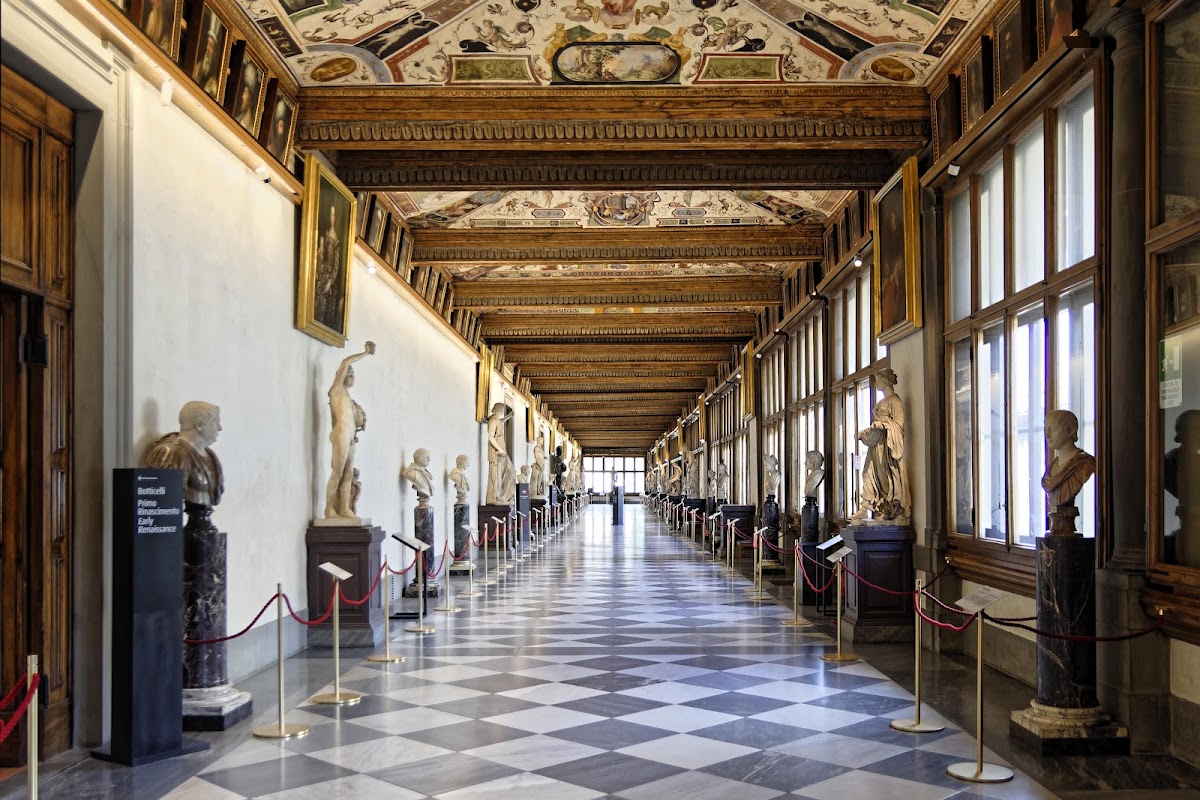
Walking Through the Heart of the Renaissance in Florence
Greetings, fellow wanderers! As a cultural travel writer constantly seeking inspiration within the world's great museums, I find myself drawn time and again to the birthplace of the Renaissance, Florence. This magnificent city, a living testament to human ingenuity and artistic brilliance, offers an unparalleled journey into the past. Today, I invite you to join me on an exploration of three extraordinary spaces nestled within its heart: the Museo diocesano di Santo Stefano al Ponte, Palazzo Vecchio, and Palazzo Pitti. Together, we will peel back the layers of history and breathe in the vibrant spirit of an era that forever changed the course of art and civilization.
Museo diocesano di Santo Stefano al Ponte: Unveiling Layers of Time
Tucked away near the bustling Ponte Vecchio and the shimmering Arno, the Museo diocesano di Santo Stefano al Ponte offers a quiet, profound journey through Florence's architectural and religious history. This isn't a museum in the conventional sense, filled with a vast collection of detached artworks; rather, the building itself is the primary exhibit, a remarkable palimpsest of centuries. Stepping inside, one immediately senses the deep historical currents flowing beneath its stone walls. What stands today as a museum and cultural events venue was once the Church of Santo Stefano al Ponte, a structure whose origins stretch back to the Romanesque period.
As I walked through its hallowed space, I could almost trace the hands of generations of builders and worshippers. The museum deftly highlights the archaeological findings and structural evolutions, revealing ancient crypts, Roman foundations, and the remnants of earlier churches beneath the existing pavement. The stark, evocative beauty of the Romanesque pillars gives way to the more ornate flourishes of later Baroque additions, each modification telling a story of changing tastes, needs, and religious practices. It's a fascinating experience to see how a sacred space adapted over time, weathering floods, political shifts, and artistic movements. The very stones here whisper tales of Florentine life, from its earliest days to its present role as a vibrant cultural hub. It’s a powerful reminder that in Florence, history isn't just displayed; it's embedded in the very fabric of the city, waiting to be discovered with every step.
Palazzo Vecchio: The Grand Stage of Power and Art
From the unassuming historical depth of Santo Stefano, we turn to the imposing, almost defiant presence of Palazzo Vecchio, Florence’s civic masterpiece and a symbol of its enduring republican spirit, even through periods of Medici rule. This fortress-like palace, with its iconic Arnolfo Tower piercing the sky, commands the Piazza della Signoria, a stage for both political drama and artistic celebration. My visit here was less about individual pieces and more about the overwhelming sensation of stepping into the very engine room of Florentine power, where art served as both propaganda and profound expression.
The true artistic heart of Palazzo Vecchio, for me, resides in the monumental Salone dei Cinquecento. This vast hall, commissioned by Savonarola and later transformed by Giorgio Vasari for Duke Cosimo I de' Medici, is a breathtaking display of ambition. Walls covered in colossal frescoes depicting Florentine military victories over Pisa and Siena immediately assert the city's dominance. Amidst this grandeur, one cannot miss Michelangelo’s powerful sculpture, Victory. It’s a dynamic, twisting composition, a young victor pinning down an older, defeated figure, symbolizing the triumph of youth and ingenuity – a perfect metaphor for Florence itself. Further exploration leads to the exquisite Studiolo di Francesco I, a tiny, jewel-box room designed by Vasari with an array of allegorical paintings by artists like Bronzino and Allori, each hiding a secret cabinet. It's a sanctuary of intellect and artistry, a stark contrast to the martial displays of the main hall, yet equally expressive of Medici sophistication. Walking through the lavish apartments, past intricate ceiling frescoes and private chapels, I felt the echoes of countless decisions, intrigues, and artistic commissions that shaped not just Florence, but the entire Renaissance world.
Palazzo Pitti: Opulence, Grandeur, and a Princely Life
Crossing the Arno to the Oltrarno district, a different kind of Florentine grandeur awaits at Palazzo Pitti. This colossal palace, initially conceived for the banker Luca Pitti and later acquired and vastly expanded by the Medici, is a sprawling testament to dynastic wealth and artistic patronage. As I approached its immense, rusticated façade, I was struck by its sheer scale – a formidable presence that promised untold riches within. And it certainly delivers.
My experience inside Palazzo Pitti was one of continuous awe at the sheer opulence and the staggering quantity of world-class art. It’s not just a single museum, but a complex of several, each offering a distinct window into a princely life. The Palatine Gallery, in particular, is an overwhelming sensory delight. Room after room, adorned with lavish stucco and frescoes, houses an unparalleled collection of Renaissance and Baroque masterpieces, hung in the style of a private collection rather than a formal gallery. I found myself lingering before Raphael's serene Madonnas, Titian’s vibrant portraits, and Rubens' dynamic compositions, often without the usual museum barriers, allowing an intimate connection with these titans of art. Imagining the Grand Dukes and Duchesses walking these very halls, surrounded by such beauty, truly brings history to life. Beyond the Palatine, the Royal Apartments offer a glimpse into the everyday lives of the ruling families, complete with period furnishings and décor. Exploring the Costume and Fashion Museum or the Gallery of Modern Art simply reinforced the palace's enduring legacy as a repository of beauty across centuries. Palazzo Pitti is more than a museum; it’s an immersive journey into the heart of a bygone era of unparalleled luxury and cultural sophistication, a truly unforgettable experience that demands time and contemplation.
Practical Tips
To make the most of your Florentine museum adventure, a little planning goes a long way. For the Museo diocesano di Santo Stefano al Ponte, check their official website for current opening hours and any special events or concerts, as its primary function can sometimes shift. Palazzo Vecchio is extremely popular; booking your tickets online in advance is highly recommended, especially if you plan to climb Arnolfo’s Tower for panoramic city views. Allow at least 2-3 hours for a comprehensive visit. Palazzo Pitti is vast, encompassing multiple museums (Palatine Gallery, Royal Apartments, Gallery of Modern Art, Costume and Fashion Museum, etc.) and the Boboli Gardens. Decide which sections interest you most to manage your time effectively, and wear comfortable walking shoes as you’ll be covering a lot of ground both inside and out in the expansive gardens. Florence itself is a wonderfully walkable city, but comfortable footwear is essential for exploring its cobbled streets and magnificent interiors.
Visitor Info
| Estimated Visit | 2~3Sun (3곳 모두 방문 시) |
| 예산 | 팔라초 베키오 14유로, 피티 궁전 16유로, 산Sat 스테파노 Free |
| 추천 시기 | 봄(4~5Mon) or 가을(9~10Mon), 여름은 인파가 매우 많음 |
| 추천 동선 | 팔라초 베키오 → 베키오 다리 → 피티 궁전 → 보볼리 정원 → 산Sat 스테파노 |
